Chapter 5 - The Question Frank Answered
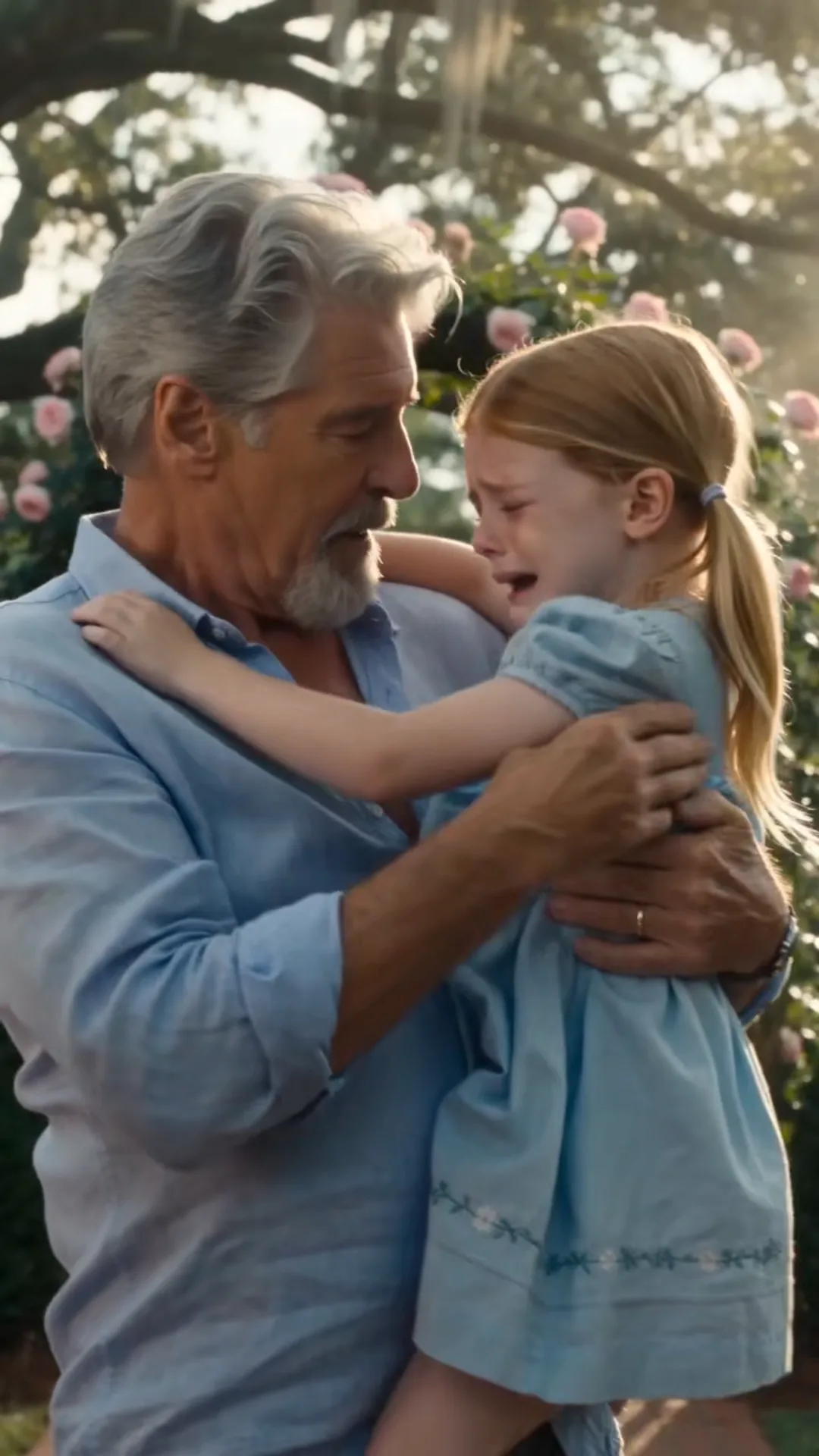
Frank had never been good at being underestimated.
It was, if you traced it back far enough, the engine behind most of his worst decisions — a childhood spent being the smaller boy, the one picked last, the one whose father had a way of comparing him unfavorably to men twice his size at Sunday dinners that went on far longer than any dinner needed to.
He had built a life, since then, out of never letting a room decide he was small. He worked out. He talked loud. He dated women who needed defending, or believed they did, because being needed felt close enough to being respected that he'd stopped checking for the difference.
And now here was a man — older, yes, but built like something out of a different century, silver-bearded and unbothered, standing in his girlfriend's garden, asking him a question that wasn't really a question.
Something you want to say with your fists instead of your mouth?
Frank felt the old engine turn over. Felt the specific heat that had gotten him into exactly this kind of trouble more times than he'd admit to anyone, including himself.
---
"You don't know me," Frank said, and his voice had lost some of its earlier authority, gone thinner, tighter. "You don't know anything about this family."
"I know a man who lets a child cry alone in a garden while the adults argue about whose fault it is," Walter said. "That tells me plenty."
"She's not even mine."
"Didn't ask whose she was. Asked what you're doing about it."
---
Denise, still standing frozen with the spoon in her hand, felt something shift inside her chest — a small, unwelcome flicker of recognition. Walter's words weren't wrong. That was the terrible part. They weren't wrong at all.
She looked down at the spoon in her hand as though seeing it for the first time — really seeing it, not as a kitchen tool but as the thing it had become the moment she'd carried it outside — and something in her face changed. Not quite shame. Not yet. But the beginning of the road that led there.
"Frank," she said, quiet now. "Just— let it go."
But Frank had stopped listening to Denise several sentences ago. Frank was listening to the old engine, the one that had been idling in his chest since he was nine years old and his father had told him, in front of company, that he threw a baseball "like his mother."
Frank had spent twenty-six years proving that sentence wrong to anyone who'd stand still long enough to watch.
---
Mia watched Frank's hands.
She didn't understand adult arguments. Didn't understand pride, or old fathers, or engines that idled for decades waiting for an excuse to finally turn over completely.
But she understood hands. She had learned, in three short years, to read hands the way other children her age were learning to read picture books — carefully, attentively, because sometimes a book told you a story with a happy ending, and sometimes hands told you a different kind of story altogether.
Frank's hands had curled into fists.
Not raised yet. Not yet swinging. But curled, and low, and trembling with a tension that Mia recognized from somewhere deep and wordless inside her — the same tension that had lived in the house right before bad things happened, right before voices got loud and doors got slammed and she learned, again, to make herself small.
She pulled the cracked teapot tighter against her chest.
"Don't," she whispered. So quietly that none of the three adults heard her.
She wasn't sure, afterward, who she'd been talking to.
---
"Get out of my yard," Frank said, and his voice had gone somewhere past reasoning now, somewhere past the point where words were doing any of the actual work in the conversation. "Last chance."
"Or what," Walter said.
He did not say it as a challenge. He said it the way you'd ask a child what happens if they don't clean their room — genuinely curious, not particularly worried about the answer, the calm of a man who has, at some point in his sixty-four years, run out of things that frighten him.
That calm, more than anything Walter could have said, was what finally broke something loose in Frank.
Because being ignored was one thing. Frank could handle being disagreed with, argued with, even yelled at. What Frank could not handle — had never, in twenty-six years, learned how to handle — was being looked at like he wasn't worth being afraid of.
---
The punch came fast. Faster than anyone in the garden expected, including, in some detached corner of his own mind, Frank himself.
His right fist swung up and across in a short, ugly arc, the kind of punch thrown by anger rather than training — all shoulder and no technique, the swing of a man who'd watched a hundred fights on television and never once been taught the difference between throwing a punch and losing your balance while doing it.
Denise's mouth opened in a small, useless gasp. The spoon dropped from her hand and clattered against the flagstones, forgotten instantly, its entire significance erased in half a second by something far worse than itself.
Mia's eyes went wide. She did not close them this time, though every instinct told her to. She watched, frozen, the small plastic teapot pressed so hard against her chest that its cracked spout dug a thin red line into her skin that would still be faintly visible at bathtime that evening.
---
What happened next happened fast enough that none of them, questioned separately later — and they would be questioned, first by each other and then, eventually, by a police officer summoned by a neighbor's phone call — would fully agree on the sequence.
What everyone agreed on was the sound.
A short, sharp exhale from Walter, quiet effort rather than exertion, the sound of a man who had spent thirty-one years redirecting the momentum of things far heavier than a grown man's poorly-thrown fist.
And then Frank was no longer standing where Frank had been standing.
He was airborne, briefly, in the specific and undignified way that men become airborne when their own momentum has been used against them by someone who understands leverage far better than they understand fighting — Walter's hand at Frank's wrist, a half-turn of his hip, the whole motion economical and almost gentle in its mechanics, more like redirecting a wave than throwing a punch of his own.
Frank's back found the wooden shelf against the garden wall.
May you like



The terracotta pots did not survive the introduction.
---







