Chapter 1 - The Walnut Tree
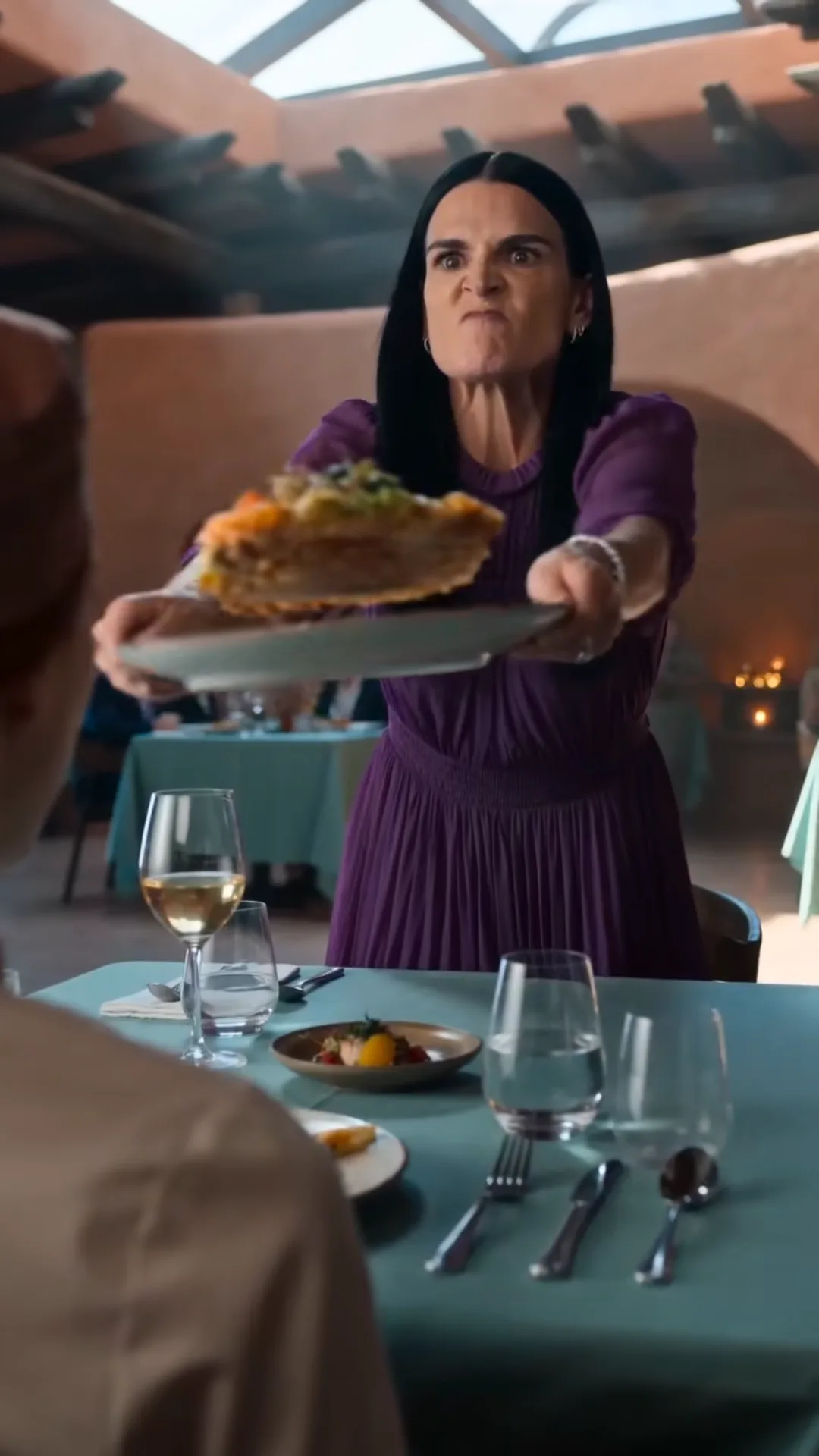
The restaurant was called El Nogal.
The Walnut Tree.
There had been an actual walnut tree once, planted by Álvaro Ferreira's grandfather in the courtyard behind the kitchen.
It died the same winter the old man did.
Nobody cut it down.
They just built the new wing around it, so the trunk still stood there, gray and hollow, holding up nothing but its own memory.
Valentina Cruz noticed it on her first day.
She was thirty-one years old, and she had a habit of noticing dead things before she noticed anything else.
It was a professional hazard.
A chef learns early that most of the job is deciding what to do with things that no longer have life in them — a fish, a stalk of thyme, a tradition.
"You'll want to leave that tree alone," said Rosa, the oldest woman in the kitchen, sixty-eight and built like a doorframe.
"I wasn't going to touch it."
"Everyone touches it eventually," Rosa said. "One way or another."
Valentina didn't understand what she meant.
Not yet.
---
She had been hired three months earlier, flown in from a city that didn't matter to anyone in this one, with a résumé that made Álvaro's accountant nervous and a palate that made Álvaro himself go quiet the first time he tasted her food.
He had eaten her cocido — the same dish his mother used to make, the same dish that had been on El Nogal's menu, unchanged, for forty-one years — and he had set down his fork like it weighed something.
"You added something," he said.
"I added smoke," Valentina said. "And I took out an hour of boiling time no one needed."
"My mother boiled it for four hours."
"Your mother didn't have a smoker."
He had laughed — a real laugh, surprised out of him — and hired her that same afternoon.
It should have been a warning to both of them.
Because a restaurant like El Nogal did not belong only to the man whose name was on the deed.
It belonged, in the particular arithmetic of old cities, to the people who had eaten there since before he was born.
And chief among them — first among them, by her own accounting — was Doña Constanza Reyes de Villalta.
---
She had known Álvaro's mother.
She had sat at table six on the third Thursday of every month for thirty years, and the staff had long ago stopped writing her name in the reservation book because there was no need — the table simply understood, the way old furniture understands where it belongs in a room.
She was seventy-four.
She wore black lace the way other women wore armor, and pearls the way soldiers wore medals, and when she spoke, the room adjusted itself around the sound, chairs creaking softly toward her like sunflowers.
Valentina had met her exactly twice before the night everything broke.
The first time, Constanza had sent her cocido back to the kitchen untouched, with a note on the tablecloth in blue fountain pen: This is not the recipe. This is a foreigner's guess at it.
The second time, she had simply refused to look at Valentina at all, speaking only to Álvaro, as though the chef standing at the edge of the dining room were a draft coming in under a door — something to be mentioned to management, not addressed directly.
Valentina had gone home both nights and cried in the shower where her daughter couldn't hear her.
Then she had gone back the next morning and cooked anyway.
That was the job.
---
Her daughter's name was Mia.
She was seven, with her mother's stubborn chin and a gap in her front teeth she was very proud of, because it meant, she explained seriously to anyone who would listen, that she could now whistle "a little bit, sometimes, if the wind helps."
Mia liked the restaurant kitchen the way other children liked amusement parks.
She liked the heat lamps and the copper pots and the walk-in refrigerator that hummed like a sleeping animal.
She was not supposed to be there in the evenings, when the dining room filled and the pace turned violent and fast, but she came anyway, tucked into the linen closet with a flashlight and a book, or curled under the long service table where nobody's eyes went.
She had a stuffed rabbit with her always.
Señor Orejas.
Mr. Ears.
Which was a joke, because by the time this story starts, the rabbit had only one ear left — the other had come off in a washing machine two winters before, and Mia had refused every offer of a replacement toy, every suggestion of a needle and thread.
"He's not broken," she told her mother. "He's just missing something. That's different."
Valentina had never quite known how to argue with that logic.
She wasn't sure she wanted to.
---
On the night in question — the night the walnut tree would finally, in Rosa's words, get touched — El Nogal was hosting its annual founders' dinner.
Forty-one years since Álvaro's father had opened the doors.
Every important family in the city had a table.
Constanza had table six, of course, and beside her sat her nephew Rodrigo, a lawyer with soft hands who had never cooked an egg in his life and considered this a point of pride.
Álvaro sat at the head table near the kitchen pass, where he could watch the room the way a captain watches weather.
And in the kitchen, Valentina stood over a pot of cocido that was not her grandmother's recipe, not exactly, and not Álvaro's mother's recipe either, but something new built carefully from the bones of both — the thing she had been hired to make and the thing half the city had already decided to hate before tasting it.
Mia sat under the service table three feet from her mother's shoes, Señor Orejas tucked under one arm, humming a song with no words.
She had no idea what was coming.
Neither, really, did anyone else.
Rosa was wrong about only one thing that night.
It wasn't the tree that finally got touched.
It was everyone standing near it.
---
The dining room glowed amber that evening, the chandeliers turned low, candlelight doing the rest of the work the way it always did at El Nogal, softening faces, forgiving wrinkles, making every glass of wine look like something poured from a more elegant century.
Waiters moved between tables with the particular gravity of people who know they are being watched by money.
Somewhere near the bar, a violinist Álvaro had hired for the occasion tuned quietly, unnoticed, the way good musicians often are until the moment they're needed.
Valentina, in the kitchen, tied her apron a second time out of nervous habit, though it hadn't come loose the first time.
She looked once through the small round window in the swinging door — the porthole, the cooks called it — and saw table six.
Constanza was already looking back.
Not at the door.
At her.
As though she had known exactly where to aim her eyes before the door had even swung open.
Valentina let the door fall shut and turned back to her pots, telling herself it meant nothing, telling herself the woman was seventy-four years old and had nothing better to look at than whatever crossed her field of vision.
She did not yet know that Constanza had spent the last three months collecting reasons.
She did not know about the phone calls to Álvaro's investors.
She did not know about the letter — unsent, folded twice, sitting in Constanza's handbag that very night — addressed to the city's oldest newspaper, describing in careful, cutting handwriting exactly what had happened to "a beloved institution" under "outside influence."
She only knew that her hands were steady, and her cocido smelled right, and somewhere under the table three feet away, her daughter was humming.
May you like



For one more hour, that was enough to hold onto.
---