Chapter 8 - What Ethan Didn't Know
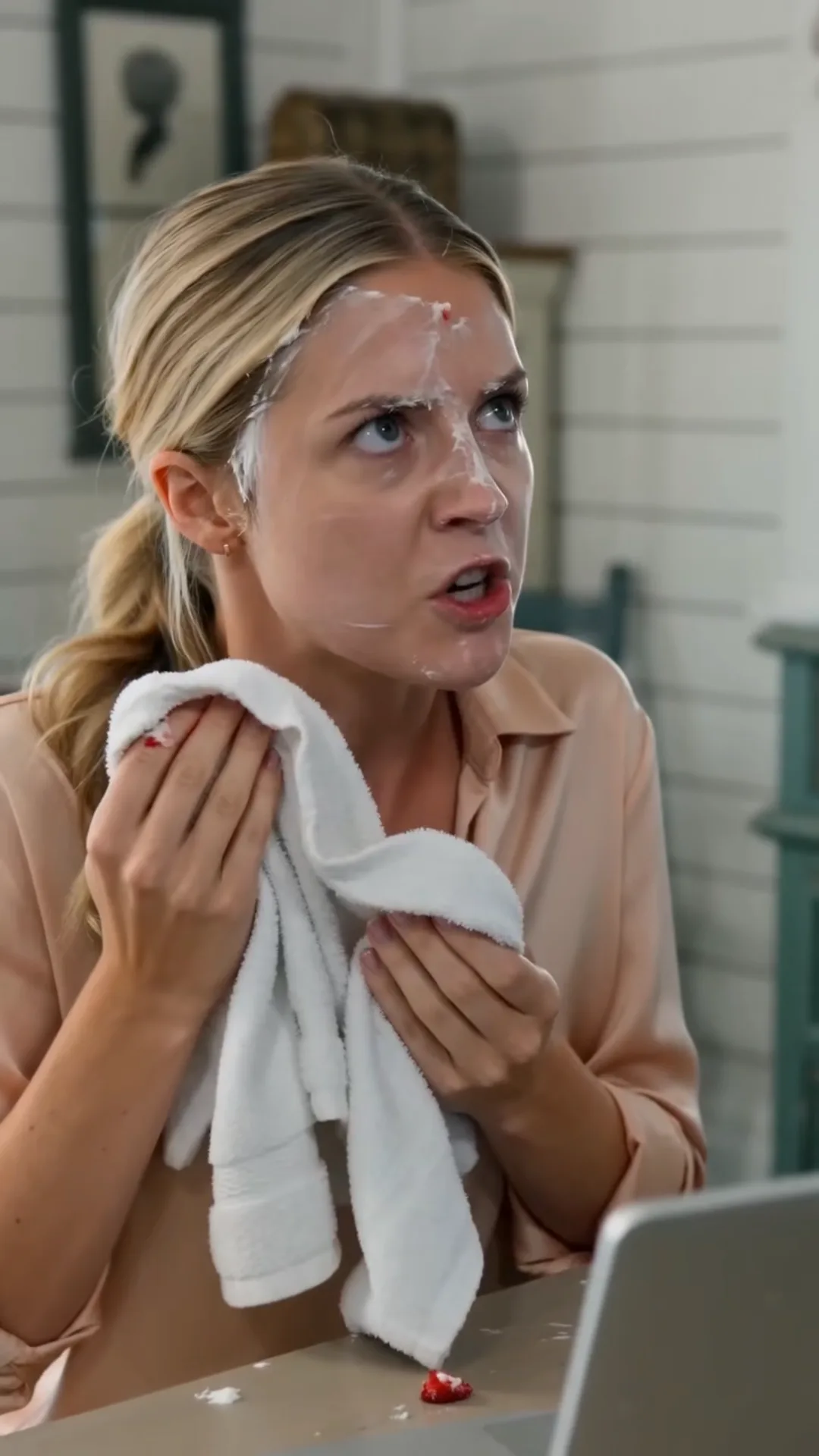
He found out the rest of it in pieces, over the following two days, the way a person finds out they've been standing on thin ice only after hearing it crack beneath a neighbor's weight instead of their own.
He found the folder on Val's laptop, left open by accident on the kitchen table while she showered — labeled, simply, MOM, containing hospital invoices going back eight months, a treatment plan with numbers circled in red, a letter from the landlord with FINAL NOTICE stamped across the top in a red so aggressive it looked almost personal.
He found, folded inside an old cookbook on the shelf, a printed bank statement showing a balance so small it barely covered a week of groceries, let alone anything close to thirty-one thousand dollars.
He sat at the kitchen table with all of it spread in front of him and understood, finally, completely, the shape of the sky Val had been carrying alone for eight months while he complained privately, in his own head, about the indignity of unemployment and hid his own rejection emails like they were the heaviest thing in the room.
They weren't. They had never been close.
That evening, Mia sat on the living room floor with a coloring book, humming something tuneless, apparently unbothered by the tension that had filled the apartment for two days like smoke that wouldn't clear.
"Ethan," she said, not looking up from her page. "Why's Val so sad?"
"Grown-up stuff," Ethan said, the same deflection he always used, except this time it tasted different in his mouth, false in a way it had never felt before.
"You always say that." Mia colored carefully inside the lines of a cartoon sun. "Grown-up stuff, grown-up stuff. But it's not that complicated. You broke something. You should fix it."
"It's not that simple, kiddo."
"Why not?" She looked up at him now, crayon still in hand, eight years old and entirely unimpressed by the excuse. "When I broke Sofia's doll I said sorry and I gave her my allowance for three weeks until it was fixed. You have a job. You have money. Why can't you just fix it?"
"I don't have a job right now, actually," Ethan said, before he could stop himself, the confession slipping out sideways, aimed at an eight-year-old because somehow that felt safer than aiming it at Val.
Mia considered this with the grave seriousness only children bring to information they don't yet understand the full weight of.
"Then get one," she said, as if it were that easy, as if the world worked the way an eight-year-old's logic insisted it should — broken thing, honest apology, fair repayment, resolution. "Or sell something. You have a lot of tools in the closet you never use anymore."
Ethan's throat tightened.
His father's old tools. The last thing he had left of a man who had never once, in his entire drunken, absent life, tried to fix anything he'd broken.
"That's not exactly—"
"You always say things aren't simple," Mia said, going back to her coloring, entirely unaware of the small earthquake she'd just caused in the middle of the living room. "But I think grown-ups just like saying that so they don't have to actually do the hard thing."
Ethan sat very still.
He thought about his father, who had spent a whole childhood saying it's complicated while never once doing the hard thing.
He thought about Val, twenty-eight years old, carrying a dying mother and a drowning bakery and a child who wasn't even biologically hers, alone, silently, for eight months, because some part of her hadn't trusted him with the weight of it.
He thought, for the first time really thought, about the specific arithmetic of what he'd broken — not just an interview, not just a call, but a fragile, singular chance built on a dead woman's diner and a stranger's grief and twenty years of gold letters on green, and how a plate of cake, thrown in three careless seconds, had put all of it at risk.
He got up from the table.
He went to the hallway closet and pulled out the toolbox that had belonged to his father, the good drill, the level, the set of chisels with worn wooden handles that a man who couldn't hold together his own family had somehow kept in perfect condition for twenty years.
He didn't know yet what he was going to do with them.
He only knew, with a certainty that felt entirely new, that Mia was right, and that grown-ups did, in fact, say it's complicated far too often, when the truth was usually much simpler and much harder at the same time:
May you like



You break something. You find a way to fix it. Or you spend the rest of your life being the person who didn't try.
---







