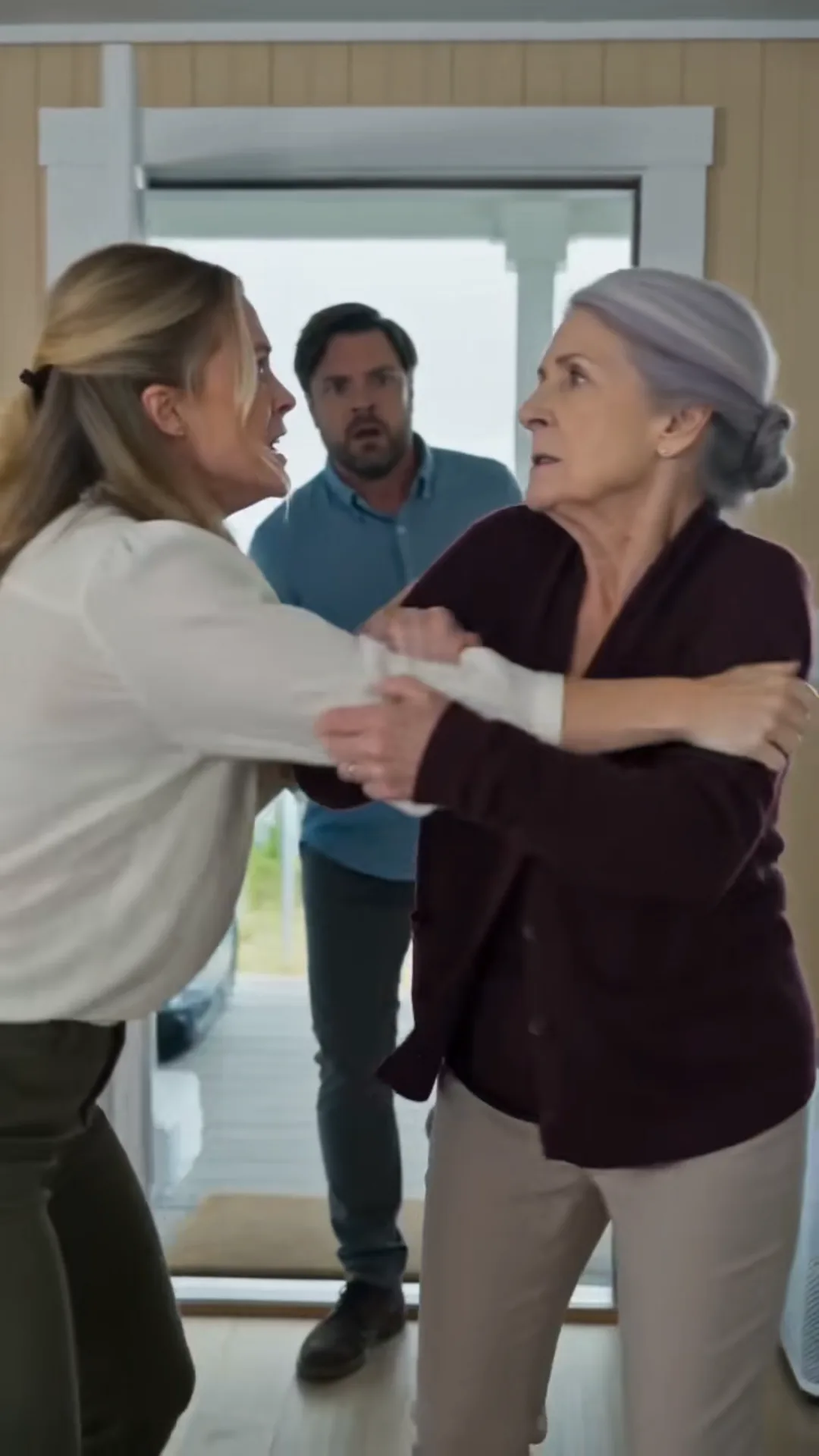
Chapter 2 - The Woman Who Built the Silence

To understand a slap, you have to understand the fifty years before it.
Bà Hòa — though no one had called her that in a long time, everyone said "Grandma" now, or "Mother," or, in the case of her son, mostly nothing at all — had grown up in a house with a dirt floor and a father who did not believe in second warnings.
She had never told anyone this. Not her son. Not her daughter-in-law. Certainly not the boy.
There was a particular kind of woman shaped by a particular kind of childhood — the kind who mistakes silence for strength, and control for love, because those were the only two currencies ever spent on her.
She loved her grandson. This was true, and it was also useless, because the love had been folded so many times into fear and correction and this is for your own good that by the time it reached the boy, it no longer looked like love. It looked like a shoe.
She had moved in with her son and his American-raised wife eighteen months ago, after her husband died and the apartment above the noodle shop grew too quiet to bear.
She had expected gratitude.
She had expected, at minimum, deference.
What she got instead was a daughter-in-law who did not lower her eyes. Who spoke back — softly, but back. Who let the boy leave his shoes by the door instead of lined against the wall. Who let him cry when he fell instead of telling him to get up and be a man about it.
Bà Hòa watched all of this the way you watch water eating away at a foundation.
Slowly. Then all at once.
That morning, the boy had broken something. A small porcelain bird, the last thing that had belonged to her mother, sitting on the shelf where it had sat for forty years across three different homes and two different countries.
He had been playing. He hadn't meant to.
He never means to. That's what they always say.
She had looked at the pieces on the floor — white shards, a broken beak, a wing snapped clean at the joint — and something old and hard had risen up in her chest like a tide she recognized but had forgotten the name of.
She had felt, for one full second, five years old again, standing over a different broken thing, waiting for a hand to come down.
And instead of remembering how much that had hurt, she had reached for the only tool she had ever been given to manage that feeling.
She had reached for the same hand.
---
Daniel — her son, the boy's father — did not know about the bird yet. Did not know about any of it, standing as he was three floors below in the underground parking garage, keys in one hand, phone in the other, listening to a voicemail from a client that had nothing to do with any of this.
He would be upstairs in eleven minutes.
He did not know that his mother had spent the morning circling the apartment like a held breath. That she had said very little at lunch, had washed the same three dishes twice, had stood at the window for eleven minutes at ten a.m. staring at nothing.
He did not know that Mai had noticed all of this too, and had spent the day flinching at doors.
Families rarely see the storm build. They only see the lightning.
---
In her room, Bà Hòa sat on the edge of her bed after it was over. Her hands were folded in her lap, still.
On the nightstand sat a photograph — herself at nineteen, unsmiling, standing beside a man twice her age who had chosen her the way you choose furniture.
She looked at the boy's cry, still audible faintly down the hall, the way you look at weather you didn't order but can't undo.
She told herself, the way she had told herself every day for fifty years:
He needs this. The world will not be gentle with him. Better my hand than the world's.
She almost believed it.
May you like



She had almost believed it for fifty years.
---