Chapter 6 - What the Kitchen Kept
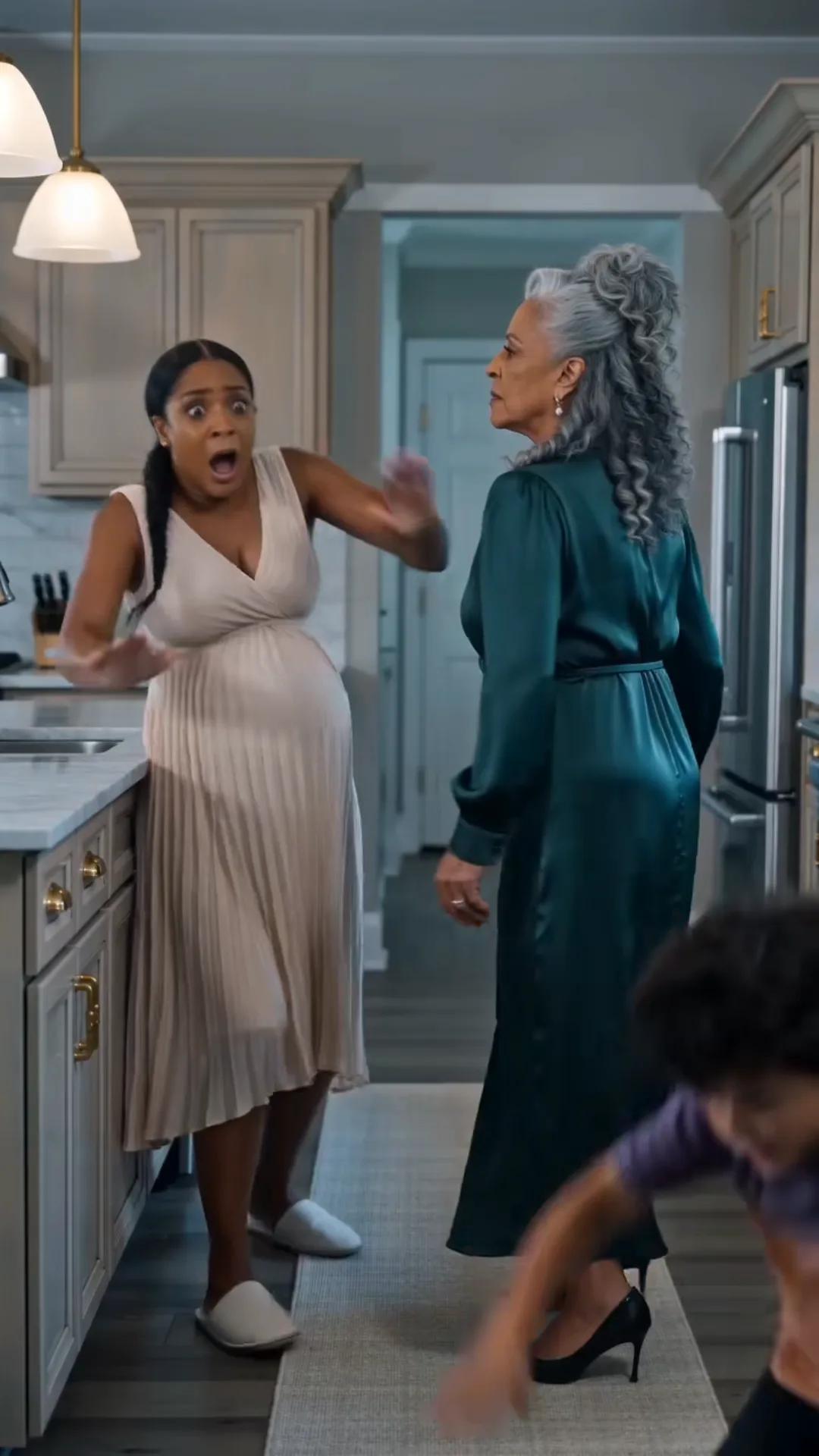
Margaret stood alone in the kitchen for a long time after the front door closed.
The sound of it — not slammed, Michael had actually pulled it shut with a strange, deliberate softness that had somehow felt worse than slamming would have — settled into the house and stayed there, the particular silence of a home that has just watched three of its five occupants leave and doesn't yet know if they're coming back.
She looked at her hand.
The one that had done it.
It looked exactly the same as it had that morning — the same rings, the same manicure she'd had touched up two days ago, the same age spots she'd been meaning to have looked at. It didn't look like a hand capable of what it had just done, and that mismatch between appearance and action sat in her chest like a stone she couldn't quite locate the shape of.
---
She thought about the letter still sitting on the counter.
Custody language. Financial boundaries. A request — reasonable, she could admit now, in the ringing quiet of an empty kitchen, entirely reasonable — that she stop showing up unannounced, stop overriding Claire's decisions about the baby's nursery, stop treating her son's marriage like a company she still had controlling shares in.
She had read it that morning and felt something she hadn't had a name for at the time.
She had a name for it now, standing alone in a kitchen gone silent.
Fear.
Not of Claire. Not really. Fear of what the letter actually represented — the slow, terrifying realization that she was, for the first time in decades, not going to be the one deciding how this family's story went.
---
She sat down on one of the kitchen stools, the burgundy dress suddenly feeling like a costume for a role she no longer recognized herself playing.
Her phone was on the counter, three feet away.
She could call Michael. Try to explain. Try to find some sequence of words that made this morning smaller than it actually was.
She didn't reach for it.
Some part of her — the honest part, the part that had gone very quiet over the years under the weight of always needing to be right, always needing to be the one holding the room together — understood that no sequence of words was going to make this smaller.
It was exactly as big as it looked.
A grandmother had struck a pregnant woman across the face, in daylight, in front of a child, and then knocked that same child to the floor when he tried to stop her.
There wasn't a version of that sentence that came out smaller no matter how you rearranged the words.
---
She thought about her own mother, briefly, unbidden — a woman with a temper Margaret had spent her whole childhood learning to predict and route around, a woman who had never once, as far as Margaret could remember, apologized for anything, who had treated apology itself as a kind of weakness beneath her.
Margaret had sworn, at nineteen, packing a single suitcase to leave that house for good, that she would never become that.
She had built an entire life in direct opposition to that woman — the company, the independence, the fierce insistence on never needing anyone's permission for anything.
And somewhere in all that building, in all that fierce independence, something of her mother had gotten in anyway, quietly, the way mold gets into walls you thought were sealed — you don't see it until the day it shows itself all at once, and by then it's already been there for years.
---
The doorbell rang an hour later.
Not Michael, not Claire — a woman from the county, calm-voiced, professional, holding a clipboard and a badge, explaining in the specific gentle-but-unmovable tone of someone who has done this exact conversation hundreds of times before, that a report had been made, that she needed to ask Margaret some questions, that this was a standard part of the process and nothing to be alarmed about, even though everything about it was, in fact, deeply alarming.
Margaret answered the questions.
All of them. Honestly. She didn't try to minimize, didn't reach for the softer language she might have used an hour earlier when explaining this to herself.
Yes, she had slapped her daughter-in-law.
Yes, she had pushed her grandson, hard enough that he'd fallen.
No, she did not have an excuse that made either of those things smaller than they were.
---
Something about saying it all out loud, to a stranger with a clipboard, in the same bright kitchen where it had happened just an hour before, cracked something open in Margaret that the silence alone hadn't managed to.
Not forgiveness. Nothing close to that yet.
Just the first small admission of a much longer sentence she would spend the coming months learning to say in full: I did this. Nobody else did this. Not the letter, not the lawyer, not thirty years of feeling unseen. I did this, with my own hand, to people I claim to love, and now I have to live with having done it.
It wasn't relief, saying that.
May you like



It was just the truth, finally standing in the room without a costume on, and Margaret, for the first time in longer than she could remember, let it stand there without immediately trying to dress it in something more flattering.
---







