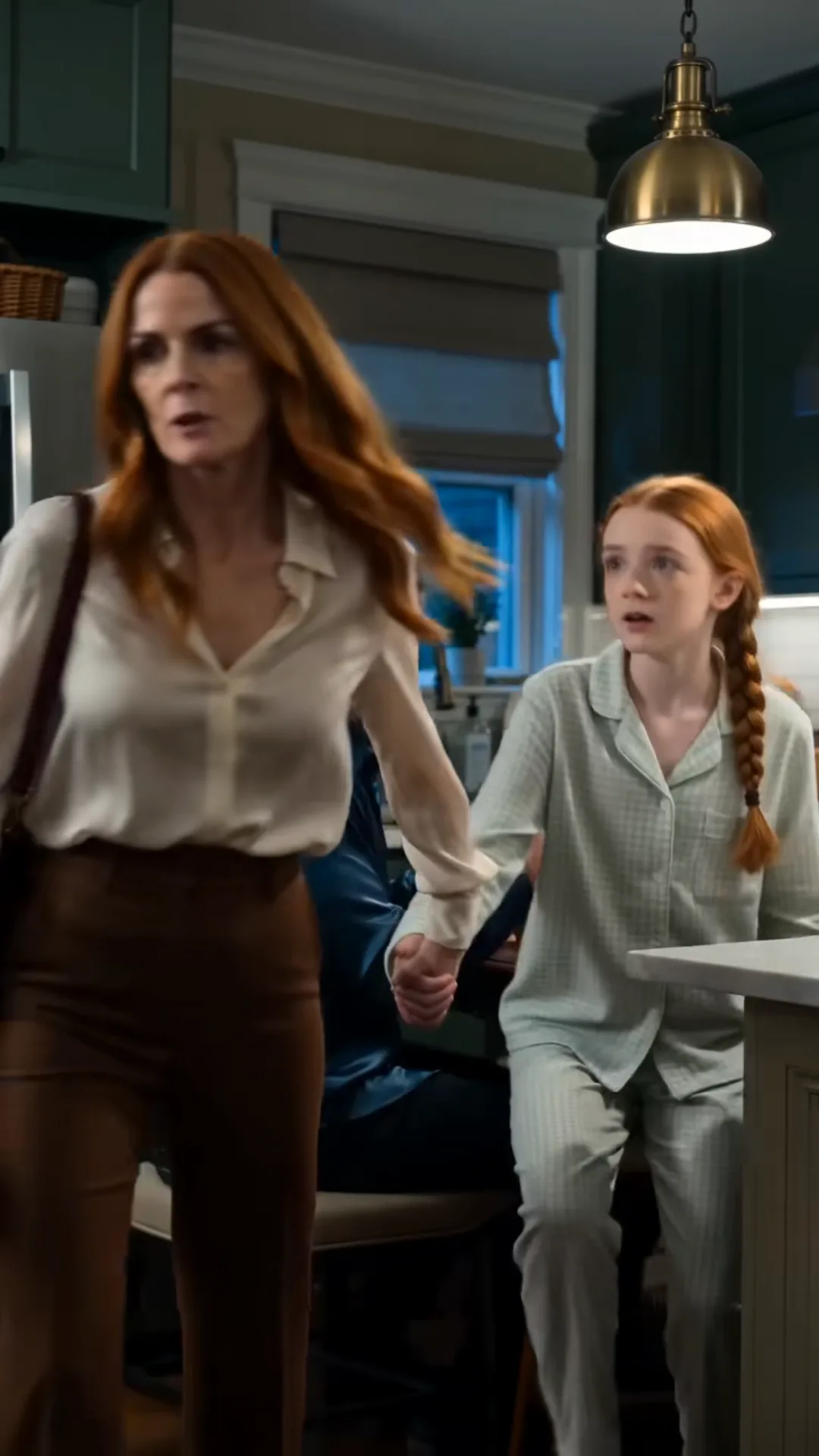
Chapter 2 - The Ledger of Kindness
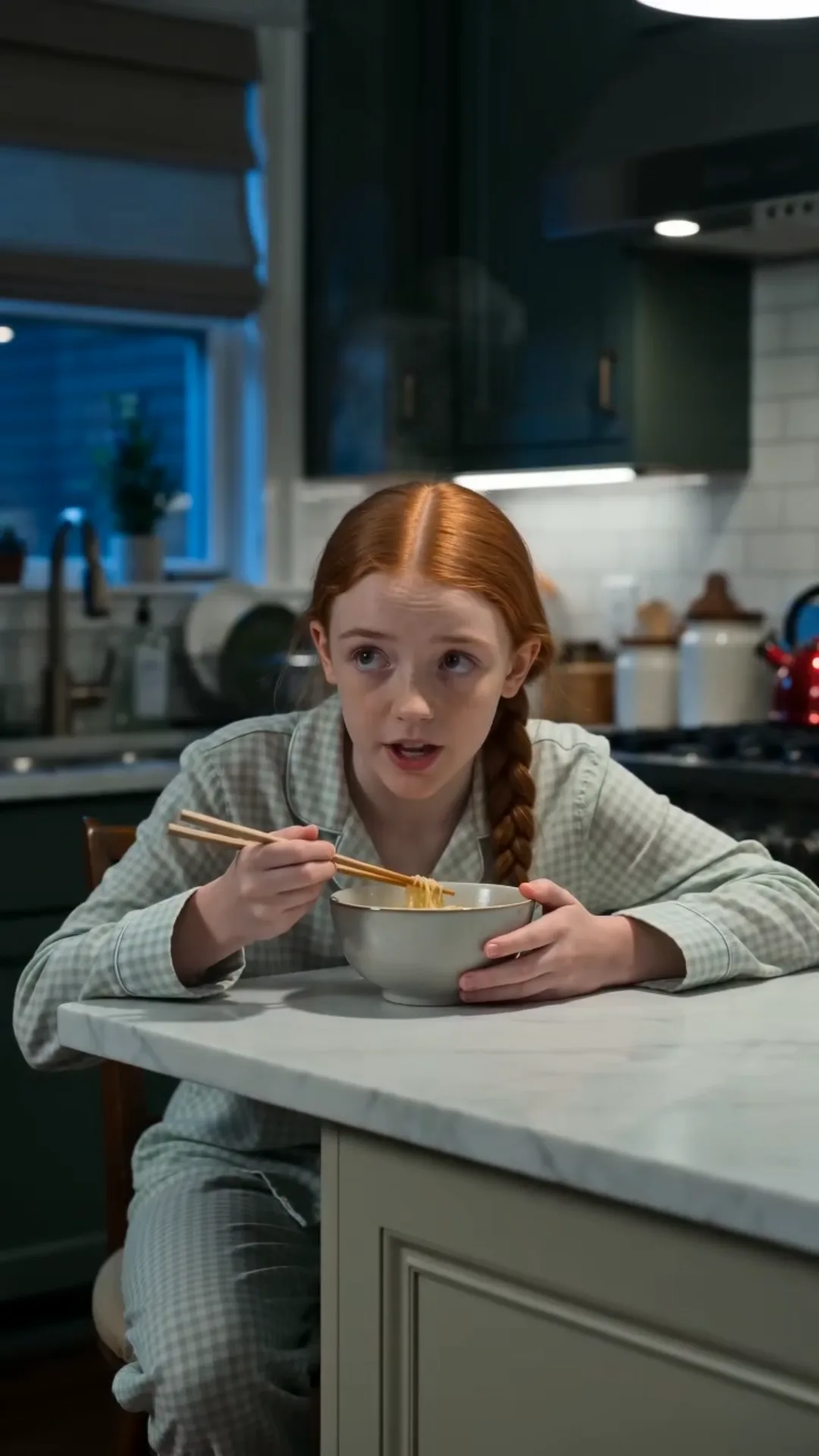
To understand the door, you have to understand the four years before it.
Mai had married Đức in a garden full of white orchids that his mother had personally selected, because — as Madam Ngọc had said at the time, smiling, holding Mai's hands in both of hers — "A wedding is the first gift a mother-in-law gives. Everything after that, you'll earn."
Mai had thought it was a joke.
It was not a joke.
It was a mission statement.
---
In the beginning, things were soft. Small kindnesses, offered like coins pressed into a child's palm.
Madam Ngọc taught Mai how to fold napkins into little swans for guests. She taught her which fish sauce brand was acceptable and which one "guests would notice." She taught her, without ever quite saying it, that love in this house was not given — it was audited.
There was a ledger. Not a real one, not on paper. But Mai learned to feel its presence the way you feel a draft in an old house — always somewhere, always cold, never quite locatable.
You didn't call to check on me when I had my knee surgery.
You let Kem wear that ugly sweater to the family photo.
You spent too much on your own hair and not enough on the household.
Every entry in that ledger was written in a currency Mai could never quite earn enough of, because the rate kept changing.
---
Đức, for his part, was not cruel.
That was the strange, slow-burning tragedy of it. He was not cruel. He was absent in the specific way some men are absent even while sitting at the same table — present in body, allergic to conflict, always finding somewhere else to look when his mother's voice sharpened.
"She's old-fashioned," he'd say, in bed, in the dark, after Mai had spent an evening swallowing something bitter. "She doesn't mean it like that."
"She means exactly what she says," Mai would answer.
"You're too sensitive."
That sentence, more than any single cruelty from Madam Ngọc, was the one that eventually hollowed something out in Mai. Too sensitive. As if the problem was the thermometer and not the fire.
---
Kem arrived two years into the marriage — a small, loud miracle with her father's stubborn chin and, Mai liked to think, her own eyes. For a while, the baby softened everyone. Even Madam Ngọc, cradling her first grandchild, seemed to remember she had a heart somewhere underneath the ledger.
It didn't last.
By the time Kem was old enough to hold her own chopsticks, the household had reorganized itself into something with clearer edges. Money, in that house, flowed through Madam Ngọc's hands like a river through a dam she alone controlled. Mai's salary — a good one, a real one, earned through eleven years of climbing a difficult industry — went, each month, into a joint account that Madam Ngọc had "helped set up for convenience."
"It's simpler this way," Madam Ngọc had said, the day she'd walked Mai to the bank branch, smiling the whole time. "One person manages the household. Otherwise everything becomes confusing — who paid for what, who owes who."
Mai, twenty-eight and still hopeful, had signed the forms.
She would spend the next several years learning exactly how unsimple that arrangement actually was.
---
The rules came slowly, the way water rises. Not a flood. A tide.
Certain groceries were "for guests only." Certain rooms were "for the family," a phrase that, Mai eventually understood, did not include her by default — it included her by permission, renewed nightly, revocable at will.
And then there was food.
Madam Ngọc had strong opinions about food. About who deserved what, and when, and why. She had a habit of describing extravagant dinners as necessary for the family's reputation while describing anything Mai or Kem needed as extra, unnecessary, spoiling the child.
"Children who eat too well become soft," she said once, watching Kem eye a plate of grilled prawns that were, apparently, "for the guests."
Mai had wanted to say: she is seven. She is not being trained for battle. She just wants a prawn.
She hadn't said it.
She had learned, by then, the cost of saying things.
---
The cost was subtle. It was never a slammed door or a raised hand. It was smaller and colder than that — a night where Kem's school fees were suddenly "delayed" for administrative reasons that never quite got explained. A week where the joint account had "unexpected shortfalls" right after Mai had asked, gently, if she and Kem could join the family for a nicer dinner sometime, instead of eating separately in the kitchen.
The message underneath all of it was never spoken aloud. It didn't need to be.
You are tolerated. You are not entitled.
Your daughter is loved, in the way you keep a nice vase — as long as it stays in its place.
Mai absorbed all of it the way certain fabrics absorb water — quietly, from the inside, until one day the whole thing is heavier than it looks and nobody can tell just from looking at the surface.
---
There had been one specific afternoon, eight months before the rainy night at the front door, that Mai still thought about more than she wanted to.
She had come home early — a rare thing — to find Kem sitting alone on the kitchen floor, crying into her own knees, a school art project crumpled beside her. A diorama, cardboard and cotton-ball clouds, something about "My Family," that Madam Ngọc had apparently deemed "a mess" and thrown half-finished into the recycling.
"She said it was ugly," Kem had whispered, snot and tears mixing, refusing to look up. "She said real families don't need paper ones."
Mai had knelt on that kitchen floor for a long time, holding her daughter, saying nothing, because there was nothing she trusted herself to say without it coming out as something sharper than she wanted her daughter to hear.
That night, after Kem was asleep, Mai had opened her laptop and, for the first time, quietly started keeping her own private folder.
Screenshots. Bank statements downloaded and never mentioned. Emails saved to a drive that no one else in the house knew existed.
She told herself it was nothing. Just paperwork. Just a woman who liked things organized.
She did not yet understand that she was building, slowly, one boring PDF at a time, the exact tool she would eventually need to walk out of that glass door with her daughter's hand in hers.
---
By the time we return to the evening in question — the rain, the ATM receipt folded twice in her coat pocket, the laughing shapes behind fogged glass — Mai Anh had already spent four years learning the architecture of that house's cruelty from the inside.
She knew exactly which floorboards creaked.
She knew exactly which smiles were real and which were performance for guests.
And somewhere in the last several months, without quite naming it to herself, she had begun quietly gathering the materials for a door she hadn't yet admitted she planned to walk through.
May you like



That night, she just didn't know yet that tonight was the night the door would finally open the other way.
---