Chapter 5 - What the Braid Meant
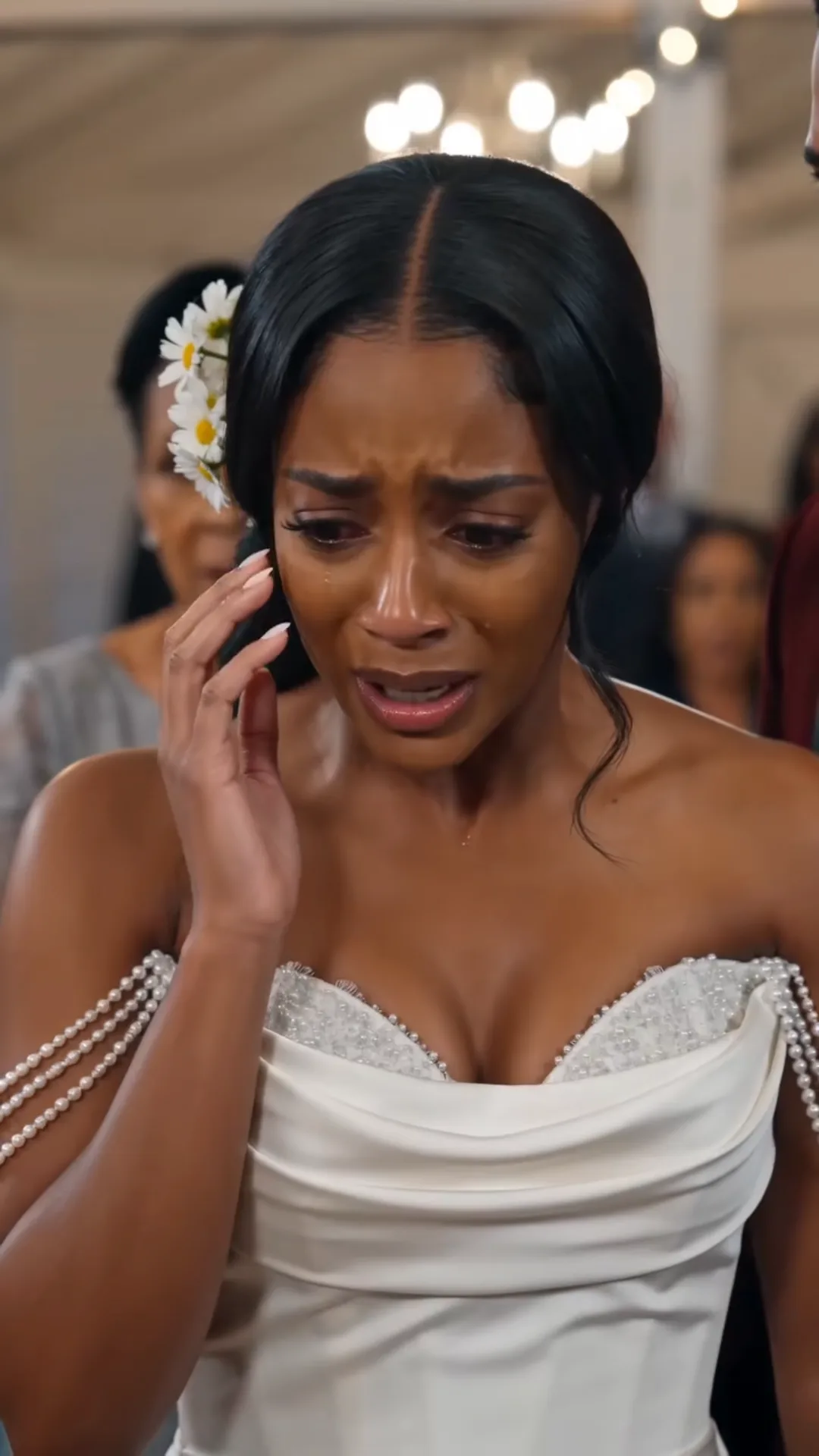
To understand why the room went so silent, so fast, you would have needed to know what that braid actually meant — and almost no one in that room did, except Claire, and Daniel, and, in her own twisted way, Margaret.
Ruth had taught Claire to braid on the porch of a lake house that didn't exist anymore, sold off after Ruth's death to pay for the funeral no one had budgeted for.
"A braid holds," Ruth used to say, working the strands with fingers gone soft and papery with age. "That's what it's for. Not to look pretty. To hold something together that wants to come apart."
Claire, eleven years old, hadn't understood.
She understood now, standing on a dance floor with her hair cut to her shoulders, exactly what came apart when the holding stopped.
---
The braid had been at her grandmother's funeral, plaited the morning of, three strands trembling under Claire's own unpracticed seventeen-year-old hands because Ruth wasn't there anymore to do it for her.
It had been at her college graduation, her father crying harder than she expected, the tassel catching briefly in the plait as she hugged him.
It had been at her first gallery show, nerves turned into something manageable by the familiar weight of it against her back.
Every important day of Claire's adult life had this one small, unbroken thread running through it: three strands, over, under, over, her grandmother's hands living on in her own.
Margaret hadn't destroyed a hairstyle.
She had severed a rope Claire had been using, without fully realizing it, to hold herself to everyone she'd loved and lost.
---
Daniel knew some of this — the funeral, the graduation — but not all of it, not the deep architecture of what the braid actually meant, because Claire had never fully explained it. Some things you don't explain. You just assume the people who love you will eventually understand by watching.
He was understanding now, watching his bride stand frozen on a dance floor, hand rising and falling against her own neck, eyes glassy with a grief that had nothing to do with vanity and everything to do with continuity, with inheritance, with the particular horror of losing access to a ritual that connected you to someone already gone.
Something in Daniel's chest, watching that, went from hot to something colder and far more dangerous.
Not rage exactly.
Clarity.
---
Margaret, for her part, had constructed an entirely different meaning for the braid — one built not from Claire's history but from her own insecurities, stacked over decades like sediment.
To Margaret, the braid represented everything she feared about Claire: a woman with her own traditions, her own lineage, her own unbroken thread of women who loved her — a thread that did not, could not, include Margaret, no matter how many Sunday dinners or fittings or toasts she orchestrated.
She had told herself, in the weeks leading up to the wedding, that cutting the braid was about tradition, about establishing the Bennett family's primacy over whatever Claire brought into the marriage.
But underneath that story, in a place Margaret rarely visited even in her own head, the truth was smaller and uglier: she was jealous of a dead woman she'd never met, jealous of the easy, uncomplicated love in three simple strands of hair, because Margaret herself had never managed to braid anything with anyone without it eventually fraying.
---
"It's a Bennett family tradition," Margaret said again, into the silence, as if repetition might will the lie into truth.
She reached for Daniel's arm, the gesture of a mother seeking an ally, a witness, a co-conspirator in the fiction she'd built.
"Your grandmother did it to me," she continued, improvising now, each word slightly less steady than the last. "On my own wedding day. It symbolizes — it symbolizes leaving behind the girl you were and becoming the woman the family needs."
It was, Claire would learn later, not a single word of it true.
Margaret's own mother-in-law had done something cruel to her — the ruined seating chart, the humiliating garter — but never this. Never scissors. Never a blade taken to hair that belonged, wholly and completely, to someone else's grief.
Margaret had built her lie out of the wound she'd received, twisting it into a weapon instead of learning from it.
---
Claire, hair ragged at her shoulders, daisies scattered at her feet, finally found her voice again — not loud, not hysterical, but low and absolutely certain.
"No," she said. "It isn't. I've met your family. I've been to four family dinners a year for two years. Nobody has ever once mentioned this 'tradition' to me. Not your sister. Not your cousins. Not you, until thirty seconds ago, holding scissors."
Margaret's mouth opened, then closed.
For the first time since the scissors had snipped, something like real fear crossed her face — not fear of what she'd done to Claire, but fear of the room, of the phones half-raised, of eighty witnesses who were beginning, one by one, to understand that they had just watched something far worse than an eccentric family custom.
"Claire, darling, you're overwrought—"
"Don't," Claire said. "Don't call me darling. Not after this."
---
Daniel stepped between them then, not violently, but with a finality that made both women stop.
He looked at his mother for a long moment — long enough that Margaret's practiced composure began, visibly, to crack at the edges.
"Twenty-nine years," he said, quietly. "Twenty-nine years I have watched you do small versions of this. The photos. Priya. The seating charts. The 'gifts' in the wrong size. I told myself every time that I was imagining it. That you loved me too much to actually mean any of it."
"Daniel—"
"I'm not finished."
The room, already silent, seemed to hold its breath even harder.
May you like



Daniel reached down, slowly, and picked up the severed braid from the floor — two feet of hair and daisies, still faintly warm from having been part of a living person seconds ago — and held it up, not as a prop, not for drama, but because he needed, physically, to hold what his mother had done in his own two hands before he could say what came next.
---







