Chapter 9 - What Eli Understood
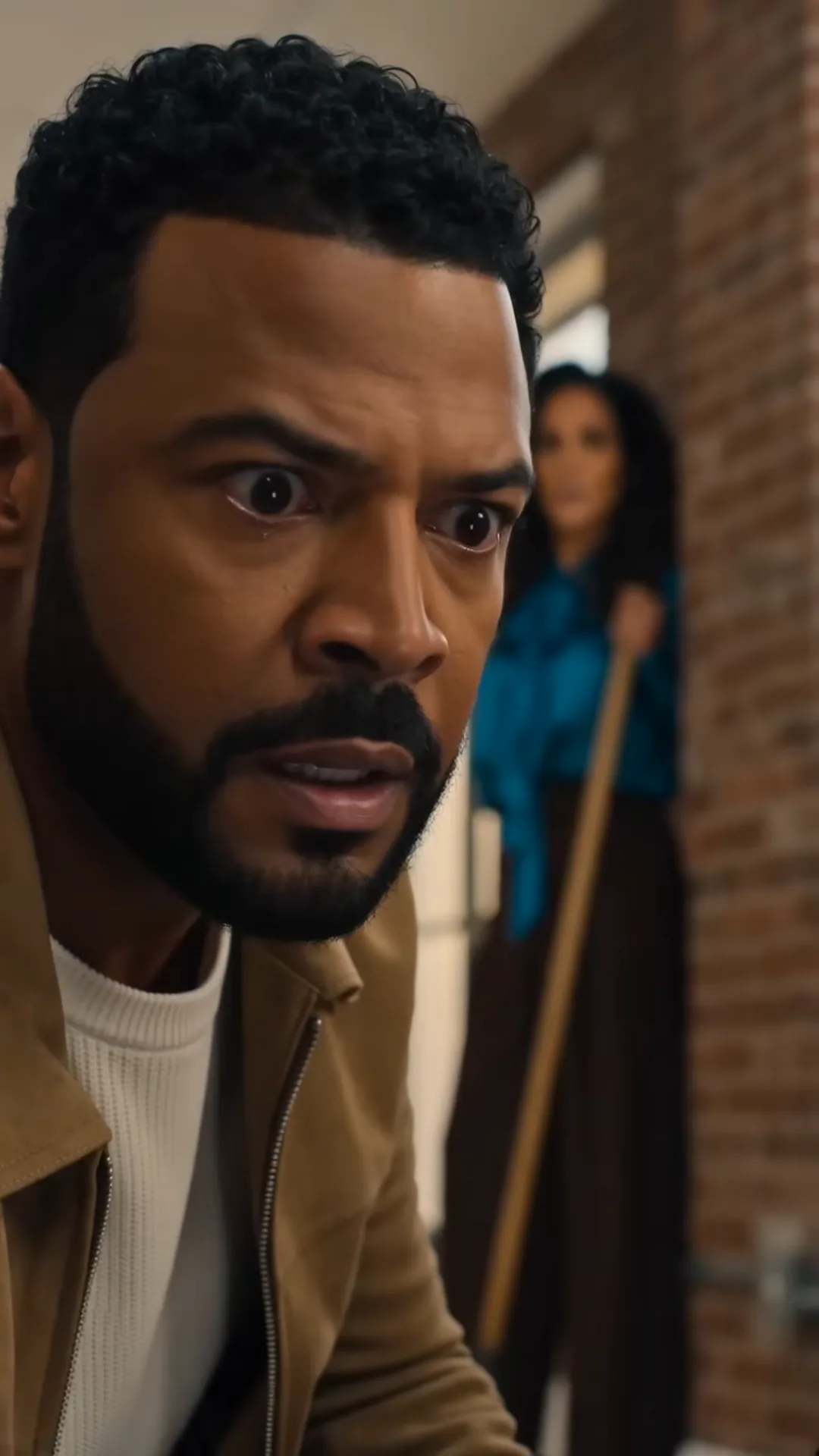
Eli was still standing in the garage doorway when his father finally emerged, carrying — impossibly, unbelievably — a woman Eli recognized in his bones before his mind had fully caught up.
He didn't run at first.
Six-year-olds process miracles slowly, the way they process everything slowly, giving each piece of new information the careful, deliberate attention it deserves before allowing themselves to believe it.
Then his legs simply moved on their own, faster than thought, faster than breath, and he collided with his mother's thin frame the way a wave collides with a shore that has been waiting, patient and eroding, for a very long time.
"You knocked," he said into her shoulder, his voice muffled and thick. "I heard you knock."
"I heard you every single day," Sarah said, her arms wrapping around him with a strength that seemed to come from somewhere beyond her body's obvious exhaustion. "Every single day, baby. I knew it was you. I knew your knock."
Eli pulled back, his small face serious in the way only a child's face can be serious — utterly without irony, utterly without the self-consciousness that makes adult sincerity so much harder to trust.
"I put a note down," he said. "Did you read it?"
"I couldn't see it," Sarah admitted, smiling through tears that hadn't stopped since the hatch opened. "But I kept it. I have it right now, actually — I kept everything you sent me."
She reached into the pocket of clothes that hung loose on a frame that had lost too much weight, and pulled out, impossibly preserved, a small folded scrap of paper gone soft with handling, the backward-tilting letters barely legible: R U OK.
Eli stared at it.
Something in his chest — something that had been holding itself carefully together for weeks, months maybe, some private architecture of hope he'd built entirely alone because no adult in the house had given him a single reason to trust that hope was reasonable — finally, quietly, let go.
He cried the way children cry when the crying is not about fear anymore, but about relief, which somehow feels almost exactly the same on the outside despite being an entirely different thing on the inside.
Behind them, at the edge of the garage, Vivian stood in the doorway, watching, her face a landscape of things she had clearly never intended to feel — not for Sarah, whom she had trapped and half-tended and never fully explained, and not for Daniel, whom she had genuinely, if fraudulently, come to love, and not even, really, for herself, standing now at the exact center of a collapse four months in the making.
Police arrived within the hour.
Vivian did not run.
She sat on the porch steps of a house she had never actually owned, in a life she had built on top of someone else's unfinished nightmare, and she answered every question with the flat, exhausted honesty of a person who has run out of the specific kind of energy required to keep lying.
She had found the hatch. She had found Sarah, already trapped by someone else — a detail investigators would spend months untangling, a thread leading backward through the house's ownership history to a name none of them expected and all of them would eventually have to reckon with. She had made a choice, in that first terrified week, to say nothing, to keep the secret, to slowly, carefully insert herself into the life above the hatch rather than report what she'd found beneath it.
May you like



Whether that choice made her a monster or simply a coward who became one by omission was a question the courts, and not this story, would eventually have to answer.
---







