Chapter 2 - Before the White Dress
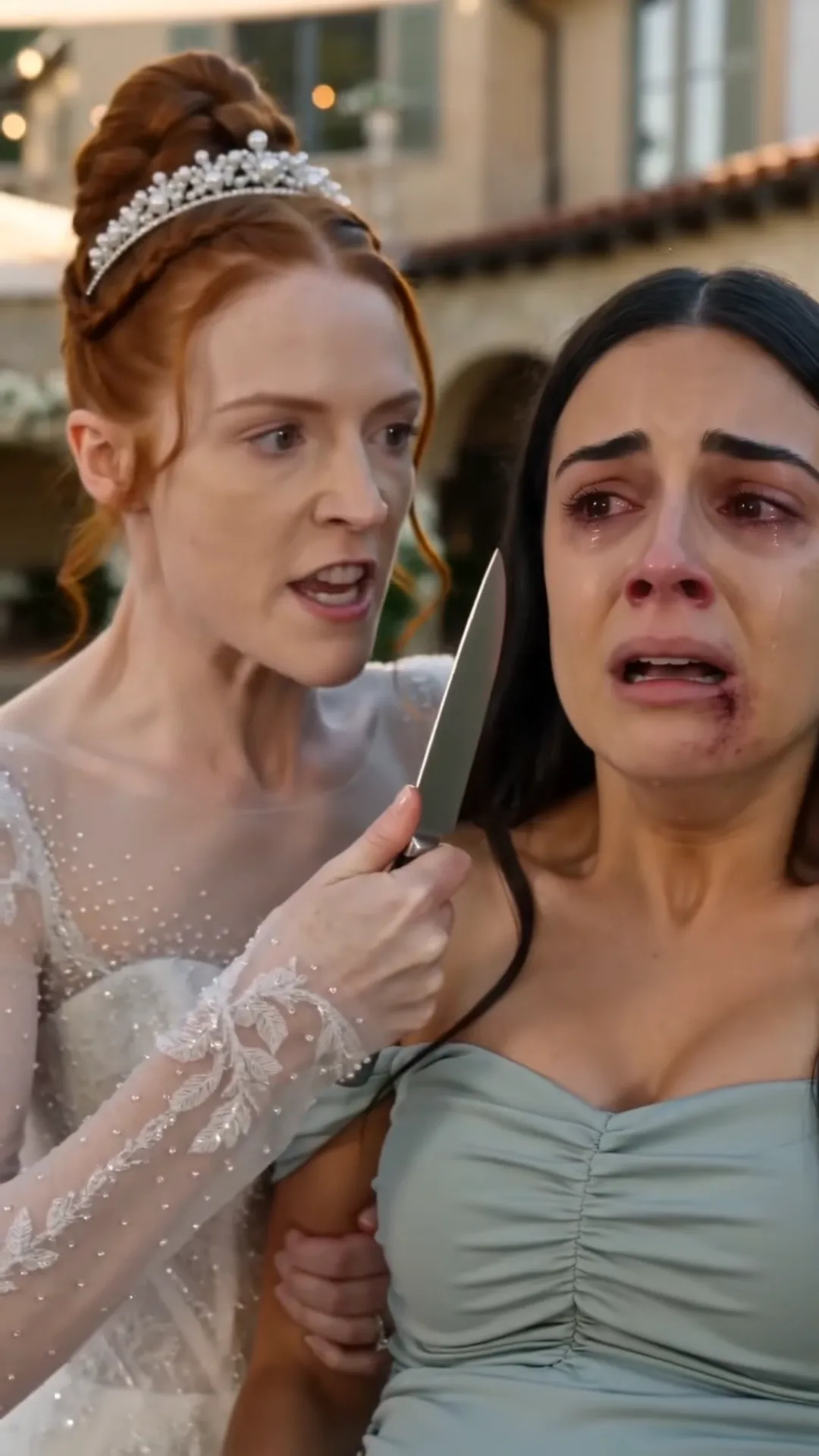
Five years earlier, there was no red carpet. Only a hospital corridor, gray-green under fluorescent light.
Julian sat in a plastic chair outside a room that smelled like antiseptic and old flowers.
His mother was dying inside it.
Wren sat next to him. Not his fiancée then. Not anything with a name yet. Just the girl from the flower shop two streets over, who had started bringing lilies to his mother's room every Tuesday because Eleanor Hale had once told her, offhand, that lilies reminded her of her own wedding.
"She's asking for you," a nurse said.
Julian didn't move.
His hands were shaking too hard to trust his legs.
Wren took one of them. Just held it. Didn't say anything wise or comforting, because there was nothing wise or comforting to say.
"I'll be right here," she said instead.
That was the whole sentence. That was enough.
Inside the room, Eleanor Hale was small against the white sheets, smaller than a woman who had once run a company from a boardroom table should ever look.
"Julian." Her voice had gone to paper, but her eyes hadn't. Her eyes were still sharp as the day she'd told the family lawyer to redo an entire contract because one clause smelled wrong.
"I'm here, Mom."
"The girl outside. The one with the lilies."
"Wren."
"Wren." Eleanor tested the name like she was weighing a coin. "She stayed."
"She's been coming every week."
"I know." A pause, a breath that cost her something. "Everyone else came for the company. For what's left of it. She came for the flowers."
Julian didn't answer. There wasn't an answer that wouldn't have made him cry, and he was trying very hard not to.
Eleanor's hand moved, slow, arthritic, toward the small side table.
There was a ring box there. Plain. Unremarkable. The kind you'd miss in a jewelry store window.
"Bring her in," Eleanor said.
"Mom, you don't have to—"
"Bring her in, Julian."
He did.
Wren stood at the foot of the bed, unsure where to put her hands, unsure if she belonged in this room that smelled like dying and lilies both.
Eleanor opened the box herself. Her fingers trembled around the hinge.
Inside was a plain gold band. No diamond. No showpiece. Just a ring with something engraved on the inside, too small to read from across the room.
"This was mine," Eleanor said. "Before it was anyone's mother's ring, or anyone's grandmother's ring. It was just mine. From a man who loved me before he had any money to prove it."
"Mom—"
"I'm not finished." Eleanor's eyes moved to Wren. "You. Come here."
Wren stepped forward. Her hands were still empty. Still unsure.
"Give me your hand."
Wren gave it.
Eleanor slid the ring onto her finger herself, slow, deliberate, the way a person does something they have decided will be their last important act.
"Keep this," Eleanor said. "Not because I know what my son will do. Boys are stupid, and mine is no exception. But because you are the only person who has come to this room for nothing. Do you understand?"
"I don't—" Wren's voice broke. "I don't know what this means."
"It means," Eleanor said, "that whatever happens after I'm gone — whatever this family decides is best, whatever contracts get signed, whatever girl with a bigger dowry gets put in front of my son — you hold onto this. You don't sell it. You don't explain it. You just hold it."
"Why?"
Eleanor's mouth curved, the ghost of a smile.
"Because someday, someone is going to accuse you of stealing something," she said. "And when they do, that ring is going to tell them exactly who you are. Not who they think you are."
Wren didn't understand the words then. Not really. She thought they were the words of a dying woman reaching for meaning, the way people do at the end.
She didn't know they were a prophecy.
Three days later, Eleanor Hale was gone.
Six weeks later, Julian's father sat him down in a study that smelled like cigars and old leather, across from a man named Arthur Whitmore, and a business arrangement was made that had nothing to do with love and everything to do with a company on the edge of bankruptcy.
Arthur Whitmore had a daughter. Ella. Beautiful, sharp, twenty-four years old, and desperately in love with a version of Julian that existed mostly in magazine photographs.
Vivian Whitmore, Ella's mother, made sure the arrangement moved quickly. Debts were quietly paid. Contracts were quietly signed. A wedding date was quietly chosen before Julian had said a single word about wanting one.
Nobody asked Wren anything.
Nobody needed to. She wasn't in any of the photographs. She wasn't in any of the contracts.
She was just the girl who had brought lilies on Tuesdays, and now there were no more Tuesdays to bring them on.
Julian came to find her exactly once, the night before it was made official, before the announcement went out to four hundred people who mattered and zero people who didn't.
He stood in the doorway of the flower shop after closing, hands in his pockets, looking like a man walking to his own execution.
"I don't have a choice," he said.
"Everyone has a choice," Wren said. "You're just choosing the company."
"It's not that simple."
"It never is, for people who get to choose."
He left that night with nothing resolved and everything unsaid.
He didn't know, when he walked out that door, that Wren was already eleven days pregnant.
She didn't know it either. Not yet.
She found out four weeks later, alone, in a bathroom with a plastic stick trembling in her hand, the ring from a dead woman's box still warm on her finger, a wedding invitation for a stranger's ceremony already sitting unopened on her kitchen table.
She never sent it back.
She never told him.
May you like



And five years later, she would take a catering job for a wedding at a mansion she'd never heard of, for a bride she'd never met, because the money was good and her daughter needed shoes, and she would not learn the groom's name until she was already halfway down that red carpet with someone else's hand crushing her wrist.
---