Chapter 10 - What Burns, What Doesn't
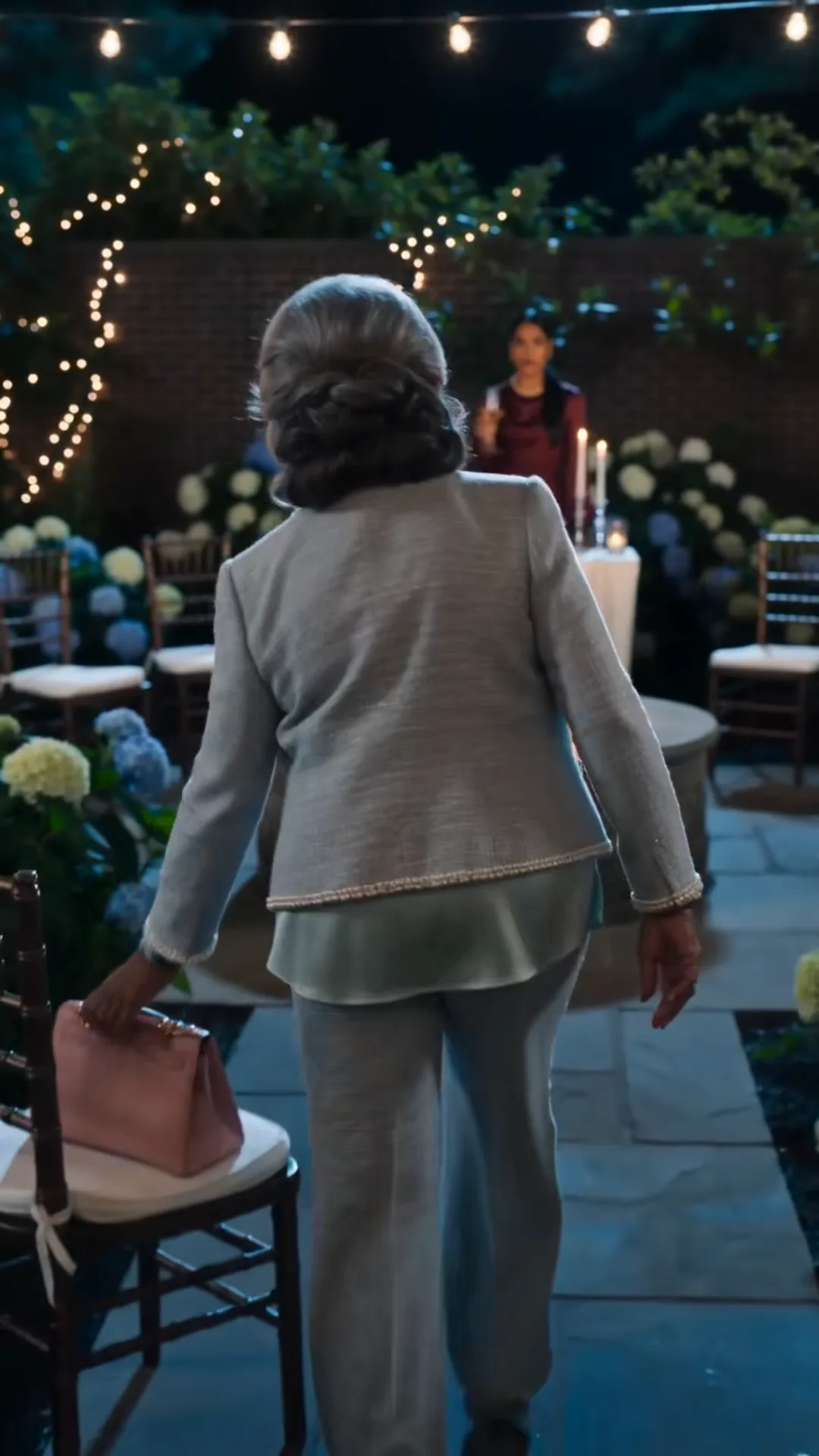
The house was quiet by the time Mia went looking for Eleanor.
Guests gone. Catering staff folding chairs in the dark, murmuring to each other in the particular hush of people who've witnessed a rich family's private theater and know better than to comment on it out loud. Daniel had taken Lily up to bed, finally useful for something, and the garden had gone back to being just a garden — string lights, dark hedges, a fire pit burned down to orange coals and a single black curl of leather no one had bothered to rake out yet.
Mia found Eleanor in the study, standing at the same window she'd stood at that morning, a glass of water untouched on the desk beside her, the folio nowhere in sight.
"You didn't destroy everything," Mia said, from the doorway. "You burned my copy. That's not the same thing."
"No," Eleanor agreed, without turning. "It isn't."
"So what was tonight, exactly? A warning?"
Eleanor was quiet long enough that Mia thought she might not answer at all.
"When my husband was alive," Eleanor said finally, "he used to say I built walls faster than anyone he'd ever met. He meant it as a compliment, in his way. He liked being protected."
"And now?"
"Now I'm seventy years old, and I've built so many walls I can't always remember which ones are keeping people out and which ones are keeping me in." She turned, finally, and in the study's soft lamp light she looked, for the first time since Mia had known her, simply old — not weak, never weak, but tired in a way the garden's firelight hadn't shown. "I saw the drive, Mia. I saw everything you copied. I could have called the police tonight. I could have called my attorney and had you removed from this family by morning."
"Why didn't you?"
"Because you didn't do it for money," Eleanor said. "I checked. Three years of watching you, and you've never once tried to take anything from this family that wasn't already legally yours to ask for. You copied those documents because you were afraid, and being afraid made you dangerous, and dangerous people in my experience are either destroyed or understood. I've spent seventy years choosing destroyed. Tonight I found I didn't have the appetite for it."
Mia stood very still, turning that over, waiting for the trap she was sure had to be hidden somewhere inside it.
"What do you want from me," she said finally.
"The truth," Eleanor said. "One sentence. No performance, no toast, no cake to knock over as a stand-in for the thing you're actually angry about. Do you love my son, or do you love what he can give you?"
Mia thought about the borrowed coat, four years ago, the first time she'd walked through this door. About the dress she hadn't chosen for her own wedding. About every dinner where she'd been assessed instead of welcomed, every threshold she'd learned to count silently before crossing.
She thought about Daniel, standing in the garden with his bucket of melted ice, asking what do you want me to do a full three years too late to matter as much as it should have.
"I loved him before any of this existed," Mia said. "I don't know anymore what I feel about the rest of it. I think that's the honest answer, and I think you'd know if I lied."
Something in Eleanor's face eased, very slightly — not warmth, exactly, but the absence of its opposite, which after four years felt almost the same thing.
"That," Eleanor said, "is the first true sentence you've said to me since you walked into this house."
"Are we done, then?"
"No," Eleanor said. "We're finally starting. Sit down, Mia. It's time we talked about that trust without a cake or a fire pit between us."
Mia crossed the study and sat, for the first time in four years, in the chair across from Eleanor's desk without being summoned there like a defendant.
Outside, in the dark garden, the last coals in the fire pit finally went cold, the small black curl of leather that had once been a pink handbag settling quietly into ash indistinguishable from the wood around it — the flash drive inside it long since melted past any hope of recovery, along with three years of a stranger's careful surveillance, and a settlement offer with a cruel handwritten note, and whatever version of Mia Eleanor had spent that long constructing in secret.
What didn't burn, it turned out, was harder to destroy than paper.
Two women who had spent four years performing for each other — one performing gratitude she didn't feel, the other performing indifference she couldn't quite sustain — sat across a desk in a quiet study at midnight, and for the first time, neither of them reached for a script.
May you like



Upstairs, Lily slept with her sparkler still unlit on the nightstand, saved, she'd decided, for a celebration that actually deserved it.
Somewhere in that decision — small, stubborn, entirely her own — was the only wish anyone in that house had actually gotten, that night, that came true.







