Chapter 5 - The Cake
The gasp came first, then the silence, then the low murmur of people deciding, in real time, how to categorize what they had just witnessed.
An accident, some of the murmurs said, generously.
Did you see her face, said others, less generously, closer to the truth.
Mia stood with her hand still extended from the motion, frosting on two of her fingers, watching the wreckage settle on the tablecloth like a small yellow disaster.
Eleanor had not flinched.
That was the part that undid Mia more than any scream or slap could have — the sheer, practiced stillness of a woman who had absorbed worse than a ruined cake and simply filed it, like everything else, for later use.
"Well," Eleanor said, in that same flat voice she used for weather and stock prices and disappointing report cards. "That's one way to skip dessert."
The laugh that followed was too quick, too eager, the laugh of guests scrambling for a script that would let them keep smiling.
Daniel came out of the house at exactly the wrong moment, ice bucket in hand, and stopped in the doorway taking in the scene — the ruined cake, his wife's frosted fingers, his mother's carved-stone face — with the particular helplessness of a man who has spent his whole life arriving one beat too late to prevent things.
"What happened?" he said, to no one, to everyone, the ice bucket sweating quietly in his hand.
"Ask your wife," Eleanor said, not looking at him, still looking at Mia.
Under the dessert table, Lily had gone very quiet, sparkler forgotten in her lap, watching the three adults she loved most in the world arrange themselves into a shape she didn't yet have language for, but would remember, in fragments, for the rest of her life — the exact color of the frosting on the grass, the exact silence that followed a gasp.
"Mommy," she said, very softly, not really to anyone. "Is the party over?"
No one answered her. Adults rarely do, in the moments that matter most to children.
Mia set the champagne glass down on the table, next to the wreckage, with the deliberate care of someone placing a chess piece.
"I'm sorry about the cake," she said, and her voice was perfectly level, perfectly hostess-appropriate, the exact tone Eleanor had spent four years training into her. "Truly. What a waste of a beautiful thing."
She let the sentence sit there a beat too long. Long enough for anyone paying attention — and Eleanor, of all people, was always paying attention — to hear the second meaning folded inside the first one.
Eleanor's eyes narrowed, just slightly, the recalibration Mia had seen that morning in the study returning, sharper now.
"You'll want to be careful," Eleanor said quietly, for Mia alone, though half the garden could probably still hear her, "about which things you decide to waste tonight."
"I could say the same to you," Mia said. "About a great many things you've decided to protect."
The exchange lasted perhaps eight seconds and meant nothing to the forty guests standing around them, rearranging their faces into expressions of polite concern, already composing the version of this story they'd tell at brunch next week.
It meant everything to the two women saying it.
Eleanor straightened her cardigan, a small, controlled gesture, the physical equivalent of closing a file drawer.
"Someone get the caterer," she said, to the garden at large, in the brisk voice of a woman restoring order to a room by sheer will. "There's a second sheet cake in the kitchen for exactly this sort of emergency. I've learned, over seventy years, to always plan for spills."
The guests laughed again, more genuinely this time, grateful for the permission to laugh, and the party resumed its shape around the wreckage the way water closes over a dropped stone.
But Eleanor did not move toward the kitchen, or the guests, or her son, who was still standing frozen in the doorway with his sweating ice bucket, waiting for someone to tell him what role he was supposed to play in whatever this had become.
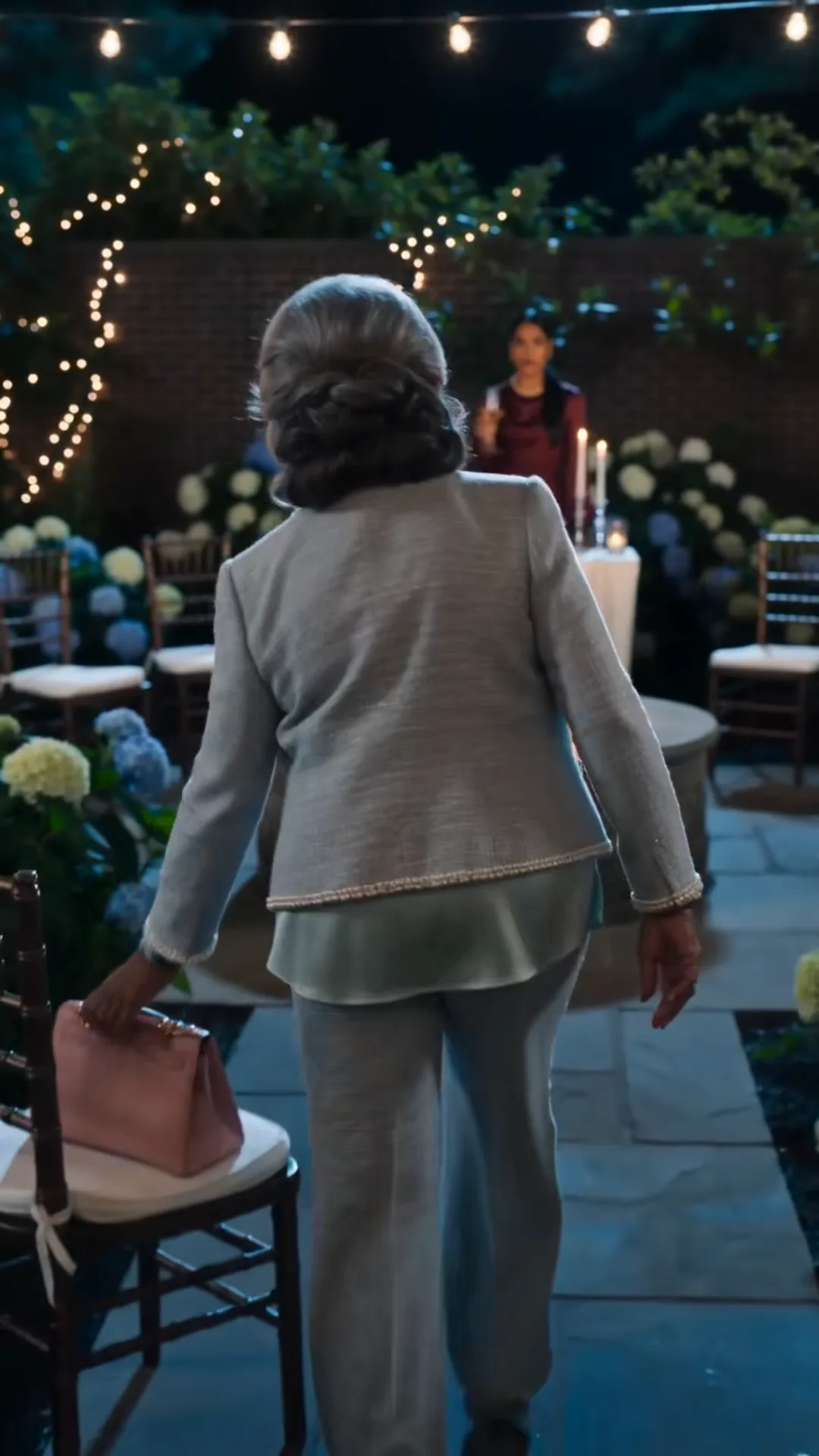
Instead, Eleanor's gaze drifted — slow, deliberate, unmistakable — toward the garden path, toward the chair near the roses, toward the small pink handbag sitting exactly where Mia had placed it an hour before.
She looked at it the way a woman looks at a door she has just realized has been left unlocked.
Then she looked back at Mia, and for one unguarded second, something passed across her face that was not anger and was not coldness.
It was almost — Mia would think about this for years afterward — almost respect. The look of an opponent recognizing, too late, that the game had already changed shape without her noticing.
"Excuse me," Eleanor said, to the garden, to no one, already turning, already walking. "I believe I'd like some air before the second cake."
May you like



She moved past the ruined table, past her stunned son, past the murmuring guests, out toward the garden path, her cream cardigan pale as bone against the dark hedges, walking with the unhurried, terrible calm of a woman who has just remembered exactly where the leverage in a room is sitting.
---







