Chapter 2 - The Bowl
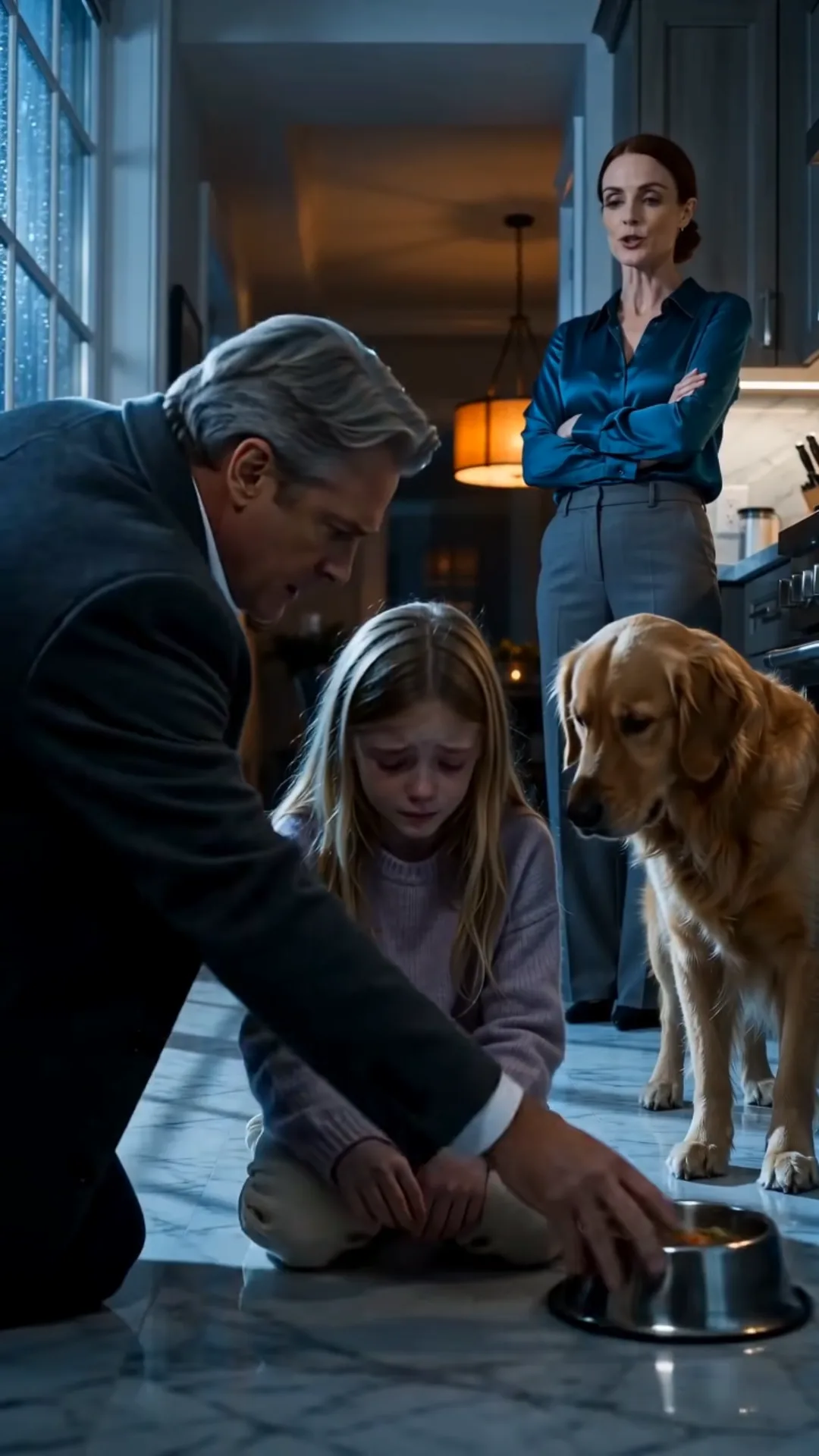
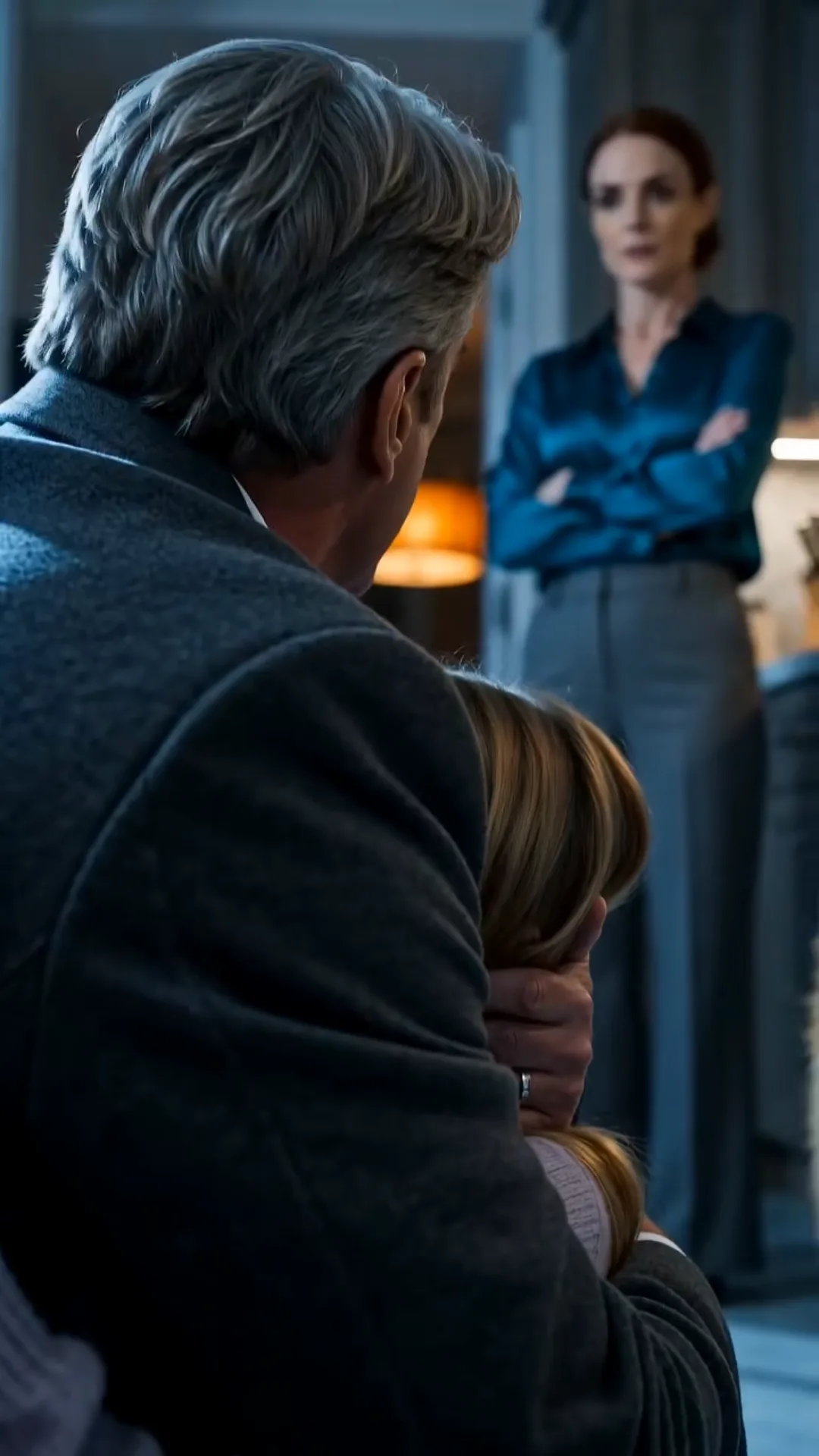
Emma stood with her wine glass in one hand and watched.
She didn't tell Nora to stop.
She didn't tell her to get up.
She simply leaned against the doorframe the way a person leans against a wall while waiting for a kettle to boil — patient, unbothered, half her attention already somewhere else.
---
Nora heard her come back before she saw her.
The click of Emma's shoes on marble was different from Biscuit's nails, sharper, more deliberate, a sound that always made something in Nora's chest go tight before she even understood why.
She stopped eating for a second.
Her hand hovered over the bowl.
"Don't stop on my account," Emma said.
---
There was no anger in her voice.
That was the part that made it worse.
If Emma had shouted, Nora could have understood it as a storm, something that would pass, something with an edge she could brace against. But this voice was calm the way a closed door is calm. Final. Already decided.
Nora lowered her hand back down.
She kept eating.
---
Biscuit shifted his weight, resettling beside her, his shoulder warm against her arm. He didn't seem to know anything was wrong. Or maybe he did, and this was simply how he'd learned to help — by staying.
Nora leaned into him slightly.
Just slightly.
Enough that no one watching would call it anything.
---
"You know," Emma said, swirling her wine, "when I was your age, my mother didn't feed me at all if I acted up. Not from a bowl. Not from anything." She took a sip. "You're getting off easy."
Nora didn't answer.
She'd learned that too — some sentences weren't questions, even when they sounded like one, and answering them only gave Emma something new to correct.
---
"You should have thought of that," Emma continued, "before wasting dinner."
I didn't waste it, Nora wanted to say. I don't like eggs. That's not the same as wasting.
But the words stayed exactly where they were, folded up somewhere behind her teeth, because she'd learned that too — that being right didn't matter in this house nearly as much as being quiet.
---
The dog food had a texture she was starting to get used to, which frightened her more than the taste did. Getting used to a thing meant it might happen again. Getting used to a thing was how it stopped being a story you told yourself was temporary.
She swallowed another mouthful.
Her jaw ached faintly from chewing something that wasn't meant to be chewed slowly, wasn't meant to be savored, wasn't meant for a person at all.
---
Emma finally pushed off the doorframe.
She crossed the kitchen — not toward Nora, toward the counter, where she set down her wine glass and picked up her phone, scrolling once, twice, the blue light catching the sharp line of her cheekbone.
"When you're finished," she said, not looking up, "wash your hands before you touch anything. I don't need dog hair all over the banister."
---
When you're finished.
As if this were a task. As if this were homework, or a chore, something with a natural endpoint that Nora was meant to reach efficiently and then move on from.
Nora looked down at the bowl.
Maybe a third of it left.
Her stomach had stopped twisting. It had gone somewhere else instead, somewhere flatter, quieter — the particular stillness of a child who has decided, without deciding, that this is simply what tonight is.
---
She thought about her mother.
She didn't mean to. The thought arrived the way thoughts of her mother always arrived now, uninvited, sideways, catching her in the middle of something unrelated.
Her mother used to cut her sandwiches into triangles. Small, precise, four per sandwich, and she used to say one for each corner of you, which had never made complete sense but had always made Nora laugh anyway.
Her mother had been dead for two years and four months.
Nora still counted.
---
She wondered what her mother would say if she could see this.
She decided, quickly, not to wonder that again. Some doors were better left shut, even in her own head. Especially in her own head.
Biscuit nudged her hand with his nose, gentle, insistent, the universal language of dogs who sense a person going somewhere far away inside themselves.
Nora scratched behind his ear.
"I'm okay," she whispered to him, which was a lie, but a small one, the kind you told to keep something calm.
---
Footsteps again. Emma, moving toward the hall.
"I have a call," she said, to no one in particular, to the kitchen air, to the space where a person might have stood if Nora counted as a person right now. "Rinse the bowl when you're done. And Nora—"
She paused in the doorway.
"—not a word to your father about this. He worries. You wouldn't want to upset him over nothing."
---
Over nothing.
Nora's throat tightened around those two words more than it had tightened around anything else that night.
She thought about her father's face, the way it softened whenever he looked at her, the low steady sound of his voice reading to her when she couldn't sleep. He was in Chicago tonight. Or Denver. Somewhere with a hotel room and a view he probably wasn't looking at.
He'd call before bed, like he always did.
She would tell him she was fine.
She always told him she was fine.
---
Emma left.
The house exhaled around her absence the way it always did, a subtle loosening, like a hand unclenching.
Nora sat back on her heels.
She looked at what remained in the bowl. She looked at Biscuit, who looked back at her with his whole soft, uncomplicated face, waiting to see what she'd do next, ready to be however she needed him to be — witness, cushion, secret-keeper.
---
She didn't finish it.
She couldn't.
Instead she pushed the bowl an inch toward him, an offering, a truce, a child giving away the only thing anyone had given her that night because giving it away felt like the last piece of control she had left.
Biscuit ate without judgment.
He never judged anything.
---
Nora stood.
Her knees were red-marked from the marble, little pink checkerboards that would fade by morning and leave no evidence at all, which was, she understood dimly, sort of the whole point of everything that happened in this house.
She washed her hands at the kitchen sink, scrubbing longer than necessary, watching the water run warm over her fingers.
In the window's reflection, faint against the dark garden outside, she could see her own face.
She didn't look like she was crying.
She looked like she was calculating something.
---
Upstairs, her phone buzzed. A text from an unknown pattern of numbers that turned out to be her father's hotel landline, forwarded through the app he used to text on the road.
Hey bug. Long day. Miss your face. Everything good at home?
Nora stared at the message for a long time.
Her thumb hovered over the keyboard.
---
Everything's good, she typed.
Miss you too. Come home soon.
She sent it before she could change her mind, before the space between the words could open up and swallow the truth she wasn't ready to put into them yet.
Then she set the phone face-down on her nightstand, climbed into bed, and listened for the sound of Biscuit settling outside her door — the soft thump of a body lying down, the sigh that followed it, the only lullaby the house had left to offer her.
She fell asleep counting the days until her father came home.
May you like



She didn't know yet that the number was smaller than she thought.
---