Chapter 3 - Before Emma
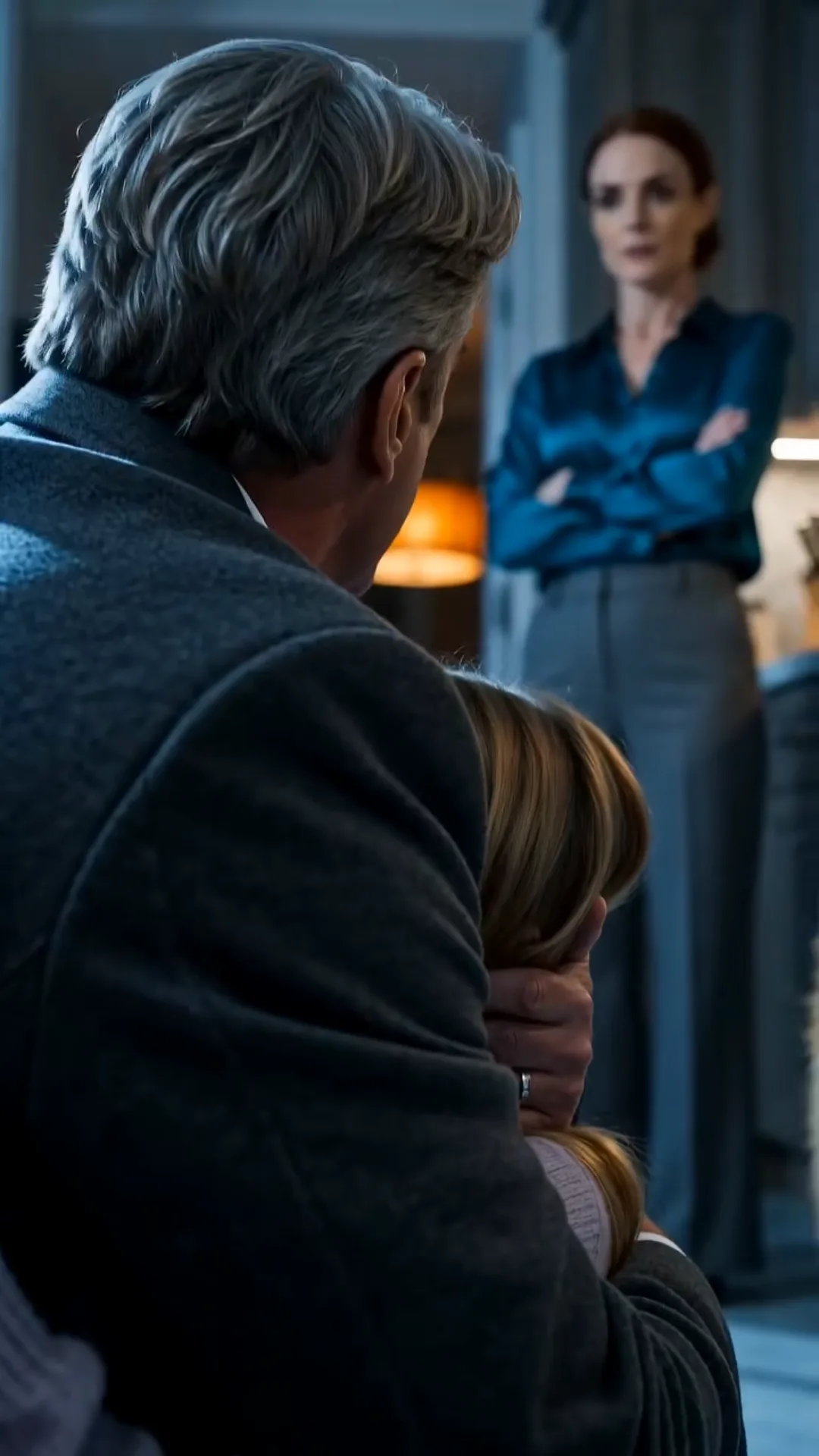
To understand the kitchen, you had to understand the years before it.
Nora's mother's name had been Claire, and she had filled a room the way certain people do, not loudly, but completely — you simply noticed, afterward, that everything had been slightly warmer while she was in it.
She had died on a Tuesday in October.
Ice on the overpass. A phone call at 6:47 that Nora, six years old at the time, had heard through the wall of her bedroom and had not fully understood until much later, when understanding arrived all at once, like a held breath finally released.
---
For a year after that, the house had been quiet in a different way than it was quiet now.
It had been quiet like a held photograph, careful, reverent, full of Claire's things left exactly where she'd left them — her reading glasses on the side table, her sweater still on the hook by the garage door, as if she'd simply gone out for milk and would be back any minute to reclaim her life.
Nora's father, Daniel, had not moved any of it.
He hadn't been able to.
---
He grieved the way some men do, by working harder, staying later, filling the hours so there was less time left over for the hours to fill him instead. Nora understood this only in fragments, the way children understand most adult things — she knew her father cried in the shower because the water ran longer than it needed to, and she knew he thought she couldn't hear it.
She never told him she could.
---
Emma had come into the picture eighteen months after Claire died, at a fundraiser Daniel hadn't wanted to attend and almost hadn't.
She was, by every visible measure, exactly what a grieving man might reach for. Composed. Beautiful in a way that photographed well. Attentive in restaurants, the kind of woman who remembered a waiter's name and used it twice.
She had asked Daniel about his daughter within the first ten minutes of meeting him.
He had liked that.
He had not yet learned that some questions are asked to gather information, not to express care.
---
Nora had met her three months later, at a dinner arranged with careful casualness — just someone Daddy's been spending time with — and she remembered, even now, the specific way Emma had crouched to be at eye level with her, the way adults do when they've read that this is the correct technique for bonding with children.
"You have your father's eyes," Emma had said.
It should have been a kind thing to say.
Nora, even at seven, had felt something small and wary uncoil inside her, the way animals sometimes know a storm is still two days out.
---
The wedding had been eleven months after that.
Small, elegant, at a vineyard an hour outside the city. Nora had worn a pale blue dress and had stood beside her father at the altar, holding a basket of white rose petals she was supposed to scatter and instead simply carried the whole way, unable to let a single one go.
Daniel had knelt afterward and asked her, gently, why she hadn't thrown them.
"I wanted to keep them," she'd said.
He hadn't pushed.
He should have, maybe. But grief makes a person generous with explanations that don't quite add up, and Daniel had plenty of grief left to spend.
---
The changes came slowly at first, the way spoiled milk doesn't announce itself all at once.
Claire's reading glasses disappeared from the side table within the first month. The sweater vanished from the garage hook. Small things, reasonable things — a new wife redecorating, nothing anyone could call cruel.
Then the rules began.
Shoes at the door. No prints on the glass table. Quiet at dinner, because Emma got headaches, she said, real ones, the kind that required dimmed lights and closed mouths.
---
Daniel traveled for work. He always had — it was part of what had let Claire fill the house so completely, because someone had to be the anchor while he was the wind, that had been Claire's joke about it, back before there was any before-and-after to divide the joke from.
But without Claire, his travel left the house with only one adult in it.
And that adult was Emma.
---
Nora had learned, over the two years since the wedding, to read Emma's moods the way a sailor reads weather — the particular set of her mouth, the speed of her footsteps, whether her voice came out flat or sharp, each one a signal for how the hours ahead would go.
She had also learned not to tell her father.
Not because Emma had ever explicitly threatened her.
Emma didn't need to threaten. She simply had a way of saying things — he worries, you wouldn't want to upset him, this is between us — that made silence feel like the only loving option available.
---
There had been small cruelties before the bowl. Nora catalogued them privately, the way a person catalogues bruises they can't yet explain even to themselves.
The time her favorite stuffed rabbit, Mr. Buttons, had gone missing from her bed and turned up, three days later, in the donation bin by the garage, ear slightly torn, and Emma had said, I thought you'd outgrown him, sweetheart, you're getting so big now.
The time she'd been sent to her room without dinner for spilling juice, an actual accident, an actual six-ounce glass of orange juice on a placemat that wiped clean in ten seconds.
The time Emma had read her diary — a school notebook, really, nothing dramatic in it, just a list of things Nora missed about her mother — and had told her, calmly, that dwelling on the past wasn't healthy, and that perhaps the notebook should go in the recycling.
---
None of it, on its own, seemed like the kind of thing you called your father about from three states away.
That was the particular genius of it, if you could call cruelty genius. Each individual cruelty was small enough to survive scrutiny. It was only in total, only in accumulation, that the picture became something a person might recognize as dangerous.
And Nora, at eight, did not yet have the vocabulary for accumulation.
She only had the vocabulary of fine.
I'm fine, Daddy. Everything's fine.
---
Biscuit had arrived the same month as Claire's death, technically — he'd been a birthday gift for Nora that had been ordered weeks earlier, before anyone knew a car would slide on ice on a Tuesday in October, and he'd shown up on Nora's seventh birthday four days after the funeral, an eight-week-old puppy in a box with a ribbon that nobody had the heart to un-plan.
Claire had picked him out herself.
She just never got to see him arrive.
---
He had grown up alongside Nora's grief, the two of them learning the shape of a house without Claire in it at the same pace, and by the time Emma moved in, Biscuit was already the thing Nora reached for in the dark.
Emma tolerated him.
Tolerated, not loved — there was a difference, and Nora had felt that difference the way you feel a draft under a door, invisible but constant.
"He sheds everywhere," Emma said once, early on, in a tone that made it clear the sentence was really about something else.
Daniel had laughed it off.
"He's part of the family," he'd said. "Has been since before you."
Emma had smiled at that, the kind of smile that didn't reach anywhere close to her eyes.
Nora had filed it away. Another small weather pattern. Another cloud on a horizon she was still learning to read.
---
By the night of the dinner Nora ate on the floor, none of this was new anymore. It had simply become the water she swam in, the temperature she'd stopped noticing because there was no longer a warmer temperature nearby to compare it to.
Her father called that phrase "the frog in the pot," once, in a completely unrelated conversation about a work situation he'd stayed in too long.
You don't notice the water's boiling, he'd said, because it happened one degree at a time.
Nora had nodded along, not connecting it to anything.
She would think of that phrase again, much later, and understand it had been about her whole life, the whole time, and she simply hadn't been standing close enough to herself to see it.
---
That night, after the bowl, after the text to her father that said everything was fine, Nora lay in bed and thought about her mother's hands.
She could still remember exactly how they'd felt cutting sandwiches into triangles, quick and certain, one for each corner of you.
She wondered, drifting toward sleep, whether her mother would recognize the girl currently lying in this bed.
She decided, in the specific logic of children right at the edge of sleep, that her mother would recognize her anyway.
Mothers always found you.
Even the ones who were gone.
May you like



Even in the dark.
---







