Chapter 2 - The Empty Box
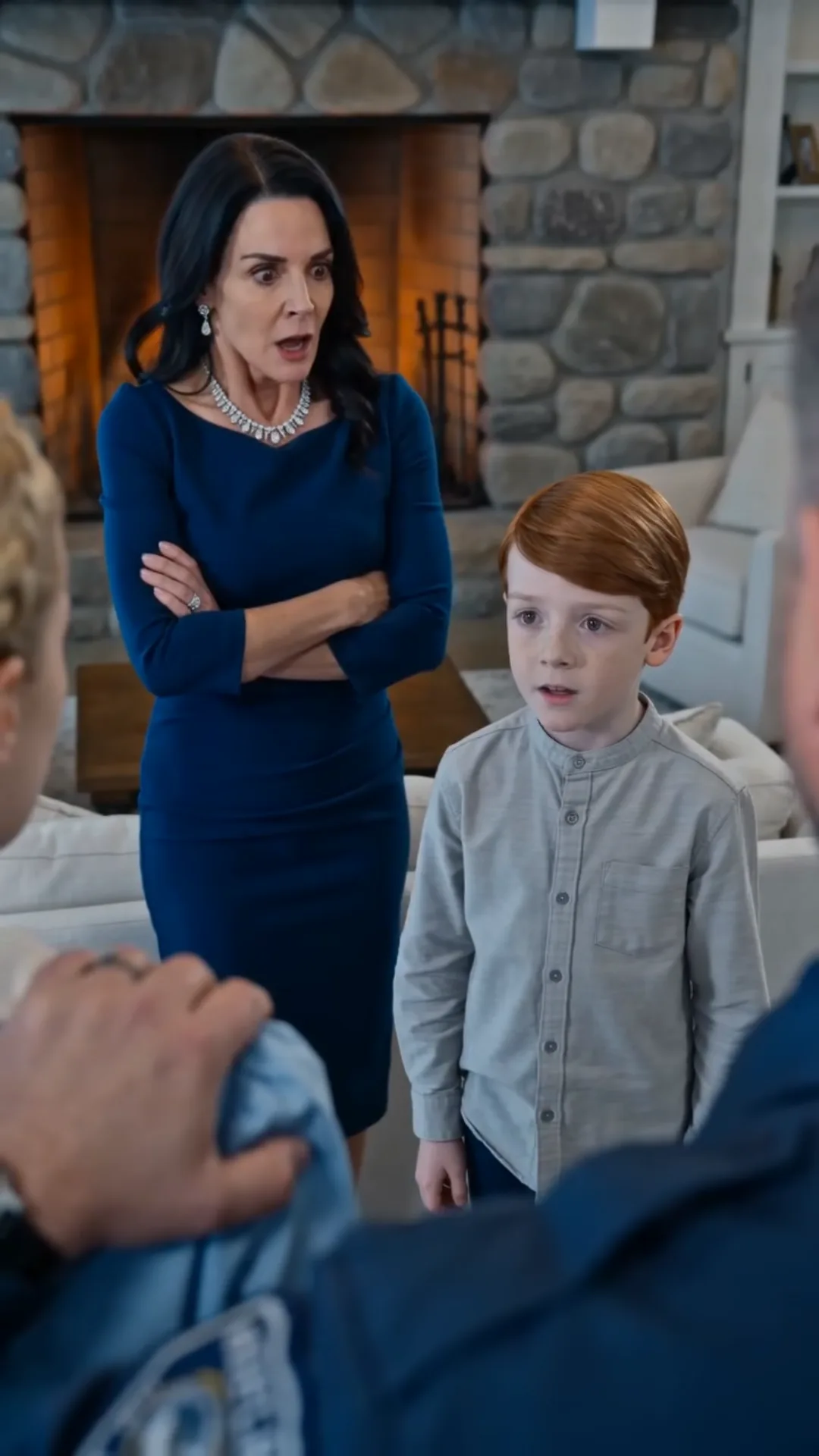
The police arrived at eleven in the morning, which Camila had calculated precisely.
Late enough that the neighbors would be out, doing neighbor things.
Early enough that Ricardo, wherever "the coast" actually was, would still be unreachable by the time reporters — if there were reporters, and she hoped there would be — started calling.
She met the two officers at the door with her hair pulled back and no makeup at all.
That, too, was calculated.
A woman who has just been robbed does not have time for eyeliner.
---
"Thank you for coming so quickly," she said, and her voice did the crack again, right on schedule.
The older officer, a heavyset man named Dueñas, nodded with the practiced sympathy of a man who had heard a thousand women say a thousand versions of that same sentence.
"Tell us what happened, señora."
"My jewelry." She pressed a hand to her collarbone, where a necklace should have been and wasn't, because she'd made sure of that this morning too. "My mother's pieces. My wedding set. Gone. All of it."
"When did you last see them?"
"Two nights ago." A pause, timed. "I put them away before bed. This morning the box was empty."
---
Mateo was on the stairs again.
He liked the stairs the way some children like closets — a place with a good view and no responsibilities.
He watched the two men in dark blue follow his mother into the hallway.
He watched his mother press her hand to her chest and say the word robbed, and something in him — something small, still mostly asleep — twitched.
Robbed.
He knew that word from cartoons. It meant bad men. It meant sirens.
It did not mean, in his seven-year-old understanding of the world, a box under a bed, put there by the same hands that were now pressed so carefully to a chest.
He hadn't made that connection yet.
He wouldn't, not for days.
Children file things away in order of what frightens them, not what's true, and right now the two policemen frightened him more than any memory of a wooden box.
---
"Who has access to the house?" Dueñas asked, pen already out.
"My husband. Myself. My son." Camila's eyes flicked, briefly, toward the kitchen, where a scraping noise had just started — someone scrubbing a pan. "And the maid."
She let the word sit there.
The maid.
Two syllables, dropped like a stone into water, and Dueñas's pen moved a little faster after that, the way pens do when a sentence contains its own suggestion.
"Has she worked here long?"
"Eleven months." Camila's mouth made a small, apologetic shape. "I hate to even say it. She's been wonderful with Mateo. But she's the only one who was in the house both nights, and she has access to every room, and—" A breath, shaky, real-sounding. "I don't want to believe it."
She did not want to believe it.
She wanted, very much, for everyone else to.
---
In the kitchen, Elena scrubbed a pan that did not need scrubbing.
She had heard voices in the hallway — men's voices, unfamiliar, low — and something in her stomach had gone tight the way it does when you walk into a room mid-sentence and know, immediately, that the sentence was about you.
She didn't know why she knew.
She just did.
She kept scrubbing.
---
"May we speak with her?"
"Of course." Camila's hand found the doorframe, steadying herself against a weight only she could feel. "She's in the kitchen. Please — be gentle. She might be frightened. She's very young."
Very young.
Might be frightened.
Every phrase built like a small brick in a wall Camila had been laying since the moment she knelt at the foot of her own bed two nights before, and every brick was mortared with just enough kindness to look, from any angle, like concern.
---
Elena turned from the sink when the two officers filled the kitchen doorway.
Her hands were still wet. She wiped them on her apron, a reflex, the way you tidy yourself for company even when the company has come to ruin you.
"Señorita Reyes?"
"Yes."
"We need to ask you some questions about missing property."
The pan slipped from her fingers into the sink with a clatter that sounded, in that suddenly too-quiet kitchen, like something breaking that wasn't a pan at all.
---
"I don't understand," Elena said.
Her voice came out smaller than she meant it to.
"Señora Duarte's jewelry is missing," Dueñas said. "You have access to the house. We need to search your room."
"Search — " She stopped. Started again. "Yes. Of course. I have nothing to hide."
She believed that sentence completely as she said it.
She had no idea, yet, how little that would matter.
---
They found nothing in her room.
Of course they found nothing — there was nothing to find, only a narrow bed, a small dresser, a photograph of her mother taped inside the closet door, and a blanket folded over a window that didn't quite close.
Dueñas noted this without comment.
The younger officer, whose name was Ferreira and who had been on the job eleven months himself — the same eleven months Elena had worked in this house, though neither of them would ever know that — lingered a moment at the photograph.
He didn't say anything about it.
But something in his face shifted, very slightly, the way a person's face shifts when a case stops being a case for one second and becomes a life.
---
"Nothing here," he said, to Dueñas, quietly.
"Doesn't mean nothing happened," Dueñas said back, just as quietly. "Means she's careful. Or means it's somewhere else."
He did not say or means she didn't do it.
That sentence, the simplest one, the one a fair mind reaches for first, seemed to be the one nobody in that house was in a hurry to say out loud.
---
Camila stood in the hallway when they came out, arms wrapped around herself in a posture of practiced fragility.
"Did you find anything?"
"Not in her room."
Her face did something complicated — relief and disappointment arguing for the same square inch of skin — before it settled back into worry.
"Then where—" She stopped herself. Pressed her fingers to her lips. "I'm sorry. I just want this to be over. I keep thinking about that necklace. It was my mother's."
It was, in fact, still under her own bed, four rooms and one staircase away, six inches beneath the exact spot where she was currently not looking.
---
Mateo watched all of this from the stairs, chin on his knees, counting the number of times his mother said the word sorry — four — and the number of times Elena's name came up — six — and understanding neither the counting nor why he was doing it, only that his hands had gotten cold somewhere in the last ten minutes and he didn't know why.
He looked at Elena when she passed the base of the stairs on her way back to the kitchen.
She glanced up.
Tried to smile at him, the way she always did, the small private smile that was just for him and no one else in that house.
It didn't quite work this time.
He noticed that.
He was seven, not stupid.
---
"We'll need to take a statement," Dueñas told Camila at the door. "And we may be back with more questions for the girl."
"Of course. Whatever you need." A hand on her heart again, the necklace-shaped absence still perfectly displayed. "I just want my family safe. I just want the truth."
She said the truth the way a woman says a word she has already decided the shape of.
Not something to be found.
Something to be delivered, gift-wrapped, to whoever was standing closest when she needed it.
---
The officers left at noon.
The house went quiet in its upstairs way and its downstairs way, both at once, for the first time all morning.
Camila climbed the stairs slowly, one hand trailing the banister, and did not go into Mateo's room to check on him, and did not go into the kitchen to check on Elena.
She went into her own bedroom.
She closed the door.
She knelt at the foot of her bed one more time, lifted the dust ruffle two inches, confirmed the box was still there, still dark, still hidden.
Then she let the ruffle fall, and stood, and looked at herself in the mirror, and this time she did not practice a sentence.
She just looked, for a long moment, at a woman who had decided, calmly and completely, to let someone else pay for her debts.
The mirror, as always, said nothing back.
---
Down the hall, in a room with nine ceiling cracks, a boy lay very still and thought about his mother's hands disappearing under a bed, two nights ago, and coming back empty, and could not yet — would not, for four more days — connect that small dark memory to the loud bright word robbed that had filled his house all morning.
But the memory didn't go anywhere.
It sat where memories sit in children, patient as a held breath, waiting for the one thing memories always eventually get.
May you like



A reason to matter.
---