Chapter 4 - Handcuffs
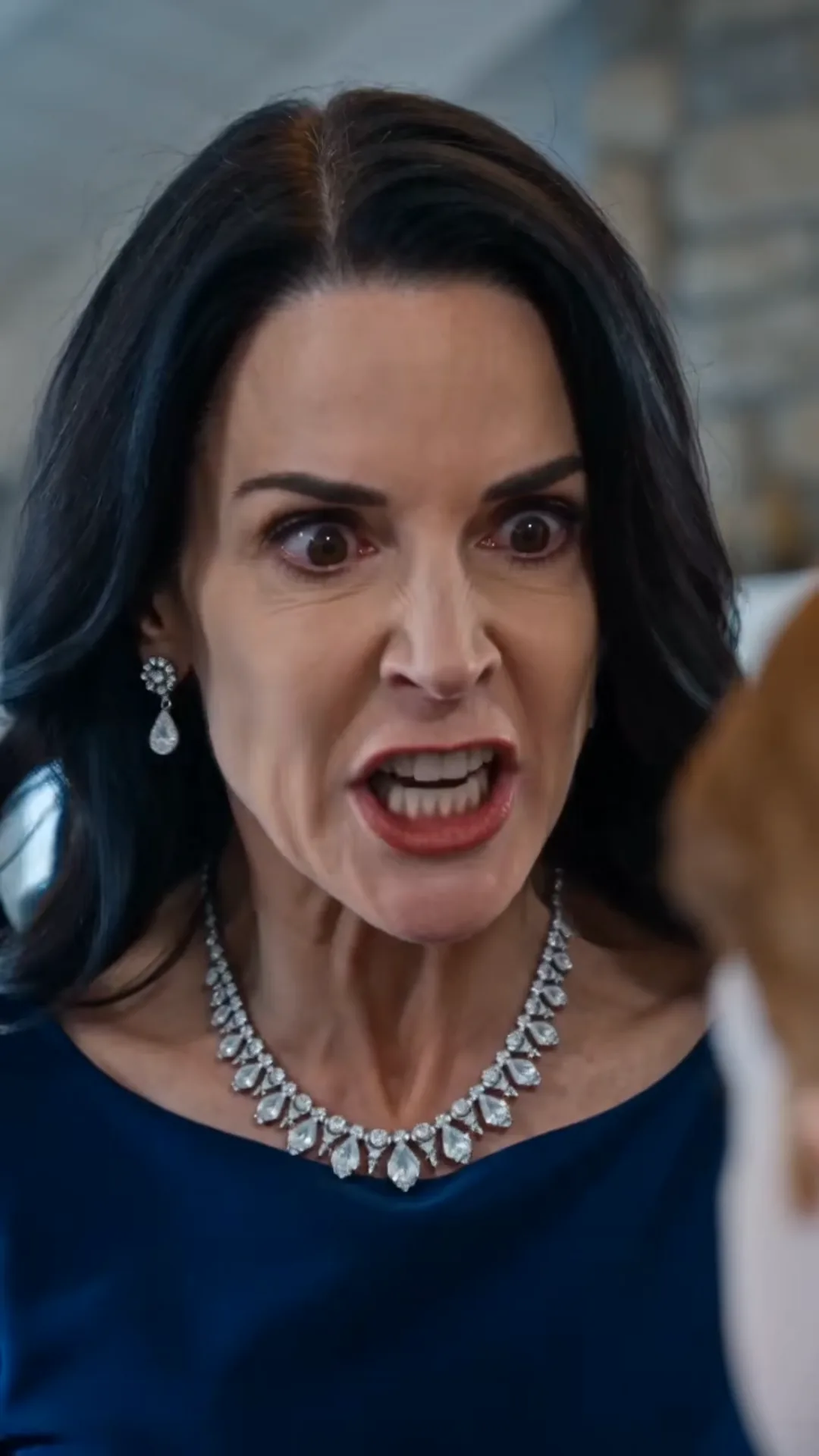
The living room of the Duarte house had never held this many people at once who weren't at a party.
Two police officers.
One weeping maid, hands cuffed in front of her.
One elegant woman by the doorway, silk the color of old gold catching the chandelier light.
And, unnoticed by everyone except the boy who'd learned to be invisible on stairs, one small witness crouched at the landing, close enough to see, too far to be seen.
---
Dueñas read from a small notebook, the words coming out flat and official, worn smooth from repetition.
"Elena Reyes, you're under arrest for the theft of jewelry belonging to the Duarte household."
Está detenida por el robo de las joyas desaparecidas.
He said it in Spanish because it was easier, in this neighborhood, in this kind of house, and because some sentences feel more official in the language they were first written down in, whatever language that happens to be.
Elena's whole body went rigid at the words, the way a body goes rigid right before it collapses, holding itself together through pure refusal.
"Yo no robé nada," she said. "Se lo juro."
I didn't steal anything. I swear it.
Her voice cracked on juro — swear — the word breaking exactly where the truth of it lived, which is the cruel thing about true words spoken under pressure: they break in the places that matter most.
---
She looked past Dueñas, past Ferreira, searching the room the way a drowning person searches water for something solid.
Her eyes found Camila.
"Señora, please. You know me. Eleven months. You know I would never—"
Camila's arms tightened across her chest, one hand coming up to rest against her own collarbone — the same gesture from four days ago, the necklace-shaped absence, worn now like a shield.
"I want to believe you," Camila said, and her voice did shake, genuinely this time, though not for the reason anyone in the room assumed. "I really do. But the evidence—"
She let the sentence dissolve, unfinished, into the air.
Sentences like that don't need endings.
The unfinished part does more work than the words ever could.
---
Ferreira placed a hand on Elena's shoulder, not roughly, but with the particular firmness of a job that has to be done regardless of what the person doing it privately believes.
Dueñas took the other shoulder.
Two men in dark blue, flanking a young woman in grey and white, her wrists bound in front of her, her dark hair coming loose from its careful bun in the small chaos of the last five minutes.
The chandelier light caught the metal of the handcuffs and threw a thin, bright line across the wall — the only bright thing in that particular corner of the room, everything else gone the color of held breath.
---
"Please," Elena said again, softer now, the fight starting to leave her voice the way heat leaves a room when a door's been open too long. "Please, someone tell them. I have a mother. She's sick. Who's going to send her the money for the roof?"
No one answered.
There was no one in that room whose job it was to answer, and the two people who could have — really could have, with a single sentence each — stood in different corners of it, saying nothing, for entirely different reasons.
Camila said nothing because saying something would cost her everything.
Mateo said nothing because he did not yet understand that he had something to say.
---
They led Elena toward the door.
She didn't fight it — there was nowhere for fighting to go, no version of resistance that would do anything but make the metal at her wrists bite harder — but her feet dragged, just slightly, the small physical protest of a body that has not yet caught up to what its mind has already, devastatingly, understood.
At the threshold, she turned her head.
Not toward Camila.
Toward the stairs.
She didn't know Mateo was there — she couldn't have, from that angle, with her vision blurred by tears and the low winter light coming sideways through the front windows — but something in her turned that way anyway, some old animal instinct toward the one soft thing in a hard house, the boy who liked triangle sandwiches and never asked her a single question she couldn't answer.
She didn't see him.
He saw her.
---
Their eyes never met.
But it didn't matter, because in that half-second, Mateo watched Elena's face crumple in a way he had never seen an adult face crumple before — not the practiced tremble his mother produced for police officers, but something with no craft in it at all, something entirely, helplessly real.
Something in his chest hurt.
He didn't have the vocabulary for it — he was seven, and grief was still an undiscovered country to him, a place he knew existed only because he'd seen its weather on other people's faces — but his chest hurt, low and tight, like the feeling right before you cry over something you can't name.
He pressed his hand flat against the stair rail.
He didn't move.
He didn't call out.
He just watched, the way children watch the worst moments of their lives — powerless, silent, memorizing every detail without meaning to, because memory doesn't ask permission before it decides what to keep.
---
The door closed behind the officers and Elena with a sound too ordinary for what had just happened — just a door, just a click, the same sound the front door made every single day when the mail carrier left or a delivery arrived.
Camila stood alone in the living room for a moment, her arms still crossed, her breathing slowly returning to normal.
She let out a long breath through her nose.
Then she looked up, and saw Mateo on the stairs, and her whole posture changed — the crossed arms unfolding, the shoulders softening, the face rearranging itself into the shape reserved specifically for her son.
"Mateo." She crossed to the base of the stairs, reaching a hand up toward him. "Baby, come down. It's okay now. It's over."
He didn't move.
"It's okay," she said again, softer. "The bad thing is over. You don't have to be scared."
---
He came down, eventually, because seven-year-olds do what their mothers tell them, most of the time, even when some new and unfamiliar part of them is whispering that the mother in front of them might not be telling the truth.
She pulled him into a hug.
He let her.
Over her shoulder, he could see the empty spot by the door where Elena had stood a minute ago, and the thin bright rectangle of the front window, and beyond it, faintly, through the glass, the shape of a police car pulling away from the curb.
"Is she going to jail?" he asked, into his mother's shoulder, his voice muffled by silk.
Camila's hand froze, just for a fraction of a second, on his back.
"For a little while," she said. "Until they sort everything out."
"Did she really take your jewelry?"
Another fraction-second freeze.
"The police think so, baby."
The police think so.
Not yes.
Not a lie, technically, if you measured lies by the strict architecture of the sentence and not by the shape of the silence it was built to hide.
---
Mateo didn't ask any more questions.
He'd learned, by now, which questions got real answers and which ones got sentences with holes in them shaped exactly like the truth, and he didn't yet have the tools to pry those holes open.
But something in him had started keeping score.
Not deliberately. Not with any plan. Just the quiet, patient accounting that children do without realizing it — collecting mismatched pieces, a hand disappearing under a bed, a mother's face gone soft with relief instead of grief, a word — robbed — that had never once, not for a single day, been followed by his mother actually looking for the missing jewelry herself, room by room, the way people look for things they're afraid they'll never see again.
She had never once looked.
Mateo had noticed that.
He hadn't known, until this exact moment, standing in her arms with a police car disappearing down the street, that noticing it meant something.
But it did.
May you like



And somewhere behind his eyes, in the dark quiet room where a boy keeps the things he's not ready to understand yet, that noticing sat down, and made itself comfortable, and began, very patiently, to wait.
---







