Chapter 1 - The Flour and the Ash
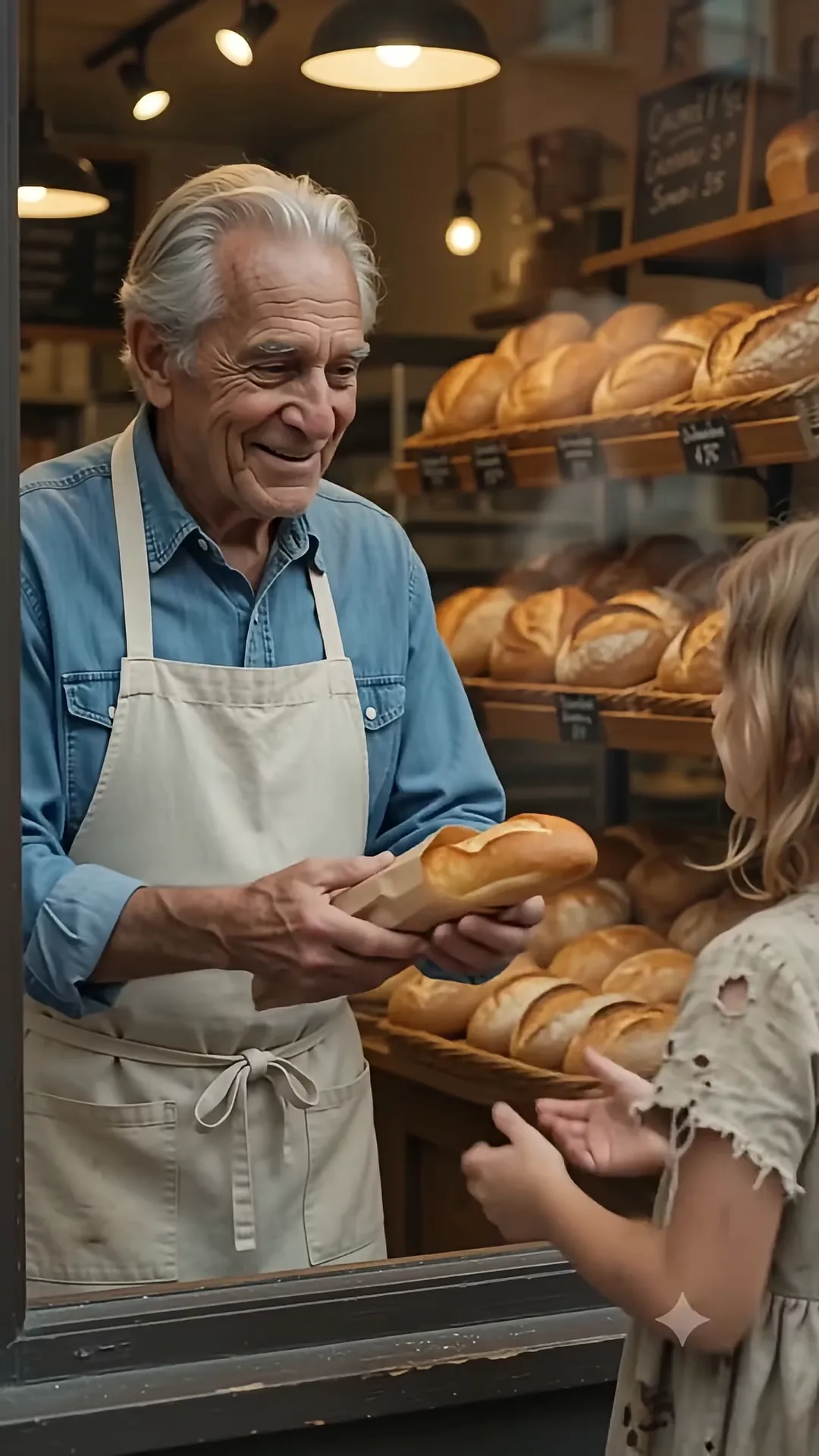
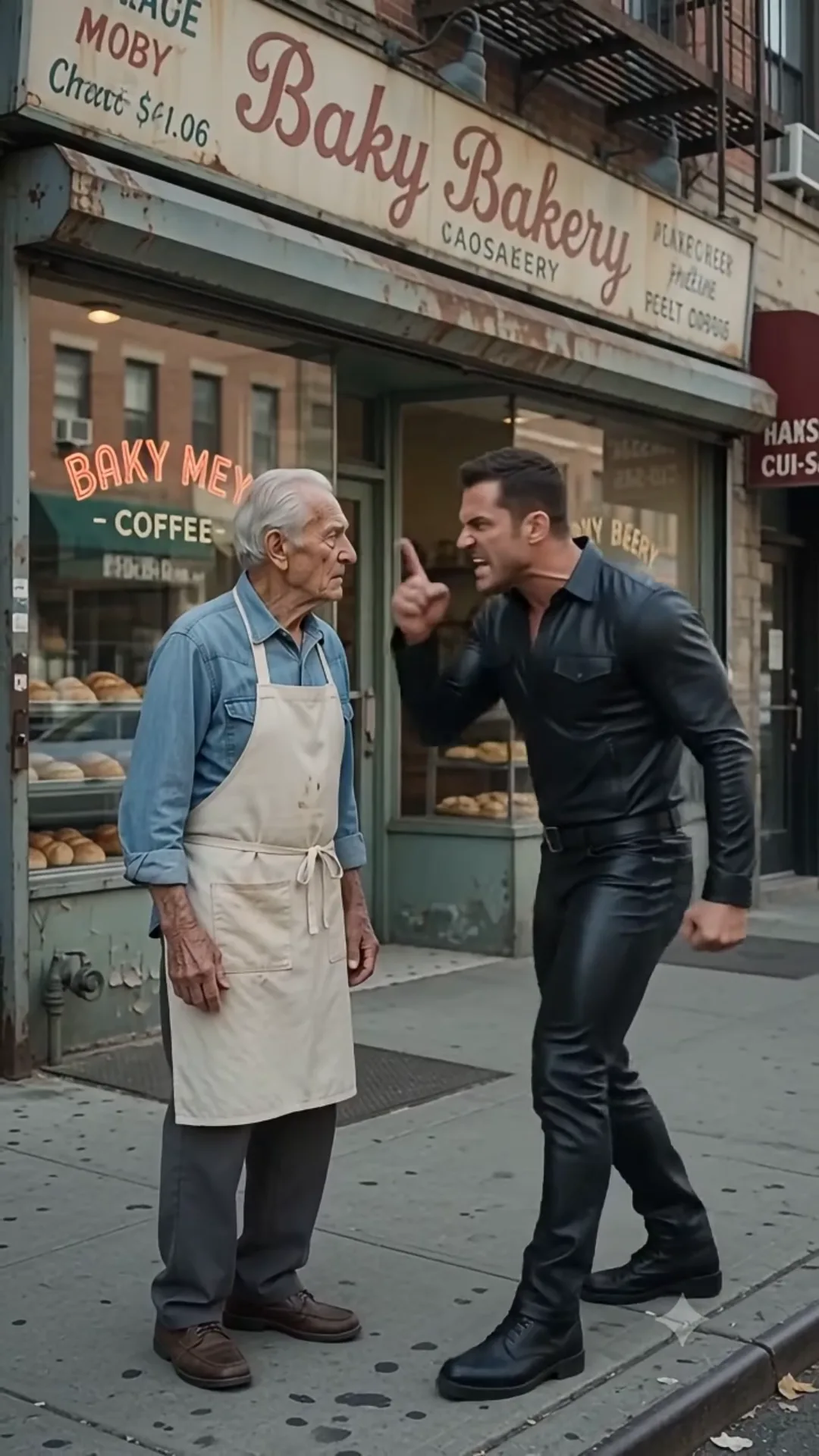
The scent of scorched yeast and damp limestone had lived in the grout of Baky Bakery for forty-two years. To Arthur Pendelton, a man whose spine had curved into the exact crescent of a resting dough trough, the smell was not a comfort; it was an anchor. It was the smell of surviving another cold winter in the iron-and-brick slum of Lower Oakhaven.
At six o'clock on a rain-slicked Tuesday morning, the glass display counter glowed with a warm, amber light that cut through the gray smog rolling off the river. On the wooden racks behind Arthur, long, golden-brown baguettes rested like rows of polished brass, their blistered crusts crackling softly as they cooled in the damp air.
Arthur adjusted his beige canvas apron, his stiff, flour-dusted fingers smoothing the worn blue denim of his work shirt. His slicked-back white hair was yellowed at the temples by decades of woodsmoke.
A shadow broke the pool of yellow light spilling onto the cobblestone outside.
The shop door’s small brass bell chimed—a hollow, tinny sound that rattled in Arthur’s teeth. A child slipped inside. She did not open the door wide enough to let the cold wind in; she slithered through the crack like a stray cat seeking dry floorboards.
She couldn't have been older than eight. Her blonde hair was matted into coarse, tangled strands that smelled faintly of coal smoke and stagnant canal water. Her face was a canvas of dark mud and faint freckles, her nose red from the bitter chill. She wore a faded, oversized sunflower-patterned dress whose hem was shredded into dirty ribbons, dragging across her bare, frost-bitten ankles.
She did not look at Arthur. Her eyes, wide and hollowed out by a deep, feral hunger, were locked onto the third shelf of baguettes.
Arthur did not move toward the till. He did not reach for the broom he kept behind the counter to chase off the dock street urchins. He reached up, took a hot, golden-brown baguette from the rack, wrapped its lower half in a thick strip of brown paper, and extended it across the glass counter.
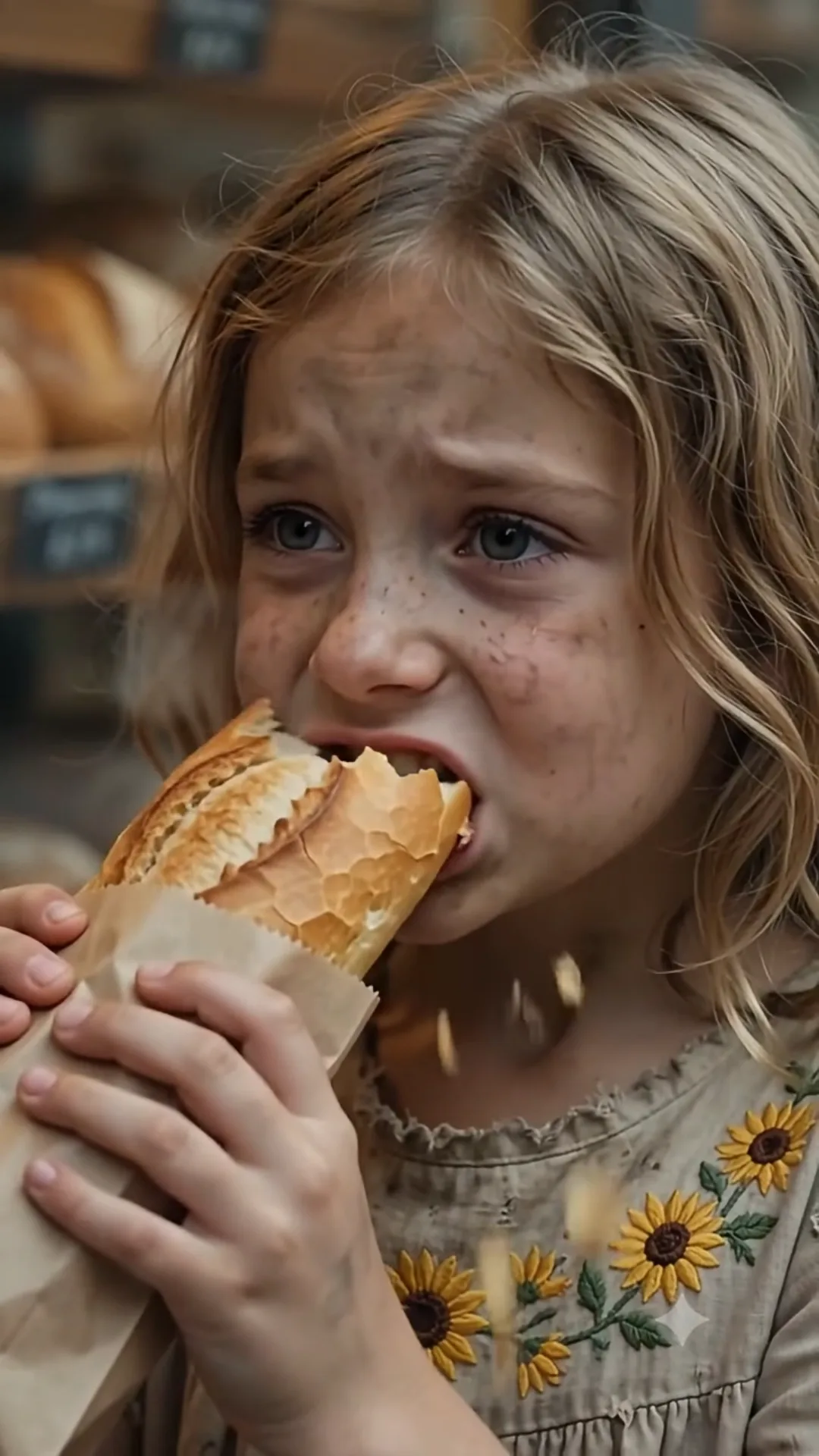
The girl’s hands—caked in black dirt under bitten fingernails—shot out like iron traps. She snatched the bread, dragged it to her mouth, and bit into the warm crust with a savage, desperate crunch. Steam rose from the white crumb inside.
As she chewed, tears cut two pale, clean tracks through the mud on her cheeks.
"I can't pay," she sobbed, her mouth full of hot dough, her voice cracking into a ragged whisper that shook her thin ribs. "I don't have any copper. I don't have anything."
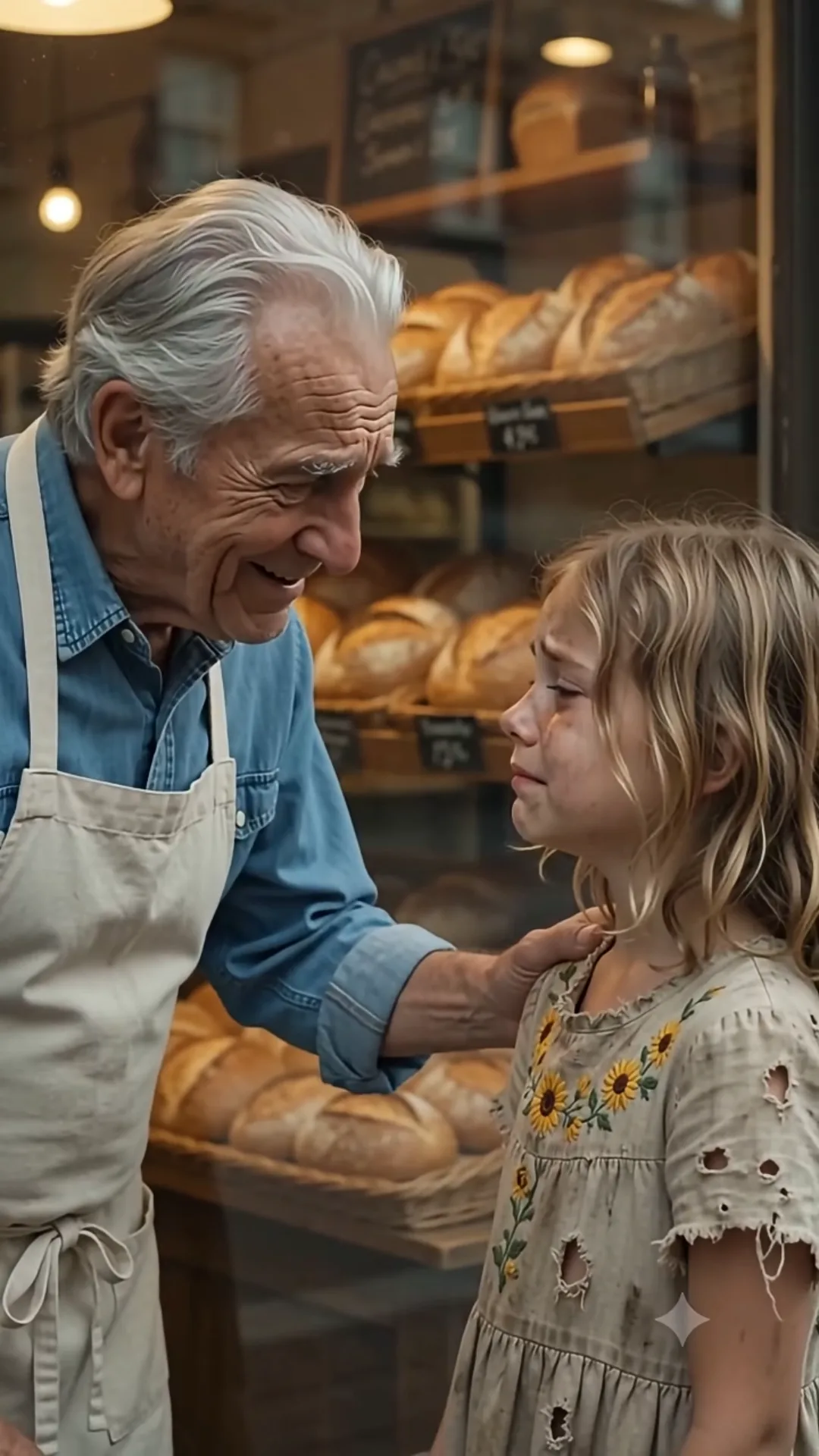
Arthur leaned over the counter. His face, lined with deep, river-like creases formed by sixty years of silent labor, did not harden. He reached out with a heavy, flour-crusted hand and rested it gently on her trembling shoulder.
"That's okay," Arthur said. His voice was a quiet, low rumble, like dry stones grinding together under slow water. "When you can, help others."
The girl froze. Her tear-filled blue eyes locked onto Arthur's face, staring at the faded blue tattoo of a three-digit number faded into the flesh of his right forearm—a marking he never spoke of. She clutched the warm baguette against her sunflower dress like a sacred relic, turned without another word, and bolted out into the rain, the brass bell giving one final, shuddering chime behind her.
May you like



Arthur turned back to his wooden dough trough. He picked up his flour scraper, his hands steady, his expression blank.
He did not know her name. In Oakhaven, names were dangerous things that attached you to corpses. But as he scraped the loose flour off the maple wood, Arthur made a silent mark in his mental ledger: One loaf. Paid in full by the promise of a stranger.