Chapter 1 - The Weight of a Suitcase
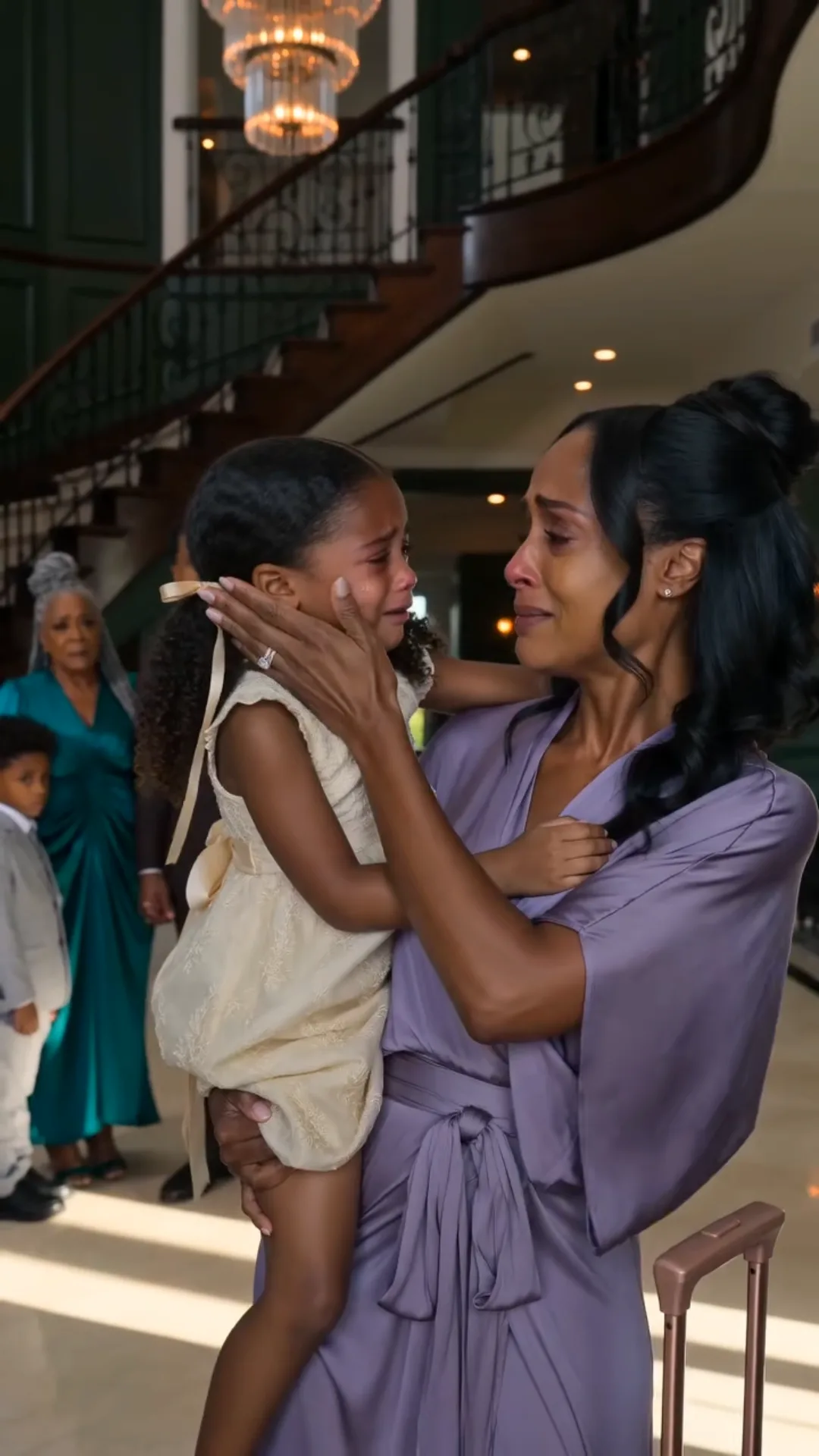
The marble was cold under Elena's bare heel.
She noticed that first.
Not the chandelier above her, not the curve of the staircase, not the wedding ring biting into her finger where it pressed against the suitcase handle.
Just the cold.
Ivy's arms were locked around her neck.
Four years old, and already strong enough to leave bruises where her elbows dug in.
"Shh," Elena said, into her daughter's hair.
It smelled like the lavender shampoo from the good bathroom, the one with the gold faucets nobody but Ivy used.
She would not have that faucet tomorrow.
She would have a motel bathroom with a paper strip across the toilet seat.
That was fine.
That was better, actually.
Behind her, she heard him.
Damian's footsteps didn't hurry. They never hurried. He walked the way men walk when they've never once in their life needed to run for anything.
"You're really leaving?"
His voice came from somewhere behind her left shoulder, flat as the marble.
Elena didn't turn around.
She looked instead at the suitcase handle. At her knuckles, white around the rose-gold metal.
At the ring.
Six years old, that ring. Older than her daughter. Cheaper, probably, than the chandelier that hung twelve feet above her head, dripping crystal like frozen rain.
"Yes."
One word. She'd practiced saying it in the mirror that morning, in the walk-in closet with the door locked, mouthing it silently first so it wouldn't shake when it mattered.
It hadn't shaken.
She felt almost proud of that, in the small, ugly way you feel proud of surviving something you shouldn't have had to survive at all.
Ivy's face was still buried against her collarbone.
Elena could feel the heat of her daughter's breath, ragged and wet, punctuated by small hiccupping sobs that came in twos, like a rhythm she'd learned before she'd learned to talk.
She had learned to cry like this in this house.
That thought cut cleaner than anything Damian could have said.
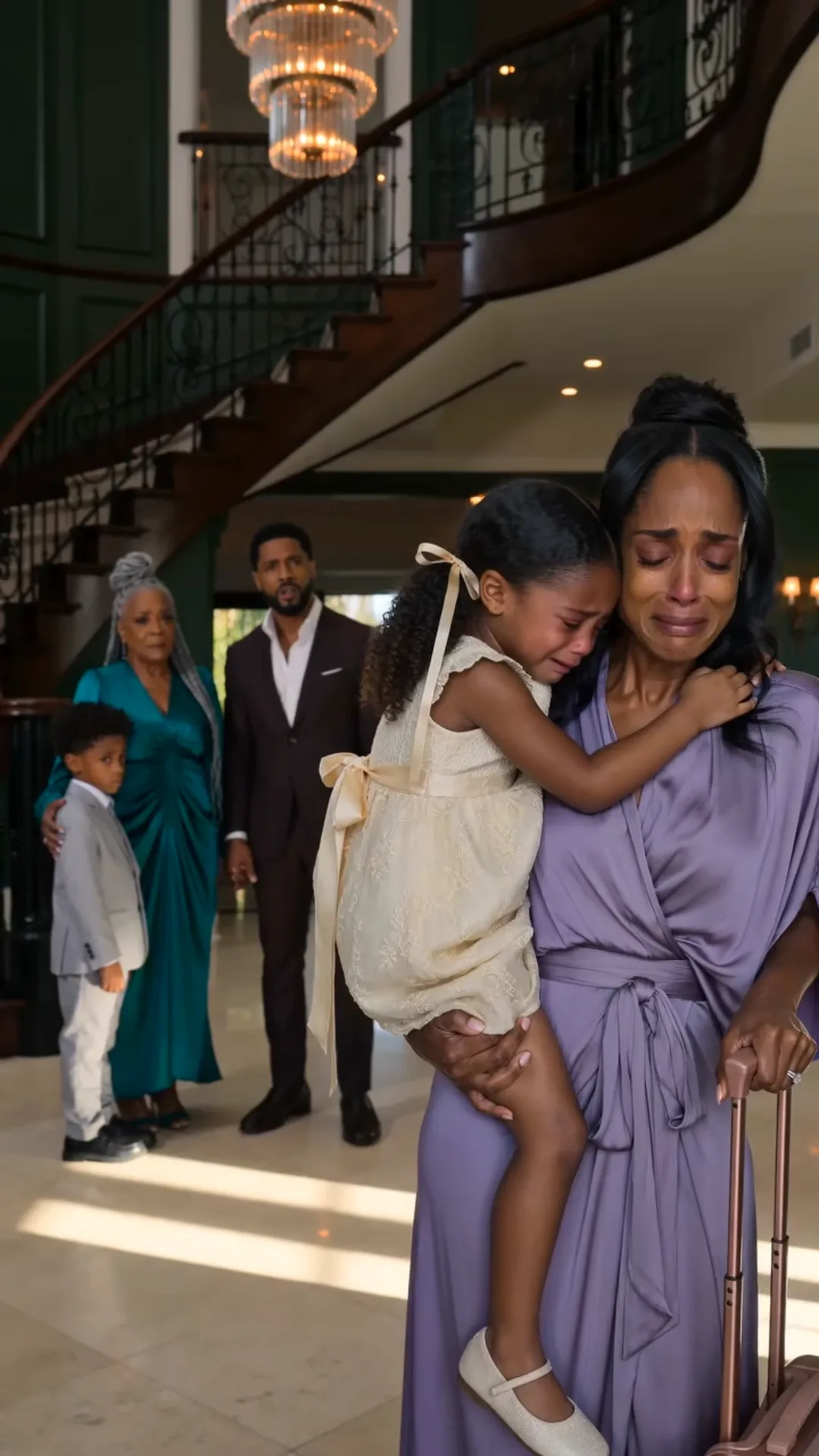
Somewhere behind him, near the base of the staircase, Elena knew — without turning, the way you know a stove is hot without touching it — that Margaret was standing with her hands folded at her waist, watching the way she watched everything, like a woman auditing a spreadsheet for errors that would later be someone else's fault.
And beside her, half a step back, in a small dark suit that had been tailored for a boy who never wanted to be looked at —
Sam.
Nine years old. Standing so still that Elena, even now, even in the middle of the worst four minutes of her adult life, felt something in her chest twist for him specifically, separately, like a second smaller heartbreak nested inside the first.
He wasn't crying.
Sam didn't cry. Not since he was six, not since the year his mother's assistant had called to reschedule his birthday, and he'd learned that some things you don't get to have twice.
He was just watching.
The way he watched everything that mattered too much to react to.
Elena made herself keep walking. One foot. Cold marble. Then the other.
The suitcase wheel caught on a groove between two tiles and jerked in her hand, and for one half-second she thought she might drop it, might have to bend down in front of all of them and gather her whole small collapsing life off the floor.
She didn't drop it.
"You're really leaving," Damian said again, except this time it wasn't a question. It came out lower. Something under the flatness had cracked, just slightly, just enough that Elena — who had spent six years learning to read the seismograph of this man's voice — could hear it.
She still didn't turn.
If she turned around now, she would see his face, and some old, worn-down, traitorous part of her chest would try to find the man she'd married inside it, and she could not afford that.
Not today.
Today she only had enough courage for one direction, and it was forward, toward the doors.
Ivy lifted her head off Elena's shoulder.
Her eyes were red-rimmed, her small blond ponytail askew, the pink bow half fallen out.
"Mommy," she whispered, in that particular child-frequency that cuts through every other sound in a room, "is Daddy going to be sad forever?"
Elena's throat closed.
She had no answer for that.
She had no answer for most of the questions a four-year-old asks after watching six years of her parents' silence finally break open on a Tuesday morning.
"I don't know, baby," she said instead, because it was the only true thing available to her.
Ivy nodded like this was an acceptable answer, the way children accept most things adults can't actually explain, and put her face back against Elena's neck.
Behind them, near the grand curve of the staircase, Elena heard Damian's mother clear her throat.
Just once. Small. Precise.
It was, Elena understood, a kind of verdict.
She kept walking.
The extreme close-up, if this had been a film — and some detached, dissociated corner of Elena's mind kept narrating it like one, kept holding itself at a camera's distance because that was the only way to survive walking through it — would have caught her hand on the suitcase handle. The ring catching the light. Knuckles white.
Then her face.
Wet. Not falling apart. Just wet, the way a window is wet with rain it didn't ask for.
She had cried more in the six months building up to this moment than in the four years before it combined.
She had run out, somehow, of the kind of crying that makes noise.
What was left now was quieter. Colder. More like the marble.
Behind her, Damian's footsteps started again — slow, unhurried, following at a distance that was not quite a pursuit and not quite a surrender.
"You'll cool down tomorrow," he said.
There it was.
The sentence Elena had heard, in one form or another, after every fight for six years. You'll cool down. You'll come to your senses. You'll realize how good you have it here.
It had worked, every single time, until it hadn't.
She almost laughed. The sound that came out instead was something smaller and sadder, half a breath through her nose.
Ivy lifted her head again, twisting in Elena's arms to look back over her shoulder at her father, blinking through tears with the particular desperate hope of a child who still believes, against everything, that the grown-ups might fix this before dinner.
"Mom," she said — not to Damian, to Elena, the two of them somehow alone inside a sentence spoken in front of four other people — "can we leave?"
Elena felt something in her ribs give way, quietly, like a floorboard finally admitting the weight it's carried too long.
"Yes," she said.
And she meant it in a way she hadn't meant anything in longer than she could remember.
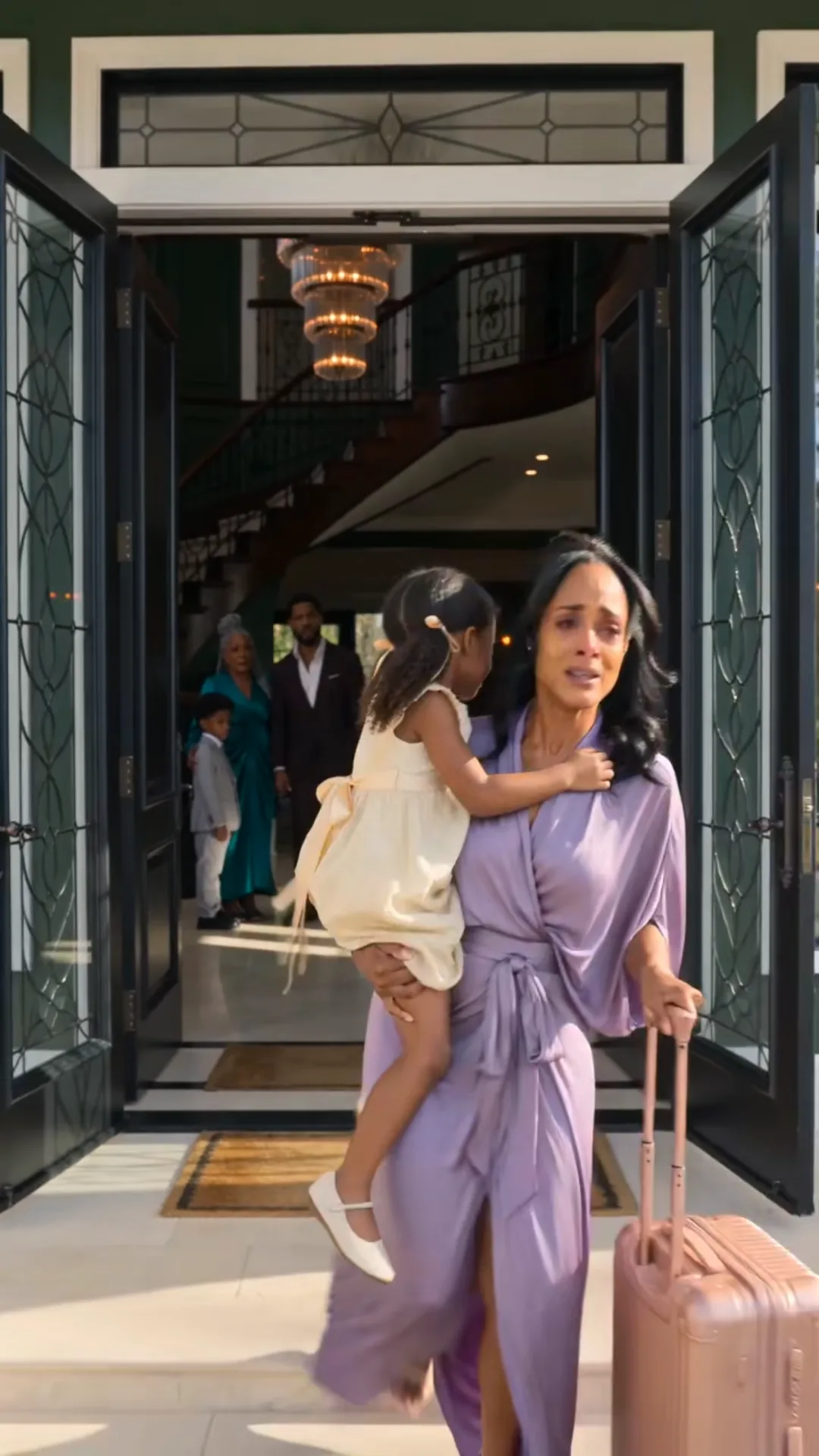
She reached the edge of the foyer where the marble gave way to the black entry mat, where the two glass doors stood open onto a wedge of ordinary daylight — green hedge, gravel drive, a world that did not care in the slightest what had just happened inside this house.
She shifted Ivy higher on her hip.
She did not look back at the boy standing so carefully still beside his grandmother.
She wanted to. God, she wanted to. But there was a version of this morning where she turned around, and knelt down, and promised Sam something she wasn't yet sure she had the power to give him — and that version ended with her crumbling on the marble in front of Damian's mother, and she refused, she absolutely refused, to give Margaret Cole that satisfaction.
So instead she straightened her spine, and gripped the suitcase handle until the ring dug a thin red line into her finger, and walked toward the light.
May you like



(continued in Part 2)
---