Chapter 3 - The Boy Who Didn't Cry
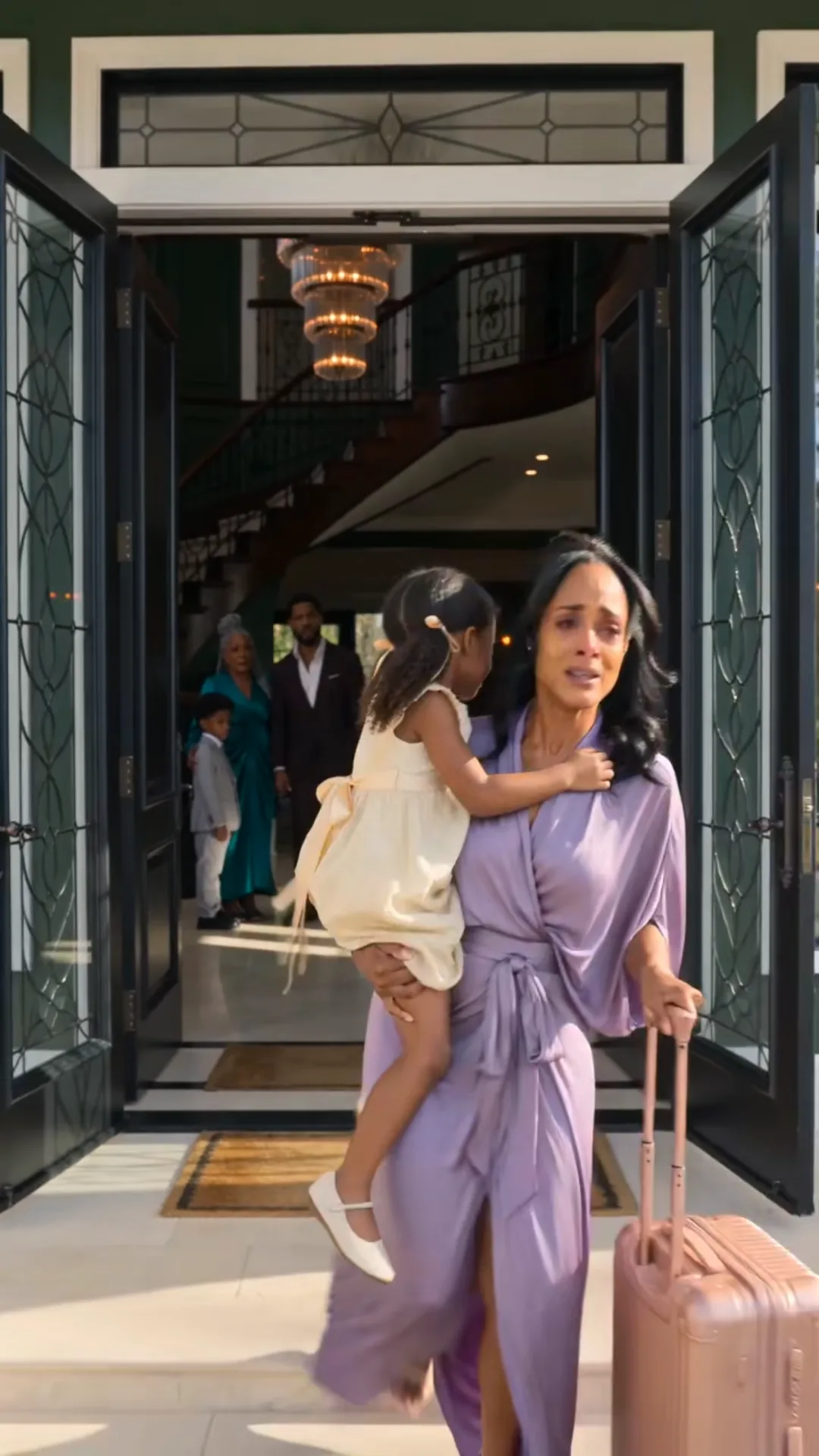
Sam Cole had a system for surviving bad days.
He counted things.
Tile lines on the marble floor. Crystals hanging off the chandelier, though he'd lost count of those around four hundred and given up trying to be exact. Buttons on his grandmother's coat. Anything with a fixed, countable number, because fixed, countable numbers were the one category of thing in this house that did not change depending on who was angry.
On the morning Elena left, he counted the wheels of the suitcase.
Two. He'd checked before, when she packed for trips. Small wheels, rose gold, matching the handle.
Two wheels rolling across marble made a specific sound — a soft rattling click, click, click — and Sam had decided, standing very still beside his grandmother's rigid arm, that he would remember that sound for the rest of his life.
He was right.
He was nine years old, and he had already learned the two hardest lessons a child can learn early: that the people who are supposed to stay sometimes don't, and that crying about it doesn't bring them back, so you might as well save the energy.
His birth mother, Vivian, had taught him the first lesson.
She called on his birthday, most years, from wherever the modeling world had sent her that season — Milan, once, memorably, calling him from a party where he could hear music and glasses clinking behind her voice, saying "Happy birthday, sweetheart, Mommy's so proud of you" in a tone she probably also used with the caterers.
She had not taught him the second lesson on purpose. He'd figured that one out himself, alone, age six, sitting on the stairs after she canceled a visit for the third time in a row, discovering that his chest could ache exactly as much whether or not any sound came out of it.
Elena had unwittingly begun to unteach him that lesson.
In the five years she'd been his stepmother, she had shown up. Not perfectly — nobody in this house did anything perfectly, least of all around each other — but consistently, which Sam had learned was rarer and more valuable than perfect.
She learned that he liked his sandwiches cut diagonally, never straight.
She learned that thunderstorms made him check the closet three times before bed, and instead of telling him it was silly, she checked it with him, every time, until he was seven and didn't need her to anymore — though she still offered, sometimes, on the worst-storm nights, and he still sometimes said yes.
She had never once, in five years, made him feel like a leftover piece of someone else's old life.
So when he stood in the foyer that morning, watching her carry his half-sister toward the open glass doors, Sam did not count tiles.
He counted the suitcase wheels, twice, click click click, click click click, and he did not cry, because he had promised himself at six years old that he would never again let his father or his grandmother watch him fall apart over a woman walking out a door.
But something in his chest was doing exactly that.
Falling apart. Quietly. Invisibly. The kind of collapse that doesn't show up on the outside, doesn't earn anyone's comfort, doesn't get noticed by anyone standing two feet away and thinking about their own grief instead.
His father's voice cracked the air. "You're really leaving?"
Sam watched Elena's shoulders. He had learned, over five years, to read her shoulders the way other kids read facial expressions — she held her feelings there, high and tight, when she was trying not to show them anywhere else.
They were up around her ears.
"Yes," she said.
Sam's grandmother inhaled through her nose, sharp, the sound she made when something had gone exactly as badly as she'd always predicted it would.
"I told your father," Margaret murmured, apparently to no one, or perhaps to Sam, who happened to be standing closest, "that girl was never built for this family."
Sam didn't answer.
He had learned, also, when not to answer his grandmother.
He watched Ivy twist in Elena's arms, watched his little sister — half-sister, technically, though Sam had never once in four years used that word in his own head — ask the question that Sam himself had wanted to ask and never dared:
Can we leave?
Yes.
One syllable, and something in Sam's stomach dropped the way it did on the elevator down from the penthouse when it moved too fast.
Because he understood, watching Elena's spine straighten, watching her walk toward the doors with a certainty she'd never once shown inside these walls, that "we" did not include him.
It had never once occurred to him, until that exact second, that it might not.
He had spent five years thinking of Elena as something close enough to permanent, the way a boy who's already lost one mother learns to hope in small, careful amounts, testing the ice before he puts his full weight on it.
He'd put his full weight on it.
And now she was walking through a door that would close, eventually, the way all doors in this house eventually closed, and Sam Cole stood very still in his small dark suit and did not cry, because that was the rule, because that had always been the rule, and rules were the only fixed countable thing he had left.
He counted the wheels one more time as they crossed the black mat by the entrance.
Click. Click.
Then the door swallowed the sound, and the foyer went quiet except for his father's breathing, and his grandmother's hand, cold and dry, landing on his shoulder like a verdict of its own.
May you like



(continued in Part 4)
---







