Chapter 1 - The Cold Line in the Floor
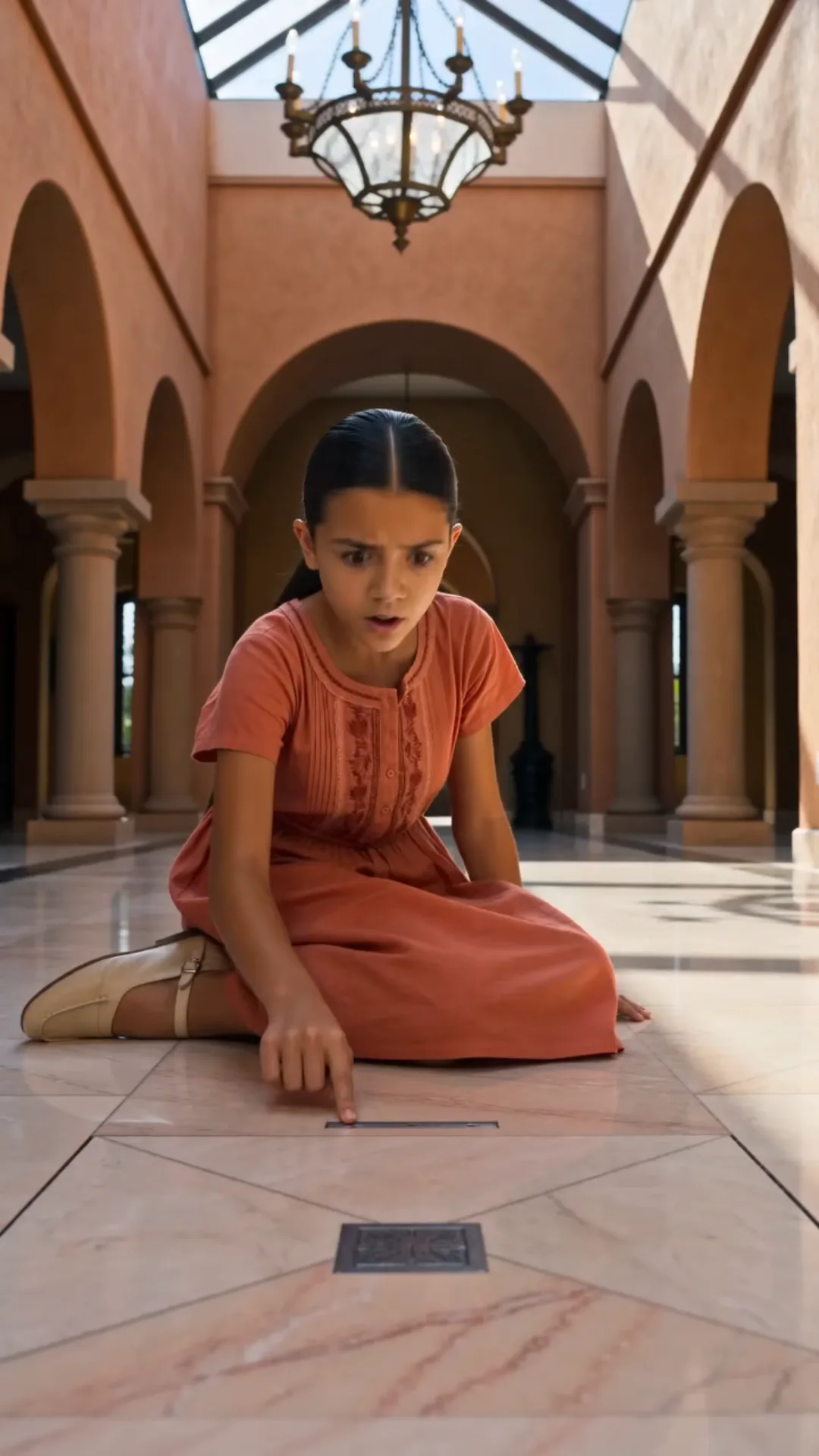
Hale Manor had forty-one rooms, and Sophie had counted every single one of them.
She was seven, and counting was the thing she did instead of asking questions, because in this house, questions had a way of disappearing into the marble the same way her voice did whenever she called down the long, echoing hallways and nobody answered.
The floors were the best part.
White marble, veined with thin grey lines like frozen lightning, cold under bare feet even in summer, polished so bright it threw back the chandelier light in broken gold pieces whenever Sophie lay down and looked up through it.
She'd found the seam by accident.
She'd been playing marbles — real ones, glass, a full set her father had brought back from some trip she couldn't remember the country of — and one had rolled, the way marbles always seem to roll, toward the one place in the entire foyer she'd never had a reason to look closely at before.
It stopped against a thin metal line in the floor.
Not a crack. Cracks in marble looked jagged, uneven, the marks of something breaking under its own weight.
This was straight. Deliberate. A seam running in a perfect square, wide enough that if she pressed her fingernail into the groove, she could feel cool air moving against her skin — a thin, steady breath rising up from somewhere beneath the house.
She lay flat on her stomach, the way she did when she wanted to see the chandeliers reflected sideways, and pressed her ear to the marble.
At first: nothing. The particular, heavy silence of old stone.
Then, so faint she thought her own heartbeat might be inventing it: a sound.
Small. Rhythmic. Something scraping, or shifting, far below the floor she was lying on.
Sophie sat up very fast.
She wasn't scared exactly — she didn't yet have enough information to know what kind of feeling this was supposed to be — but her whole body had gone alert in the specific way it did during hide-and-seek, the moment right before you find someone, when the air itself seems to know a secret is about to end.
She pressed her hand flat against the seam.
The cold air moved against her palm again, steady, patient, like breathing.
"Hello?" she whispered, the word swallowed almost instantly by the vast, echoing foyer.
Nothing answered in words. But the scraping sound below shifted — closer now, or so it seemed, as though whatever was making it had noticed her voice and moved toward it the way a plant moves toward light.
Sophie's finger traced the seam all the way around its square edge.
It wasn't a decoration. It wasn't a design detail some architect had added for style, the way her father sometimes explained the strange, beautiful, purposeless things in this house — the stained glass nobody looked at, the second staircase nobody used.
This was a door.
A door built to look like it wasn't one.
She thought, with the sudden clarity children sometimes have about things adults spend years avoiding, of her mother.
Three years ago, her mother had been in this house every single day — humming in the kitchen, reading to her on the window seat in the library, smelling like the lavender soap Sophie still sometimes found, unopened, in the bathroom cabinet nobody had thrown away.
And then, one day, she simply wasn't.
She left, her father had told her, his voice careful in the particular way adult voices get careful around subjects that hurt too much to examine directly. Sometimes grown-ups need to go find themselves. It's not your fault. It was never your fault.
Sophie had believed him, the way seven-year-olds believe most things they're told by the person who tucks them in — not because the story made complete sense, but because the alternative, that her mother might have wanted to stay and simply couldn't, was too large and too painful a thought for a small chest to hold comfortably.
But now, lying on cold marble with her palm pressed against a seam that breathed like something alive, a different thought arrived instead, unbidden, enormous.
What if she never left at all.
Footsteps echoed from the east hallway — her father's footsteps, she knew them by the particular unevenness of his left shoe, worn slightly thin at the heel from years of pacing this same marble during phone calls he thought no one could hear.
Sophie scrambled up, her heart hammering, marbles forgotten and rolling loose across the floor behind her.
May you like



"Daddy!" she called, her voice cracking with an urgency she didn't fully understand yet. "Daddy, come look, come look—"
---