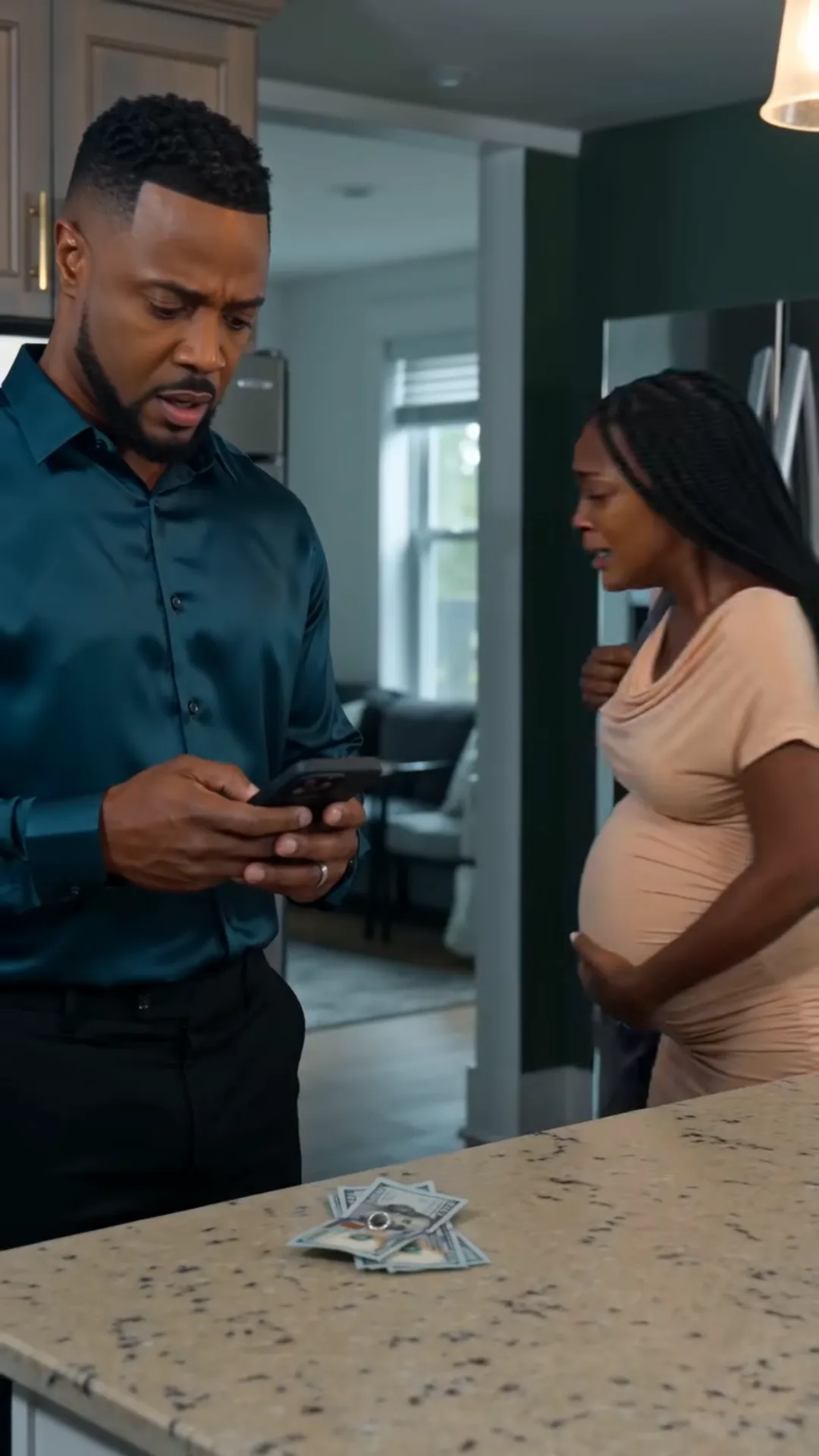
Chapter 1 - The Sound of a Phone Screen Lighting Up
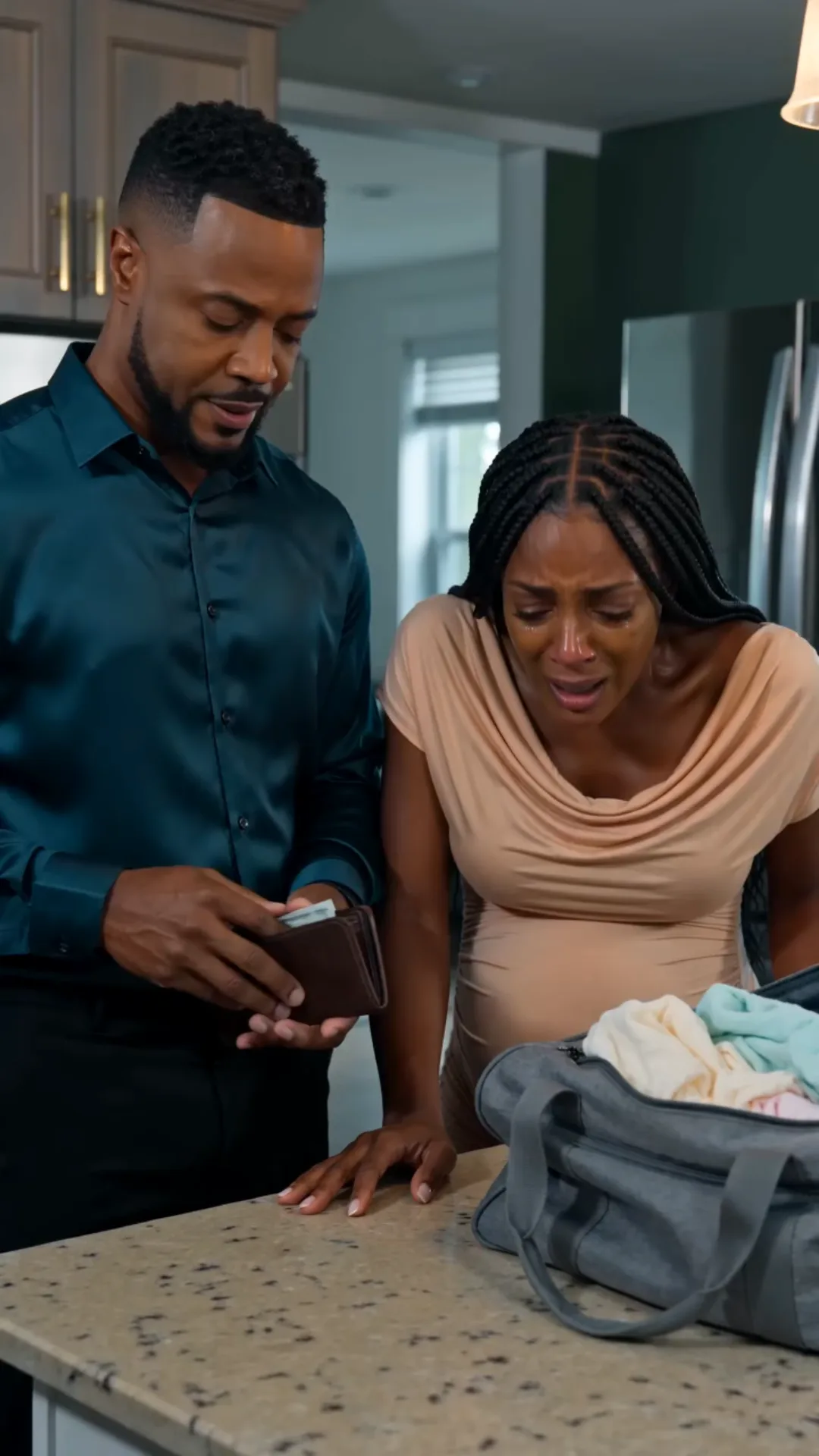
Emma used to keep a list.
Not of complaints. She would have hated that word.
A list of small proofs — moments she could point to later, if she ever needed reminding, that Julian still loved her the way he had in the beginning.
March 3rd: brought me soup when I had the flu, sat on the bathroom floor while I threw up, didn't even flinch.
June 14th: drove two hours to get the specific brand of prenatal vitamins that didn't make me nauseous.
August 2nd: fell asleep with his hand on my stomach, woke up when the baby kicked, laughed out loud in the dark.
She had stopped adding to the list in October.
Not because nothing happened.
Because she'd started needing a different list — the one she didn't want to write, the one that would have required her to admit something she wasn't ready to admit yet.
---
The apartment was beautiful. Everyone said so.
Floor-to-ceiling windows. A kitchen with grey cabinetry and a granite island Julian had chosen from a catalog without asking her opinion, because, he said, you're better at the pretty stuff, I'm better at the practical stuff, and she had laughed at the time, charmed, not yet understanding that this division of labor would eventually come to describe their entire marriage.
She did the pretty stuff.
He did the practical stuff.
Somewhere in that arrangement, she had slowly stopped being asked about anything at all.
---
Julian worked for his father's investment firm. Had, since business school. He was good at it — brutally, efficiently good, the kind of good that earned him a corner office by thirty-two and a phone that never, not once, stopped buzzing.
Emma had been a set designer, once. Theater, mostly — small stages, big ambitions, the particular poverty of people who love something more than they love stability.
She'd given it up when they married. Not because he asked her to.
Because he never asked her about it at all, and eventually a thing you're never asked about starts to feel like a thing that doesn't matter, and eventually you stop mentioning it yourself, and eventually — this was the part that frightened her most, looking back — you stop remembering why you loved it in the first place.
---
The pregnancy had been an accident, in the practical sense, and a gift, in every sense that mattered to Emma.
Julian's reaction, when she told him, had been to nod, twice, and say, "Okay. We'll need to talk to the accountant about the tax implications of dependent status," before going back to his laptop.
Emma had stood in the doorway of his office for a long moment, waiting for something else. A smile. A question. Are you happy?
It never came.
She told herself, that night, that some men just process things differently. That he'd come around. That the coldness was armor, not absence.
She would spend the next eight months slowly, quietly, testing that theory against the evidence, the way a scientist tests a hypothesis she is desperate to prove true and increasingly unable to.
---
The evidence did not cooperate.
He came to exactly one ultrasound appointment, in the fifth month, and spent it responding to emails in the waiting room, joining her in the exam room only when the technician called his name twice.
He'd looked at the black-and-white image on the screen — their daughter, curled and small and entirely real — for perhaps four seconds.
"Good," he'd said. "Looks healthy."
Then his phone had buzzed, and he'd stepped out to take the call, and Emma had lain there on the exam table alone, gel cooling on her stomach, watching her daughter's tiny heartbeat flicker on the monitor, feeling something in her own chest quietly, irreversibly, begin to harden.
---
She told her sister, once, in September, over coffee neither of them finished.
"He's just stressed," Emma said. "The Whitmore account. His dad's been hard on him."
Her sister, Kate, had looked at her with an expression Emma recognized even then, though she wasn't ready to name it — pity, layered carefully under patience, the specific look people give you when they've already seen the ending of a story you're still insisting is unfinished.
"Emma," Kate said carefully. "When's the last time he asked how you were doing? Not the baby. You."
Emma had opened her mouth.
Closed it.
Genuinely, actually tried to remember, and found, with a small cold shock, that she couldn't.
---
She didn't leave then. It's important to understand that about her — she wasn't a woman who left easily, who saw one red flag and walked.
She was a woman who believed, with the specific, exhausting faith of people raised to see the good in everyone, that love was a renewable resource, that patience eventually got paid back, that if she just held on a little longer, a little more gently, the version of Julian she'd fallen in love with — attentive, funny, endlessly curious about her — would resurface, the way a tide eventually comes back in.
She did not yet understand that some tides don't come back.
That some men don't get lost and found again.
That some men simply, quietly, decide you are no longer worth the effort of finding, and let the distance between you grow because the distance is easier than the honesty.
---
October ended. November came in grey and short-tempered, the way November always does in cities that don't get enough sun.
Emma's belly grew heavy enough that walking became its own small negotiation with gravity.
Julian's hours grew longer.
By the time she was thirty-six weeks along, she had started, without fully admitting it to herself, keeping a second list.
Not proofs of love.
Proofs of something else — dates and small unkindnesses, catalogued the way you catalogue anything you're building a case for, though she wasn't yet sure, consciously, what case that was.
November 2nd: forgot the anatomy scan follow-up. Said work ran late. It was 6 p.m.
November 19th: I asked him to feel the baby kick. He said "in a second" and never came back to the couch.
December 1st: cried in the shower so he wouldn't hear. He didn't ask why my eyes were red at dinner.
---
Her due date was December 20th.
She'd imagined, in the soft, hopeful part of her mind she hadn't yet learned to distrust, that the approaching birth would wake something in him. That holding his daughter would be the tide finally turning.
She would learn, in a kitchen with grey cabinets and cold granite, on an ordinary Tuesday evening, exactly how wrong that hope had been.
She would learn it in the space of about twelve seconds, watching a man count out cash for a cab instead of looking at her face.
But that was still two weeks away.
For now, she stood in the kitchen most evenings, one hand pressed to the small of her back, watching her husband's face lit blue by a phone screen, and told herself, one more time, that things would change.
She did not yet know that the changing had already started.
May you like



Just not in the direction she'd hoped.
---