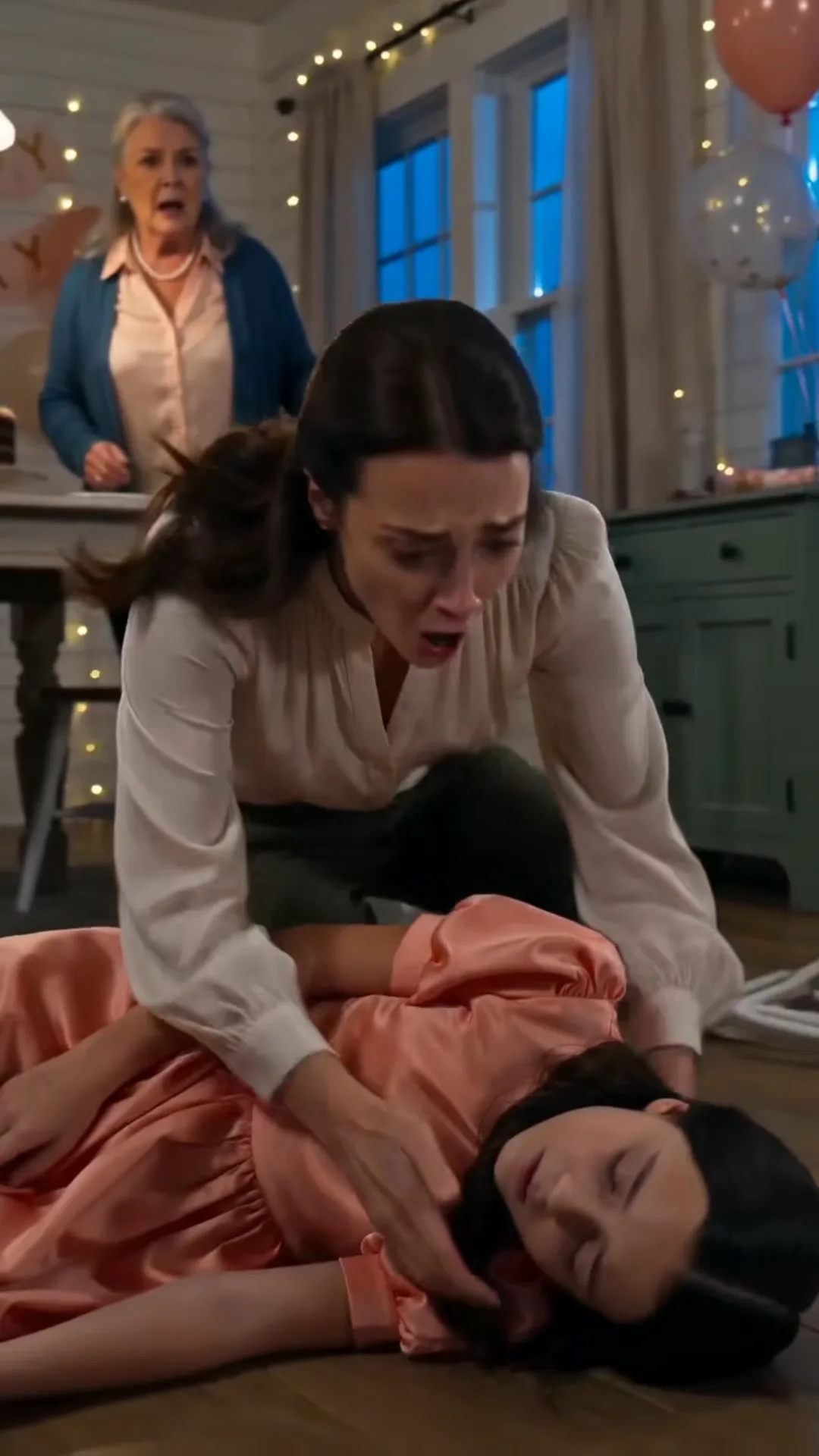
Chapter 2 - What Nobody Told the Cake
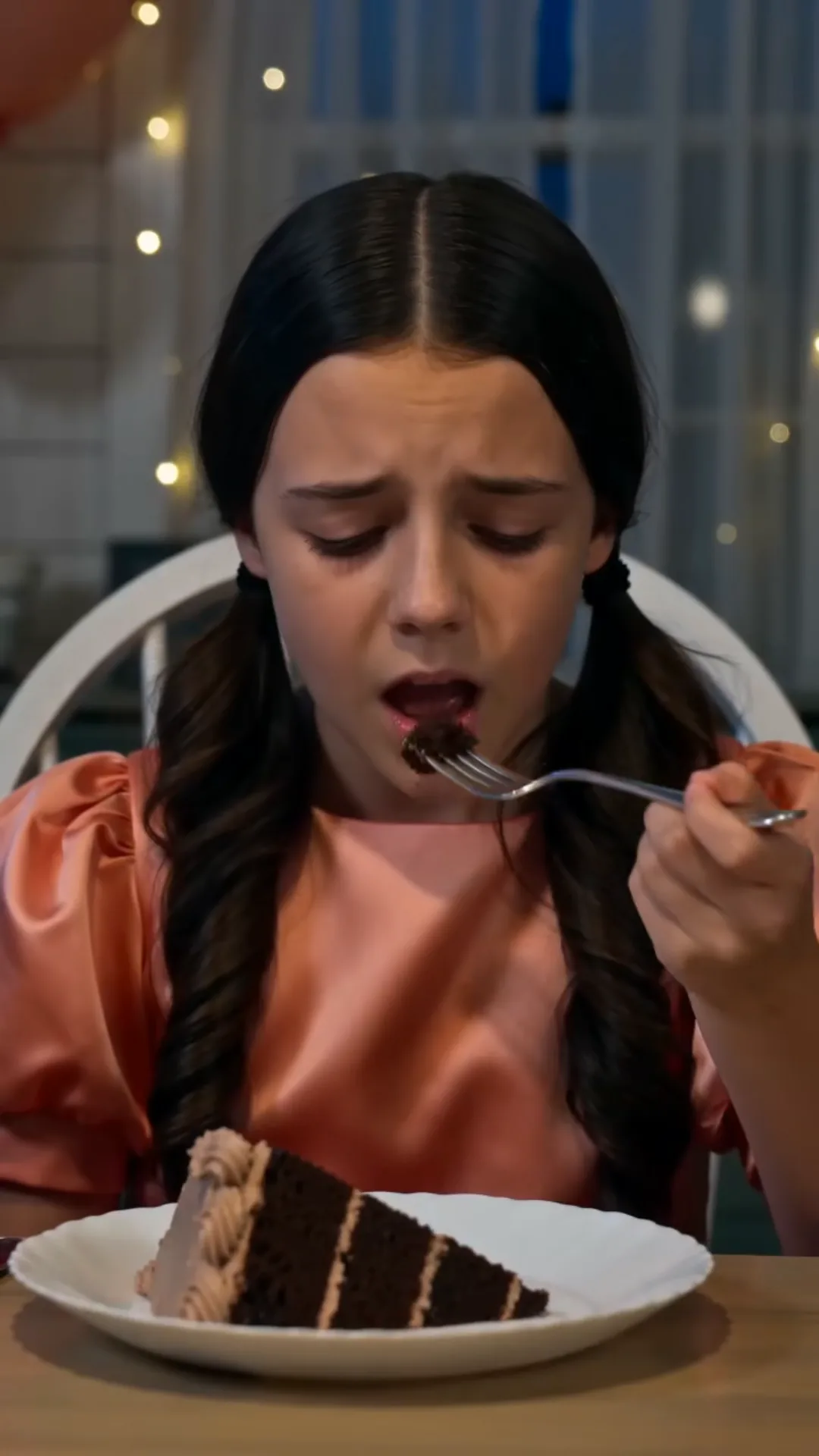
Here is what Eleanor did not know.
In March, four months before the party, Emma had eaten a single walnut from a trail mix at her after-school program.
Her lips swelled first. Then her throat felt "itchy, like a sweater," she told the school nurse, in the specific, oddly precise language of a child describing a sensation for the first time. Hives bloomed across her forearms in raised red islands.
The nurse had given her Benadryl and called Claire, and Claire had left work with her heart going sideways in her chest, and by the time she reached the school Emma was pink-cheeked and drowsy and fine, technically fine, but the allergist appointment two weeks later confirmed it in a single clean sentence.
Tree nut allergy. Moderate to severe. Carry an epinephrine auto-injector at all times.
Claire had cried in the parking lot after that appointment. Not from fear, exactly — fear came later, in waves, usually at 2 a.m. — but from a simpler, uglier feeling: another thing. Another thing to track, another label to read, another risk in a world that already felt engineered to take things from her.
She had told the school. The after-school program. Rachel. Emma's pediatrician.
She had not told Eleanor.
Not out of malice. Not even really out of the rift between them, though the rift didn't help.
She had not told Eleanor because, in March, they had not spoken in five months, and the last conversation had ended with Eleanor saying something about the funeral flowers that Claire still couldn't repeat out loud, even to Rachel, even to her own reflection.
You do not call a woman like that to update her on your daughter's allergy panel.
You especially do not call her when a part of you — a part you are deeply ashamed of, a part you have never once said aloud — does not fully believe she deserves to be updated on anything about Emma at all.
So the information simply never traveled.
It sat in a folder on Claire's kitchen counter, in the notes app on Claire's phone, in the small red pouch in Emma's backpack that held the EpiPen Claire had drilled her, over and over, never to touch without a grown-up. It sat in every place a piece of information can sit except the one place that would have mattered today.
It did not sit in Eleanor's kitchen, where a recipe card — soft at the corners, stained brown at one edge from forty years of use — called for a cup of finely ground walnuts folded into dark ganache.
Fold gently, the recipe said, in David's grandmother's looping handwriting. Do not overmix, or the nuts will sink.
---
Eleanor had made this cake at every birthday David ever had.
She had made it the year he turned eight and broke his arm falling out of the oak tree the week before, so she'd had to feed him bites of it left-handed because his right arm was in a cast and he refused, with the stubbornness that Emma had apparently inherited two generations down, to be fed with the "wrong hand, Mom, that's not how eating works."
She had made it the year he turned sixteen and brought a girl to the party for the first time — not Claire, someone before Claire, a girl whose name Eleanor could no longer quite recall — and David had eaten two slices and declared, mouth full, that it was the best thing his mother had ever made him, better than love, better than anything, and Eleanor had swatted him with a dish towel and pretended to be scandalized and secretly, privately, glowed for a week.
She had made it the year he turned twenty-nine, the last birthday, six months before the accident, and he'd driven two hours each way just for cake, just for one Saturday afternoon in her kitchen, and she had not known — how could she have known — that she was watching him eat it for the final time.
The cake was not a recipe to Eleanor.
The cake was the last unbroken thread she had to her son.
And so when Claire had called in early June — stiff, formal, the call of a woman doing something because a therapist had suggested it, not because she wanted to — and said, Emma would like you to come to her birthday, if you'd like to come, Eleanor had said yes before she let herself think about all the reasons to say no.
And she had decided, in the weeks after, lying awake at 3 a.m. the way she'd been doing since the funeral, that she would bring the cake.
His cake.
Because if she could not give her granddaughter her father, she could at least give her the thing he loved. She could put something of him into the girl's mouth, into her memory, into the small permanent archive a body builds out of birthdays and sugar and being celebrated.
It did not occur to Eleanor to ask if Emma had any allergies.
It did not occur to her because in Eleanor's generation, in Eleanor's house, you did not ask. You made the cake your mother made you, and your children ate it, and if a child didn't like walnuts they simply picked around them, the way David used to, carefully excavating the nuts from his slice and lining them up on the rim of his plate like small brown casualties.
Eleanor had never once, in sixty-one years of living, met a child for whom walnuts were not an inconvenience but a threat.
She did not know such children existed in the abstract, let alone that her own granddaughter was one of them.
Nobody had told her.
Nobody had told the cake.
---
The cake sat now in its carrier on Claire's kitchen counter, dark and glossy under its dome of plastic, a slab of dense chocolate crowned with ganache that had been folded, gently, the way the recipe demanded, with a full cup of walnuts ground fine enough to disappear into the color of the frosting itself.
Ground fine enough that a person could eat an entire slice and never see a single piece.
Ground fine enough that even a careful child, the kind of child who had been taught to check her food, the kind of child who at daycare now peered suspiciously at unfamiliar cookies and asked, does this have nuts in it? — even that child would have no visual warning.
No lump to spot. No fragment to push aside.
Just chocolate. Dark, familiar, celebratory chocolate, made with love, by a grandmother who believed — genuinely, completely believed — that she was doing the single kindest thing available to her that day.
Claire had asked, when Eleanor set the carrier down that afternoon, "What kind of cake is it, exactly?"
"Chocolate," Eleanor had said. "David's favorite."
"Nothing unusual in it? Emma can be picky."
It was the closest Claire came, that whole afternoon, to asking the question that would have changed everything.
Emma can be picky was not the same sentence as Emma has a severe tree nut allergy and carries an EpiPen in her backpack.
It was vaguer. Smaller. A sentence built for small talk, not safety.
And Eleanor, hearing it, had simply smiled the particular smile of a woman certain of her own recipe.
"She'll like this one," Eleanor said. "Everyone does."
---
There is a particular cruelty in accidents like this one — the kind built not from malice but from silence, from two people each holding half of the same fact and never once thinking to lay their halves down side by side.
Claire held the half that said my daughter's body will turn against her if she eats the wrong thing.
Eleanor held the half that said my dead son loved this cake more than almost anything, and I want to give a piece of him to his daughter.
Both halves were true. Both halves were, in their own way, acts of love.
Neither woman knew that the other's half of the truth was walking, right now, toward a wooden dining table set with fox napkins and twelve balloons, six pink and six gold, where a little girl in a pink dress was about to be asked to eat one bite.
Just one bite.
To make her grandmother happy.
May you like



To taste, for the first and last uncomplicated time, what her father used to love.
---