Chapter 1 - The Wager
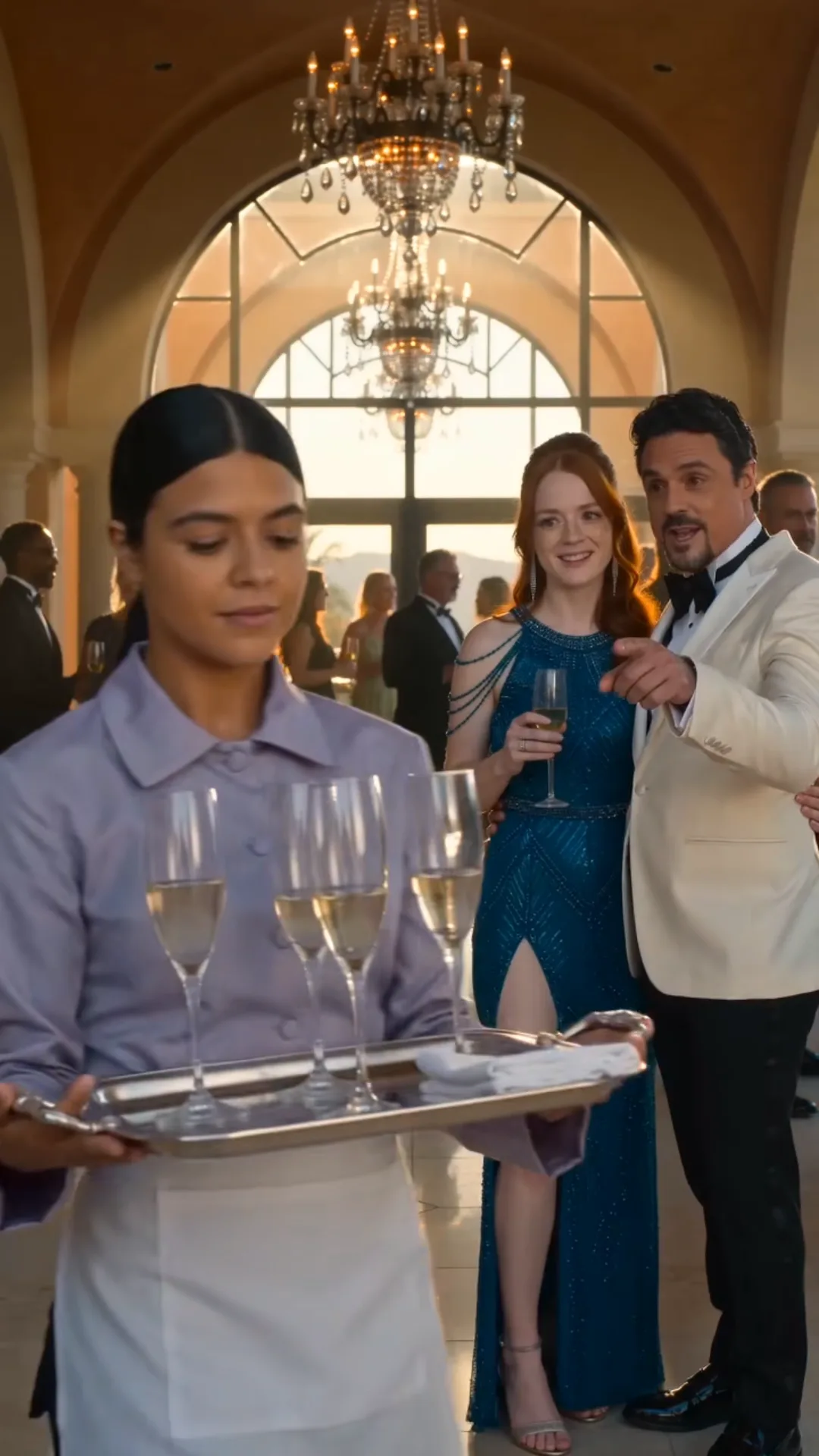
The tray was heavier than it looked.
Four champagne glasses. One white cloth folded twice. Elena had carried heavier trays for less pay, in worse shoes.
Tonight the shoes pinched anyway.
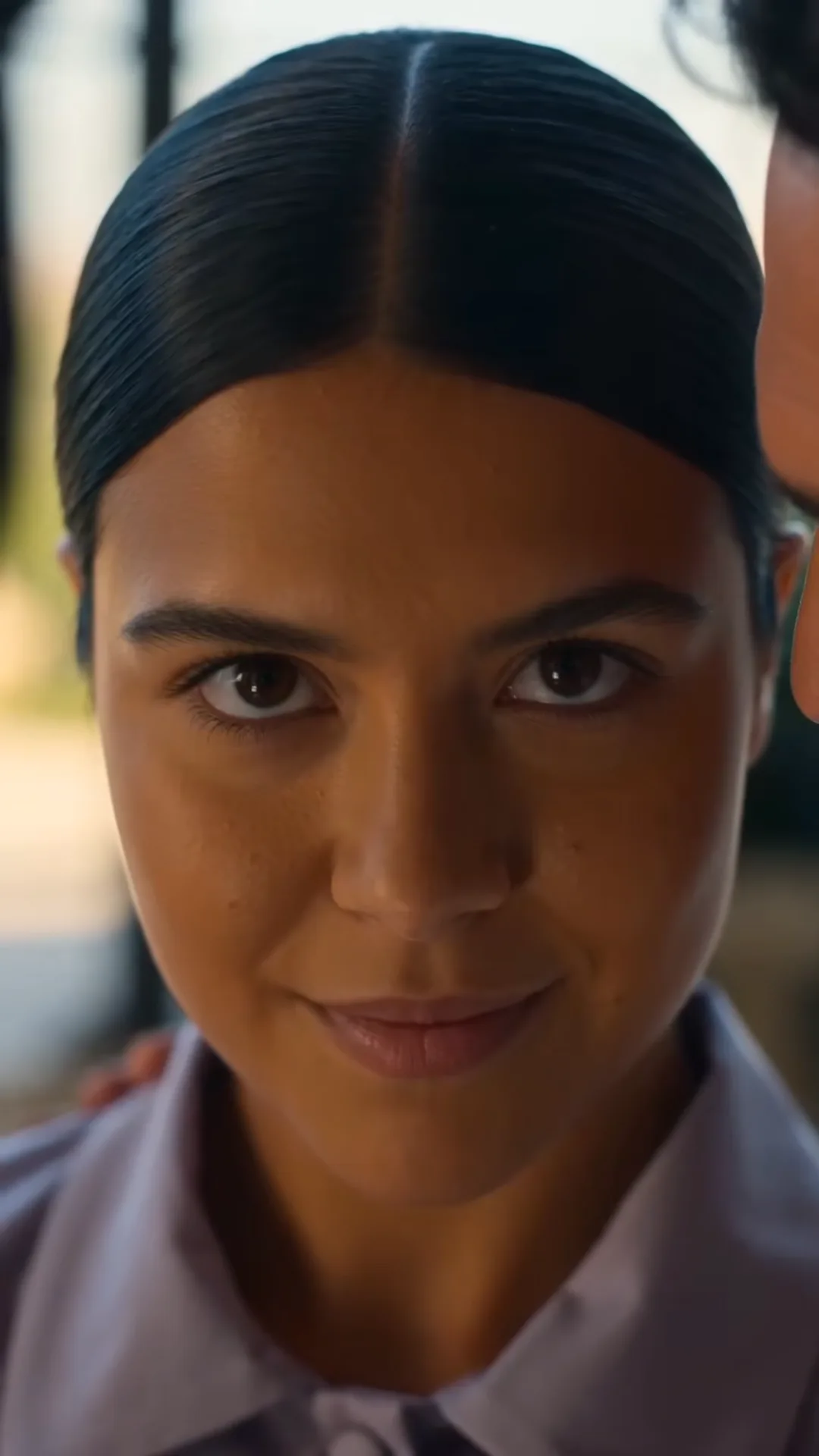
She kept her eyes down. That was the trick. Not submission — geometry. Look down, you see the floor, the floor never insults you.
The marble here was the color of old butter, veined with gray, polished so hard it threw back the chandelier light in long yellow smears. She had scrubbed floors like this once, before she learned to walk on top of them instead.
Somewhere behind her, laughter. Bright, easy, expensive laughter.
She didn't turn.
She didn't have to. She'd been in this room for two hours and she already knew the shape of every laugh in it — which ones came from real joy, which ones came from champagne, and which ones came from cruelty wearing a tuxedo.
The one behind her now was the third kind.
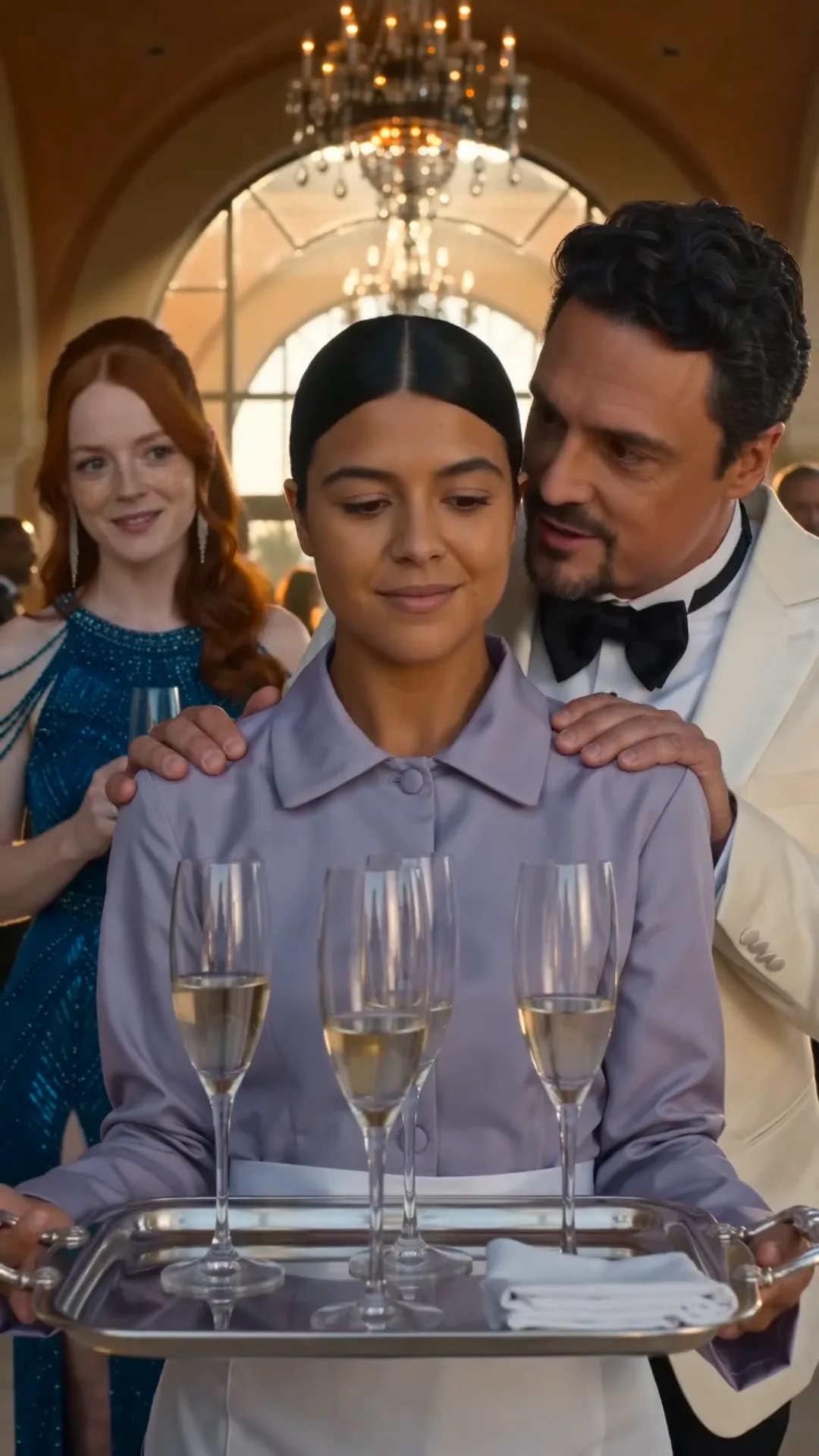
"There," a man's voice said. Low. Amused. Aimed at her back like a finger. "The one with the tray."
Elena's grip did not change. Her knuckles did not whiten. She had trained her hands the way other people trained their faces — into stillness, into nothing worth noticing.
"What about her?" A woman's voice. Silver-bright, edged with static, the voice of someone who had never once in her life had to ask permission to leave a room.
"I'll bet you," the man said, "that I could make her fall in love with me by midnight."
Elena's foot did not stop moving. One step. Then another.
"And?" the woman said, delighted already.
"And dump her at the door like yesterday's paper." A pause, a smile you could hear even without looking. "If I do — you give it to me tonight."
The woman laughed. Sharp, delighted, cruel in the specific way of people who have never once been the joke.
"You're terrible," she said, and it sounded like a compliment.
Elena reached the service door. Her shoulder found the brass handle without her eyes needing to look for it — three years of muscle memory, three years of knowing exactly where the exits were in every room she was paid to disappear inside of.
She did not disappear yet.
She stopped. One half-second. Long enough to feel the weight of eyes on her back, not looking, but knowing.
Long enough to decide something.
Then she walked through into the kitchen, where the light was fluorescent and honest and the noise was pans instead of violins, and set the tray down on the steel counter so gently the glasses didn't even ring.
"You're shaking," said Marisol, sixty-one years old, twenty-eight years on this floor, hands like a bricklayer's and a face like she'd seen every kind of party there was and stopped being impressed by any of them.
"I'm not," Elena said.
"You're shaking," Marisol said again, not unkindly, and took the tray from her before she could argue.
Elena looked at her own hands. They were not shaking.
They were still. Stiller than they had been in months.
That was the part that scared her.
---
She had heard the number before she heard the bet. That was the strange thing about the man's voice — it hadn't started with cruelty, it had started with a joke, and the cruelty had ridden in on the back of the laugh like something small and armed hiding inside a gift box.
I'll give it to you tonight.
She didn't know what "it" was. A ring. A car. A year of someone's silence.
It didn't matter. What mattered was the other half of the sentence — the half about her. The half where she was the coin flipped to settle someone else's bet.
She had been that before. Not in this room, not with this money, but the shape of it was old and familiar, worn smooth from handling. Men who looked at a uniform and saw a blank space where a person should be. Men who thought waitress was a kind of invisibility cloak, and that whatever they said in front of one didn't count, because she wasn't really there to hear it.
She was there. She heard everything.
She always heard everything.
Marisol was rinsing the champagne flutes under water so cold it fogged. "Table nine wants more of the salmon canapés. And table twelve's wife is crying in the coat check again, third time tonight, don't ask."
"I won't," Elena said.
"You okay?"
Elena looked at the little round window in the swinging door, the one that let kitchen staff check the room before walking into it — a tiny porthole into a world with a different set of laws.
Through it, she could see him.
Black tuxedo. Bow tie undone at a rakish diagonal that had probably taken him ten minutes in a mirror to get exactly that careless-looking. A jaw that belonged on a watch advertisement. He had his arm around the blonde woman's waist the way men like that held things — loosely, casually, the grip of someone who has never once worried about anything slipping away from him, because everything always came back.
He was laughing at something. Head tipped back. Throat exposed. A man utterly, thoroughly unafraid.
"I'm fine," Elena said, and pushed the door open, and went back out into the gold.
---
The rest of the room didn't know yet. That was the strange privilege of being spoken about instead of spoken to — she had information nobody else in that ballroom had, not even the woman with the silver dress and the delighted laugh, who thought she was in on the joke and did not understand yet that she was also, a little, its object. Elena understood something about jokes like that. They always needed at least two people to hurt. The target, and the person standing close enough to laugh and not realize the blade was pointed at her too, eventually, in a different way.
She refilled a glass at table six. Smiled the smile that cost her nothing and meant nothing and had gotten her through four hundred nights like this one.
She did not look at table nine, where he was.
She felt him anyway. The way you feel weather changing before the sky tells you.
Fifty feet away, Damien Cole — she'd learn the name later, though right now he was only the man in the tuxedo, only the bet — watched a waitress not look at him, and found, to his mild surprise, that he wanted her to.
He had made bets like this before. He always won them. Winning had stopped being interesting around the fourth or fifth time; what he chased now was the shape of the win, the small furniture of somebody's face changing when they realized they'd fallen for someone who was never going to stay.
This one felt different, and it took him a moment, turning his glass by the stem, to understand why.
She hadn't looked at him.
Every other version of this game started with a look. A held glance across a room, an accident of eye contact that either party could later pretend not to remember making. This one hadn't given him that.
She had given him a shoulder. A very deliberate, very composed shoulder.
Vivienne — the blonde, the woman with the silver dress and the laugh like a struck bell — noticed him noticing.
"You're staring," she said, delighted.
"I'm calculating," Damien said.
"Calculating what?"
He smiled, and it was a beautiful smile, and it had never once in his life failed to get him exactly what he wanted.
"How long it'll take," he said.
Vivienne raised her glass. "Midnight. That's the bet."
May you like



"Midnight," he agreed, and did not know yet that he had already made a mistake, the first small crack in the marble, the kind that doesn't show until much later, under weight.
---