Chapter 9 - The Cost of Being Seen
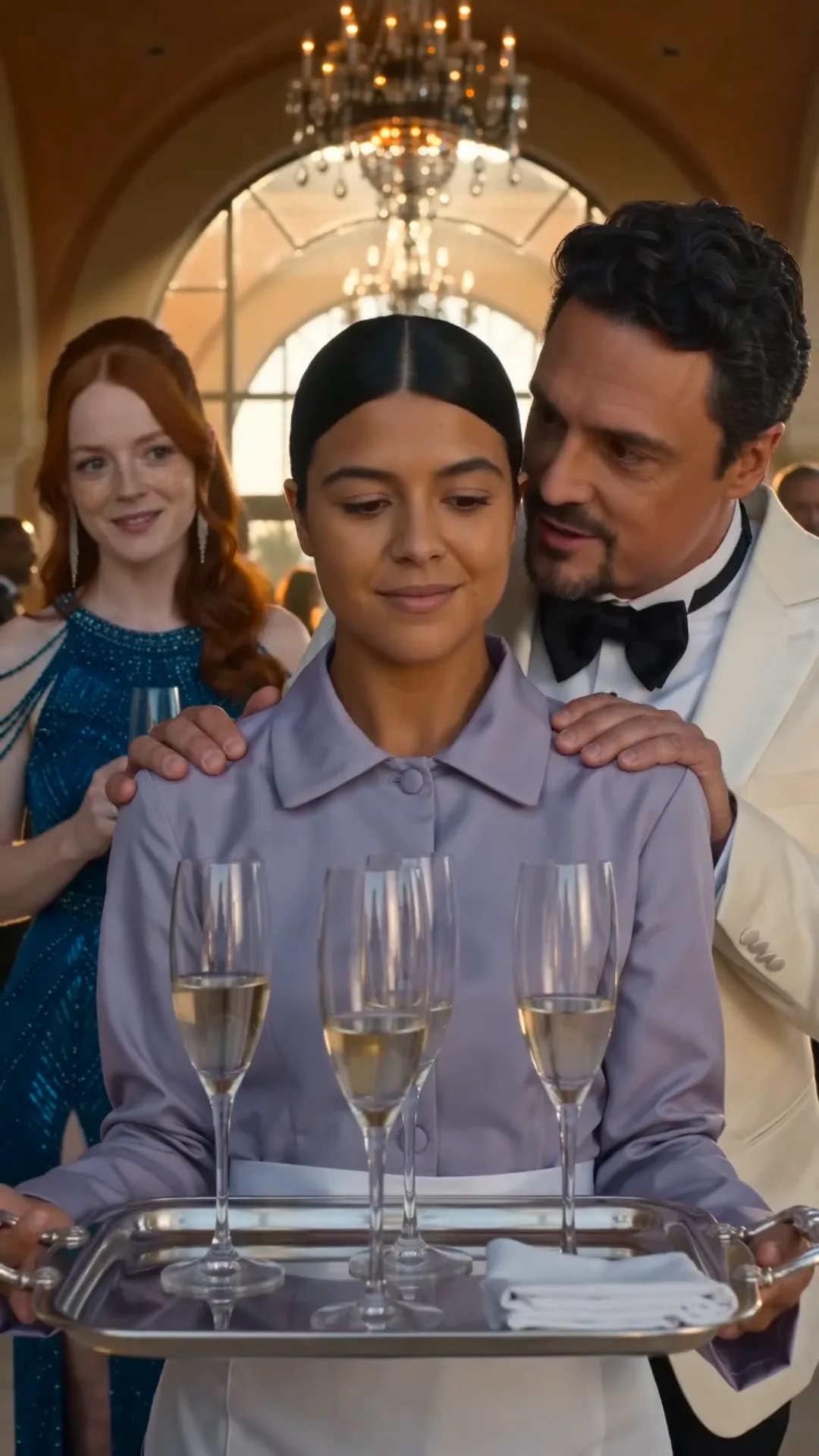
Three weeks passed before Damien Cole showed his face in public again.
The company's board had insisted on a statement — carefully worded, thoroughly lawyered, containing exactly enough contrition to satisfy the shareholders without admitting to anything that could be used against the family name in a courtroom. He'd read it over four times before signing off, and hated every sentence of it, because none of the sentences were actually about the thing he'd done. They were about optics, about the company, about protecting an inheritance he had, until three weeks ago, never once had to think of as something that could be taken away from him.
Nobody in that boardroom had asked him how he felt about Elena.
Nobody, he realized, had asked him anything real in years. That was the particular loneliness of a life built entirely around being unassailable — everyone around you eventually stops asking real questions, because real questions imply you might have real answers, and real answers imply you might, occasionally, be wrong.
He found her mother's restaurant on a Tuesday afternoon, the kind of gray, unremarkable day that made the whole city look like it was holding its breath.
He almost didn't go in.
He stood outside for nearly ten minutes, hands in his coat pockets, reading the chalkboard menu through the window, watching a dozen ordinary people eat lunch in a small warm room that had nothing to do with marble floors or chandeliers, and understood, standing there, that he had absolutely no right to walk through that door.
He went in anyway.
Elena was behind the counter, sleeves rolled up, hair pulled back, utterly unglamorous in a way that made his chest ache with something he didn't have a polished word for.
She saw him before he reached the counter. Her face didn't change — that same flat, professional stillness he remembered from the very first night, the tray of champagne glasses, the shoulder she'd refused to turn toward him.
"We're closing in twenty minutes," she said, not unkindly, exactly the tone she'd have used for any stranger.
"I didn't come to eat."
"Then I'm not sure why you're here."
He stood there for a long moment, feeling, for possibly the first time in his adult life, entirely without a script.
"I came to apologize," he said finally. "Not the boardroom kind. The real kind. I don't actually know how to do it well. I've never had much practice."
Elena set down the rag she'd been using to wipe the counter. Studied him with an expression he couldn't quite read — not forgiveness, not yet, but not the flat dismissal he'd half expected either.
"Go on, then," she said. "Practice."
He took a breath.
"I made a bet about you before I ever knew your name," he said. "That's the part I keep coming back to. I didn't fall for a person. I fell for a game I'd set up myself, and it took me weeks to realize the two things weren't the same, because I'd never once had to tell the difference before. Everyone I've ever dated fit neatly into whatever game I was already playing. You didn't. You kept correcting the rules until I couldn't recognize the shape of it anymore, and somewhere in there, I actually — " he stopped, searching for the word, finding it harder than he expected. "I actually cared. Which terrified me more than the ledger getting out ever did, if I'm honest."
Elena listened without interrupting, arms folded, weight settled back on one hip, the posture of a woman who had spent years learning to hear people out fully before deciding what, if anything, their words were worth.
"That's a nice speech," she said finally. "Better than the boardroom one, I'd guess."
"It's not a speech. I mean it."
"Maybe you do," Elena said. "But here's the thing you still haven't understood, even now, standing in my mother's restaurant trying to look humble. You didn't come here because you're sorry for what you did to me. You came here because you got caught, and getting caught is the first real consequence you've faced in your entire life, and you don't know what to do with the feeling, so you're calling it heartbreak because that word sounds nobler than comeuppance."
The words landed harder than anything Vivienne or the board or his own father had managed to say to him in three weeks.
Because they were true.
"Maybe both things are happening at once," he said quietly, after a long silence. "Maybe I am sorry, and maybe I also got exactly what I deserved, and maybe those two things aren't as separate as you're making them sound."
Elena was quiet for a moment. Something in her face softened, very slightly — not enough to call it forgiveness, but enough that he understood he hadn't been thrown out yet, which felt, given everything, like more than he had any right to expect.
"You should go," she said finally. "Not because I hate you. Because I don't actually know what I feel, and I'm not going to figure it out with you standing at my mother's counter waiting for an answer you can carry back to your board."
He nodded. Didn't argue — a small victory, she thought, that he'd learned that much at least.
At the door, he paused.
"For what it's worth," he said, "the fifty thousand dollars was never the point of any of this. Not to you, I understand that now. But it also stopped being the point to me somewhere around the second dinner. I just didn't know how to say that until it was too late for it to matter."
He left before she could answer.
Elena stood behind the counter for a long time after the door closed, listening to the small bell above it settle back into silence, feeling something complicated and unresolved sitting exactly where the anger used to be.
Marisol, watching from the kitchen doorway, said nothing at all — which was, from Marisol, its own kind of eloquent commentary.
"Don't," Elena said, without turning around.
"I didn't say anything."
"You were about to."
"I was going to say," Marisol said mildly, "that it's easier to hate a villain than to forgive a man who's actually trying. Doesn't mean you have to do either tonight."
May you like



Elena picked the rag back up, wiped a counter that was already clean, and said nothing else for the rest of the shift.
---







