Chapter 2 - The Whisper
He waited an hour before he moved.
An hour was strategy, not patience. Damien Cole did not have patience; he had timing, which looked the same from the outside but cost less.
An hour let the room forget the joke had been made out loud. An hour let Vivienne get bored enough to drift toward the terrace with her second cousin and a cigarette she wasn't supposed to be smoking indoors-adjacent. An hour let the waitress relax the half-inch of tension she carried in her shoulders, so that when he finally crossed the floor, she wouldn't see it coming from across the room and have time to build a wall.
He was good at walls. Better at finding the door in them.
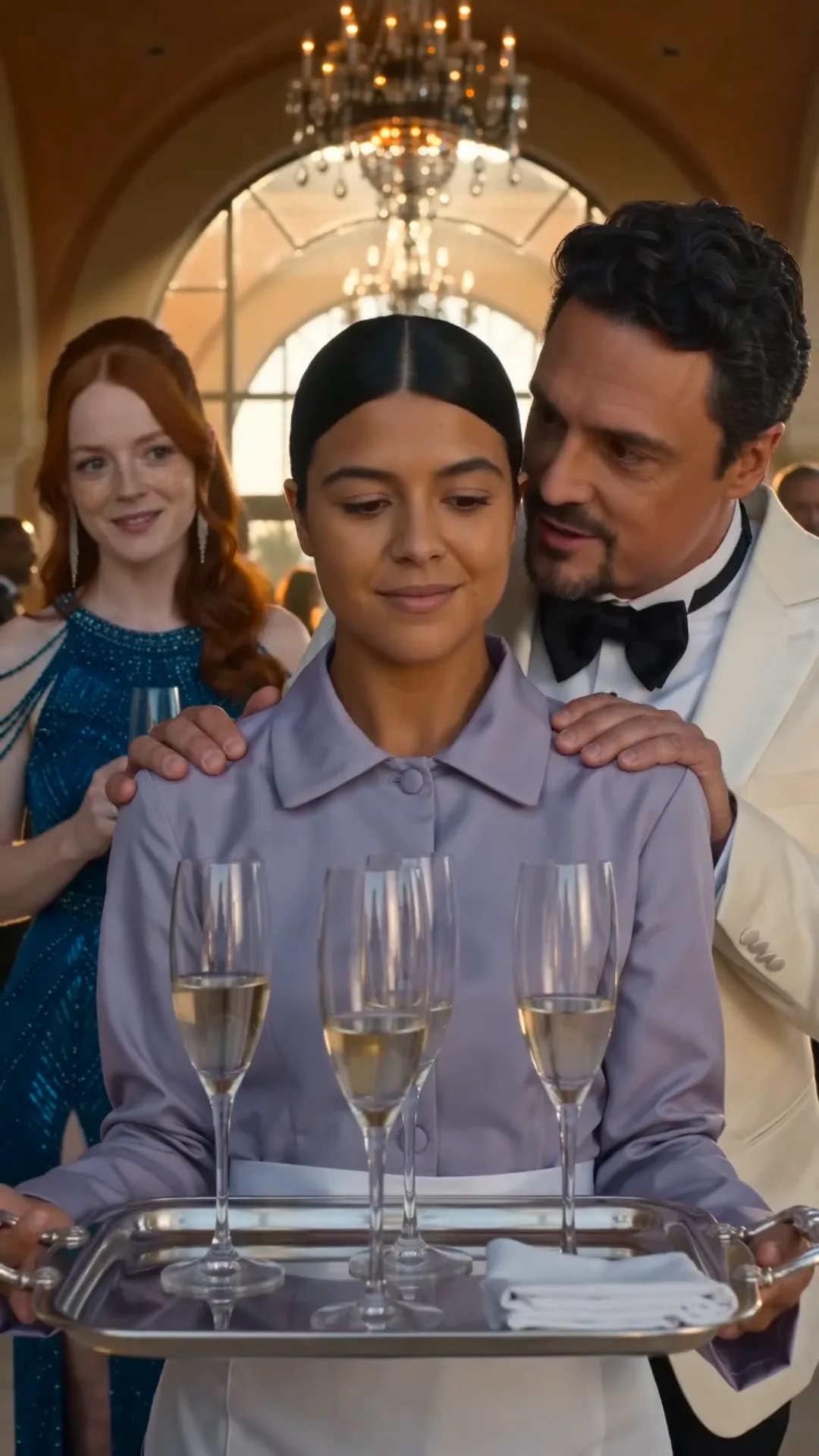
She was at the dessert table, straightening a row of small glass cups filled with something the color of a sunset, when he stepped in behind her.
Not beside her. Behind her.
Close enough that his voice didn't need to travel.
"You've been avoiding me," he said.
Elena did not turn around. She adjusted a spoon by a quarter inch, as if that mattered, as if anything about a dessert spoon had ever mattered to anyone.
"I don't know you," she said.
"That's not an answer."
"It's the only one you're getting."
He almost laughed. Genuinely — not the performance laugh he'd been running all night for Vivienne's benefit, but something smaller and more real, startled out of him.
Most people, once caught being talked about, folded immediately. Anger or embarrassment, it didn't matter which — both were doors he knew how to open. This was neither. This was a woman rearranging spoons like he was a mild inconvenience, a draft from a window someone had left cracked.
"You heard," he said. Not a question.
"I hear everything in this room. It's the job."
"And?"
She finally looked at him. Not up — she was tall enough, in her low practical shoes, to meet him nearly eye to eye, and something about that irritated him in a way he didn't examine closely. He had built his whole approach around women tilting their chins up at him. This one didn't tilt anything.
"And I think you should go back to your date," she said, "before she notices you've wandered off to bother the help."
The help. She said it herself, first, before he could — took the knife out of his hand and used it on the table between them so he'd have nothing left to cut with.
He recalibrated. Fast — he was good at fast.
"What's your name?"
"Not part of the service."
"I'll find out anyway. I already have people who could—"
"Then you don't need me to tell you." She picked up the tray of glass dessert cups. "Excuse me."
He put two hands on her shoulders.
Not a grip. Barely even a touch. The kind of contact designed to look casual to anyone watching from across the room while being, up close, an unmistakable claim.
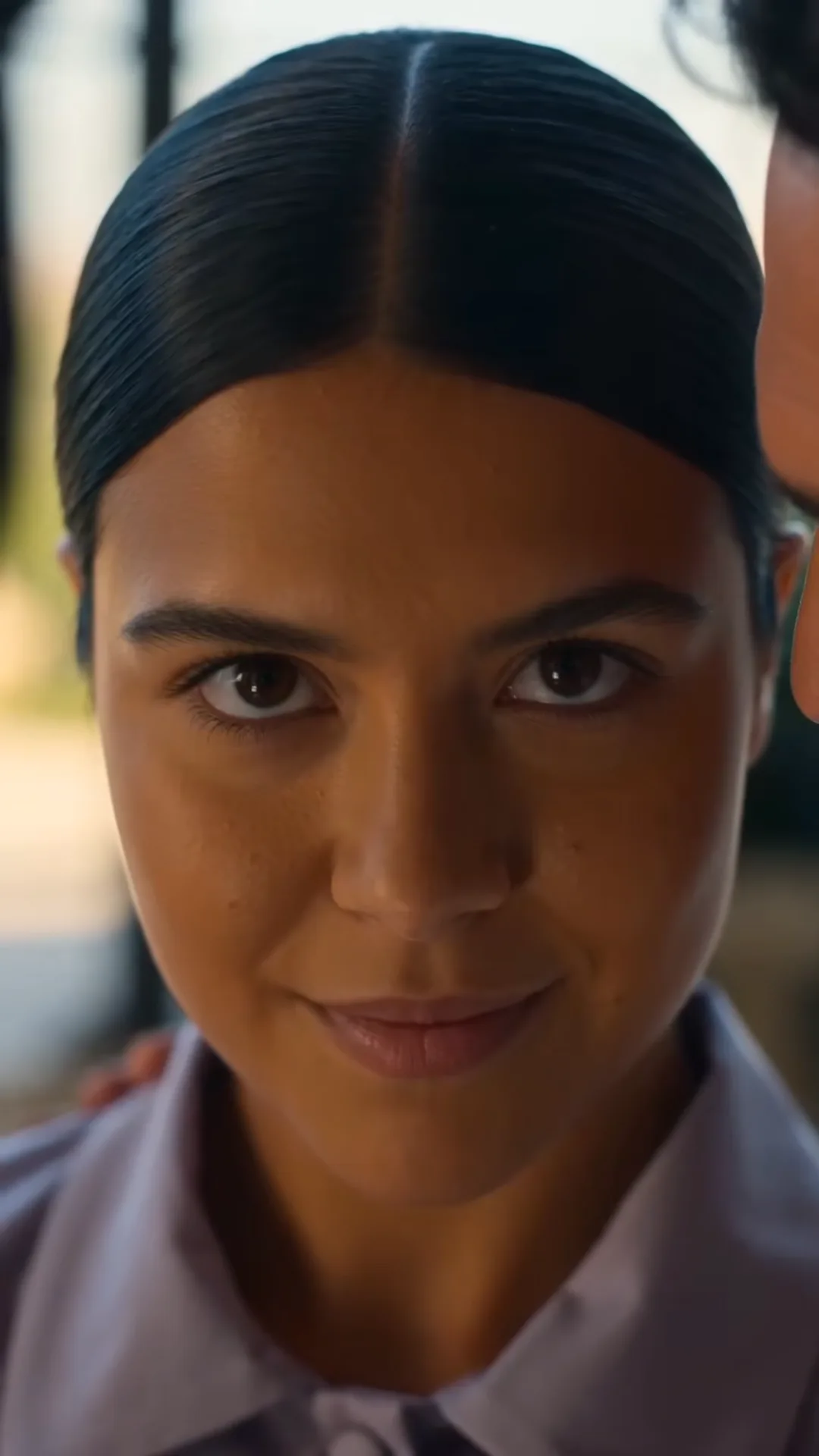
She went very still under his palms.
Marisol, forty feet away, refilling ice at the bar, saw it and felt her stomach drop half an inch, the old reflex of thirty years watching men in expensive jackets decide that a uniform was an invitation.
Elena didn't shrug him off. She didn't lean in either.
She simply stopped moving, the way a small animal stops moving when it decides that stillness, not flight, is the safer bet — and waited to see what he'd do with the silence he'd created.
He leaned down. His mouth close enough to her ear that his voice didn't have to compete with the string quartet.
"What," he said, "too scared?"
Elena's jaw tightened. Barely. A muscle, not an expression — the kind of thing you'd only catch if you were looking for it, and he was looking for it, because finding those small tells was the only part of this game he still found interesting.
"Too scared of what," she said, flat.
"Of me."
She almost laughed. The sound she made instead was quieter than a laugh and twice as cutting. "You're not scary. You're bored."
That landed somewhere it shouldn't have. He covered it, the way he covered everything, with more charm, more volume, more of the practiced ease that had never once failed him in a room like this.
"I'll give you fifty thousand dollars," he said, "if you take the challenge."
The tray in her hands did not tremble. That was the detail Marisol would remember later, retelling it in the break room with her hands shaking around a paper cup of bad coffee — that Elena's hands had not moved even a fraction, even when he said a number like that, a number that could pay off a year of somebody's debts in a single sentence, a number that most people in this building would have to work eleven months to see.
"Take what challenge," Elena said. Still flat. Still giving him nothing.
"The one you already heard about."
"I heard a joke. Jokes don't come with fifty thousand dollars attached."
"This one does." He straightened, put half a step of distance between them, gave her back the room she needed to think, because he had learned — through many, many nights exactly like this one — that people made worse decisions when they felt cornered, and better ones, for him, when they felt like the decision was theirs.
He wanted her decision to feel like hers.
That was the whole architecture of the trick.
"Dance with me," he said. "Let me walk you home. Let the room see it. That's all. You don't have to feel a thing. I certainly won't."
"And in exchange for feeling nothing," Elena said slowly, "you'll pay me fifty thousand dollars."
"Correct."
"Because that's what nothing costs, to a man like you."
Something in his face changed — not much, a flicker, gone almost before it arrived, but she caught it, because catching flickers on rich men's faces was also, in its way, part of the job.
"Is that a yes," he said, "or a very long no?"
Elena looked past him, once, toward the terrace doors where Vivienne stood laughing at something her cousin said, silver dress catching gold light, utterly unaware that the joke she'd made an hour ago had just grown teeth.
Then she looked at Marisol, twenty-eight years on this floor, hands cracked from dish soap, rent due on the fourth of every month whether the tips were good or not.
Then she thought of her mother's restaurant. Six months behind on the lease. The landlord's letters stacking up on the kitchen counter like something you could bury under enough junk mail to forget it was real.
Fifty thousand dollars.
She thought about how much of her life she had spent being underestimated by men exactly like this one, and how none of them, not one, had ever once imagined that the woman holding the tray might be doing arithmetic of her own.
"I need to think," she said.
It wasn't a no.
He heard that. Rich men are not always smart, but they are almost always excellent at hearing the difference between no and not yet.
"Midnight," he said, and walked away smiling, already composing the version of this story he'd tell Vivienne, already certain he knew exactly how it would end.
He did not know yet how wrong that certainty would turn out to be.
---
Elena set the tray down in the kitchen so carefully that not one glass rang against another, which was, by now, the only outward sign she allowed herself of anything at all.
Marisol was watching her from the sink, arms crossed, water running unheeded over her hands.
"Don't," Marisol said.
"Don't what."
"Whatever that man just offered you. Don't."
Elena leaned against the steel counter, closed her eyes for exactly three seconds — she counted them, one, two, three, a habit from childhood, from a different kitchen, a different kind of hunger — and opened them again with her face rearranged back into the calm she needed for the rest of the night.
"He offered me fifty thousand dollars," she said, "to dance with him."
Marisol's mouth opened, then closed.
"And," Elena said, before the older woman could speak, "to let him fall in love with me on purpose, so he can win a bet with his girlfriend."
"Elena—"
"I know what it is," Elena said quietly. "I heard the whole bet. I know exactly what he's offering and exactly why."
"Then you know to walk away."
Elena looked toward the little round window in the swinging door, the porthole into the gold-lit room where a man in a tuxedo was already rejoining his date, already laughing, already so sure of himself that he hadn't spent one further second wondering what she might decide.
"Or," Elena said, "I know exactly how this game is played. Which means, for once, I might actually be the one holding the good cards."
Marisol turned off the water. Dried her hands slowly on the apron at her hip. "That kind of money doesn't come without a price, mija."
May you like



"Everything has a price," Elena said. "I just want to make sure, for once, that I'm the one setting it."
---