Chapter 10 - The Color After Red
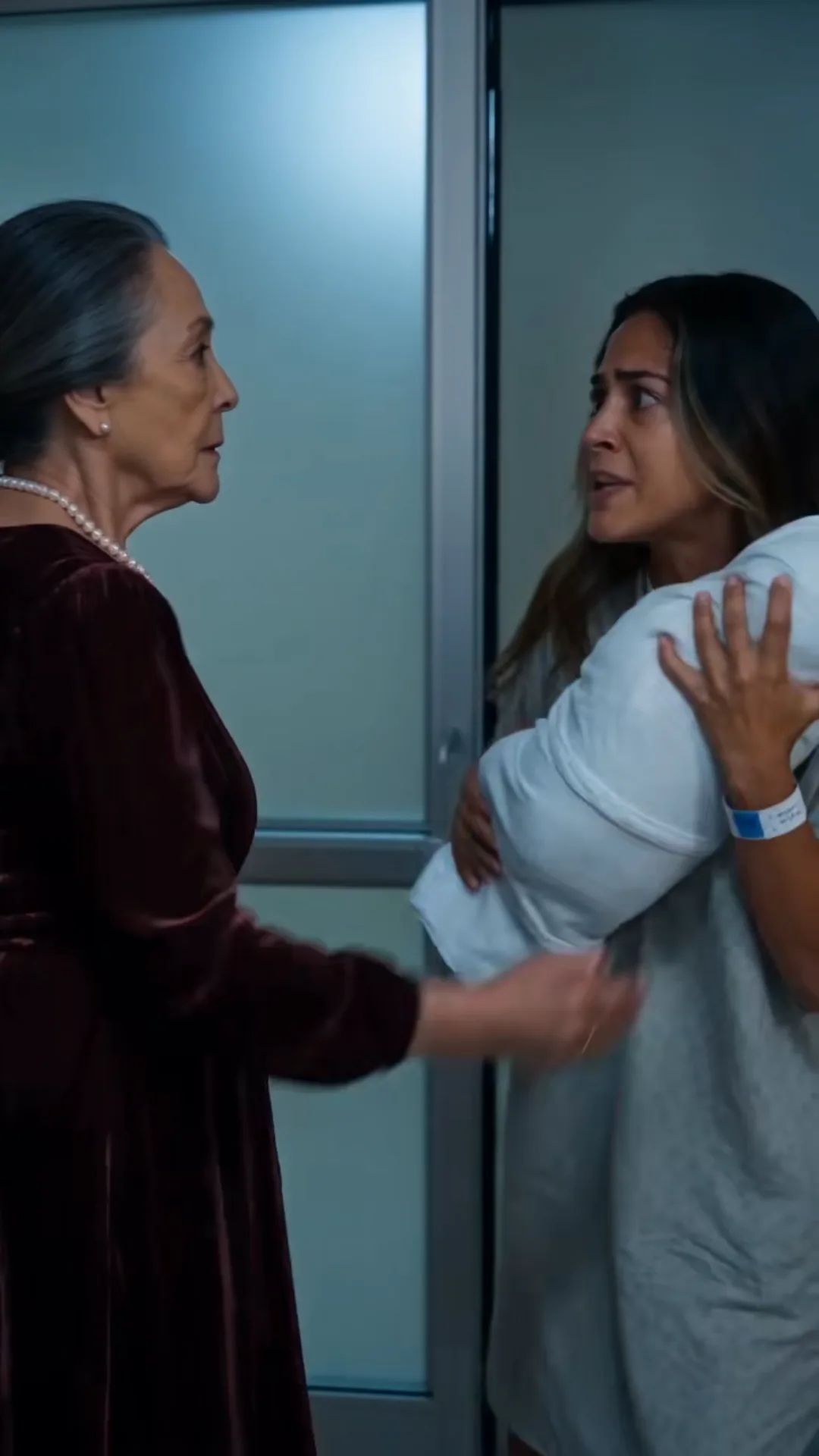
Noah is ten now. Old enough that the story has, eventually, been told to him — not all at once, not as a single devastating revelation, but in pieces, over years, the way families tell their hardest truths when they trust a child to hold them.
He knows, now, about the hospital room. About the folder. About the document with his mother's signature shaking across the bottom, obtained between contractions by two people she trusted.
He knows about the red emergency lights, the corridor, the scream that brought four nurses running.
He is quiet for a long moment after Sarah finishes telling him the full version, the real version, sitting together on the back porch on a summer evening not unlike a hundred other summer evenings, except that tonight it carries all of this new, heavy weight.
"So the locks," he finally says. "That's why I always checked them. Even before you told me anything."
"I think some part of you already knew," Sarah says. "You've always noticed more than we gave you credit for."
Noah is quiet again, turning something over.
"Grandma cried at Grandpa's hospital bed," he says slowly, connecting a dot he laid down himself at six years old and has apparently been carrying ever since. "That was the first time I saw her be a person instead of a — a system. Like a machine that was supposed to act like a grandma but hadn't figured out how yet."
"That's a pretty accurate way to put it," Sarah says.
"Is she a person now?"
Sarah thinks about the last four years — the correct gifts, the real questions, the slow unsupervised visits, the pearls that appear less and less often, replaced sometimes by nothing at all, just Eleanor, unguarded, learning late in life how to hold a hand before the house catches fire.
"I think she's trying to be," Sarah says honestly. "Every day. Some days she's better at it than others."
"That's what trying looks like, though," Noah says, with the particular, unearned wisdom of a ten-year-old who has spent his entire life quietly cataloguing the difference between people who perform love and people who practice it. "Nobody's good at it right away. You just have to keep unlocking the door even on the days it doesn't feel safe yet."
Sarah looks at her son — this small, fierce, watchful person she once fought a woman for in a teal-lit hospital room, whose fist closed around her finger before he could see her face clearly, who has spent every year since counting doors and noticing kites and telling sick old men to hold hands before it's too late.
"When did you get so wise," she asks, only half joking.
Noah shrugs, the same shrug he's had since he was five, unbothered by his own insight, already looking past the conversation toward the fireflies starting to rise over the yard.
"I've just been paying attention," he says. "Since always. Since before I could even talk. I think that's the first thing I learned how to do."
---
Later that night, after Noah is asleep, Sarah stands in the hallway outside his room the way she has a thousand nights before, listening to the small, steady rhythm of his breathing.
She thinks about the monitor in the hospital room, ten years ago. Beeping. Once. Twice. A rhythm nobody asked for.
She thinks about teal light, and red emergency light, and the specific color a hallway turns when your body is running faster than your mind can process what it's running toward.
She thinks about the version of herself who grabbed a stranger's — no, not a stranger's, a mother-in-law's, a family member's — arm and pulled her own son back into her chest with a strength she didn't know she had until the exact moment she needed it.
Down the hall, through the small window, she can see a light on in the kitchen — Michael, up late again, going through paperwork for Eleanor's now-quarterly, now-unsupervised, now almost ordinary visits, the whole terrifying machinery of six years of legal war finally, slowly, winding down into something that resembles peace.
Not perfect. Not fully healed. Some doors take longer than others to feel safe again, even after they've been proven, over and over, to open from both sides.
But quieter now. Softer, in Noah's word. Like a couch, finally, with pillows.
Sarah steps into her son's room one more time before bed, the way she has every night for ten years, and watches him sleep — small, whole, hers, the fight for him folded now into the deep, ordinary architecture of an ordinary childhood, a story he'll carry the rest of his life not as a wound, but as proof.
Proof that someone fought for the door to stay unlocked from the inside.
Proof that he was — that he has always been —
May you like



hers to keep.
THE END







