Chapter 5 - What the Ink Meant
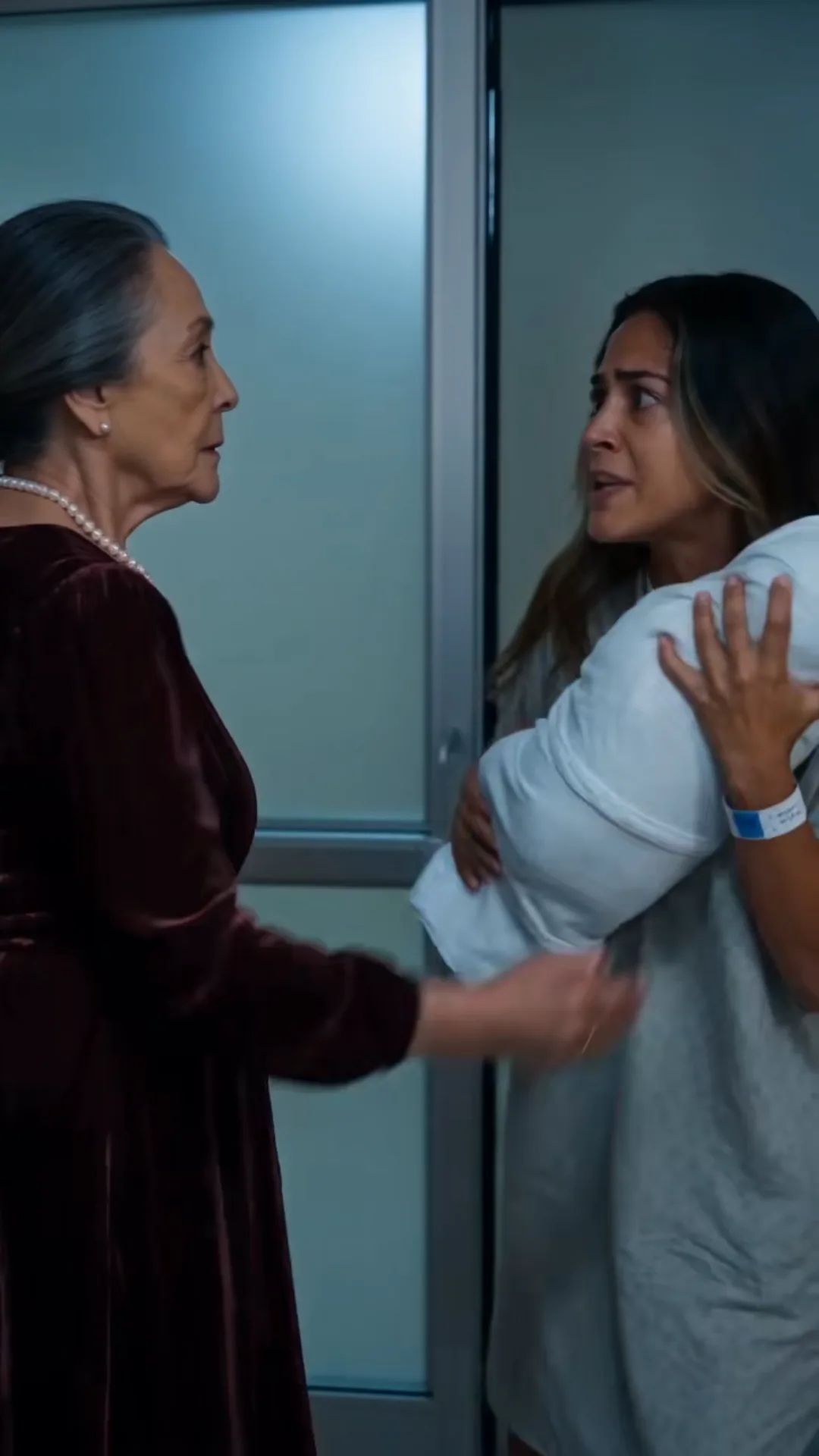
The hearing is scheduled for six weeks out. Renata calls this "fast, for family court," and Sarah spends every one of those six weeks feeling like she is holding her breath underwater.
Eleanor does not call. Does not text. Does not send flowers, cards, the small performative gestures Sarah half expects from a woman who has spent thirty years mastering the art of the perfect apology that isn't one.
The silence is its own kind of statement.
Michael calls his father twice. Both times, the calls end quickly, quietly, Michael's face folding into something older each time he hangs up.
"He says she means well," Michael tells Sarah after the second call, voice flat with the particular exhaustion of repeating a lie he no longer believes. "He says she's just scared of losing us."
"Losing you," Sarah says. "Not us. She's never once, in eight years, been scared of losing me."
Michael doesn't argue. There isn't an argument left to make.
---
Three weeks in, Renata calls with news.
"The notary," she says. "The one who stamped the document three days before you delivered. We found her."
"And?"
"She remembers the appointment. Says Eleanor came in alone, with the paperwork already drafted, and asked her to backdate nothing — the notarization date is accurate, it really was three days before your due date. But—" Renata pauses for effect, the pause of someone who has done this a hundred times and still enjoys the good parts, "—the notary also confirms Eleanor told her, and I quote, 'This is just a precaution in case something happens to my daughter-in-law during delivery. High-risk pregnancy, family history of instability.'"
Sarah goes very still.
"There was no high-risk designation on my chart," she says. "My OB cleared me as low-risk at every single appointment."
"I know," Renata says. "Which means Eleanor lied to a notary public to get a legal document prepared under false pretenses, months before you gave birth, in anticipation of a fabricated medical emergency she intended to use as cover."
The room is quiet for a long moment.
"She wasn't planning for an emergency," Sarah says slowly. "She was planning to create one. If I hadn't fought back that night, if security hadn't come — she was going to say I had some kind of breakdown. That's the story she was building. Not a grandmother helping in a crisis. A grandmother rescuing a baby from an unstable mother."
"That's my read too," Renata says. "And it's going to matter a great deal in six weeks."
---
Sarah doesn't sleep well that night, though Noah, mercifully, does.
She lies awake replaying the last year — every comment from Eleanor she'd brushed off, every raised eyebrow at a missed phone call, every carefully worded remark about her mother's history dropped into conversation like a coin into a jar, saved up, counted, waiting to be cashed in exactly when it would do the most damage.
She thinks about her own mother — genuinely unwell for years, genuinely absent for a childhood Sarah rebuilt herself out of library books and other people's kitchen tables — and how Eleanor had turned that grief, that old wound Sarah had spent a decade healing, into a weapon.
"You knew," she says to Michael in the dark, not accusing this time, just tired. "On some level, you must have known what she was capable of."
"I think," Michael says slowly, "I spent so long being the thing standing between her and everyone else's disappointment in her, I never let myself imagine what she'd do if I stopped."
"And now?"
"Now I know," he says. "And I can't unknow it. And I don't want to."
---
The hearing itself is almost anticlimactic after six weeks of dread.
Eleanor sits across the room in a charcoal suit instead of black, pearls absent for once, as if she has calculated that today calls for softer optics. Her lawyer speaks about family concern and misunderstanding and a grandmother's love, perhaps expressed clumsily.
Renata speaks about notary dates and fabricated medical histories and a document signed by a woman in active labor who, by her own written statement six weeks later, still doesn't remember signing it at all.
The judge — a woman with silver hair not unlike Eleanor's, though nothing else about her resembles Eleanor in the slightest — reads both filings without expression.
When she finally speaks, it is brief.
The guardianship document is voided in full. A protective order is granted, limiting Eleanor to supervised contact only, contingent on a review in twelve months. The judge's closing words are the ones Sarah will carry with her the longest:
"Mrs. Hale, love does not require deception. If you loved this child as much as your filing claims, you would have trusted his mother to raise him — not engineered a paper trail to take him from her."
Eleanor's face does not change. Not visibly. But Sarah, watching closely, sees something small flicker behind her eyes — not remorse, not yet, but the first crack in thirty years of certainty that she has always, always been right.
Outside the courthouse, Noah asleep in his carrier against Sarah's chest, Michael exhales like he's been holding his breath since the delivery room.
"It's not over," he says. "Twelve months. Review. She won't just disappear."
"I know," Sarah says. "But today, she left with less than she came with. That's a start."
Noah stirs, makes a small sound, settles again.
Six weeks old. Already the subject of a court order, a voided document, a mother's unbreakable resolve.
May you like



He has no idea, yet, how much of who he becomes will be built on the fact that she fought for him before he could even hold up his own head.
---







