Chapter 4 - What the Glass Remembers
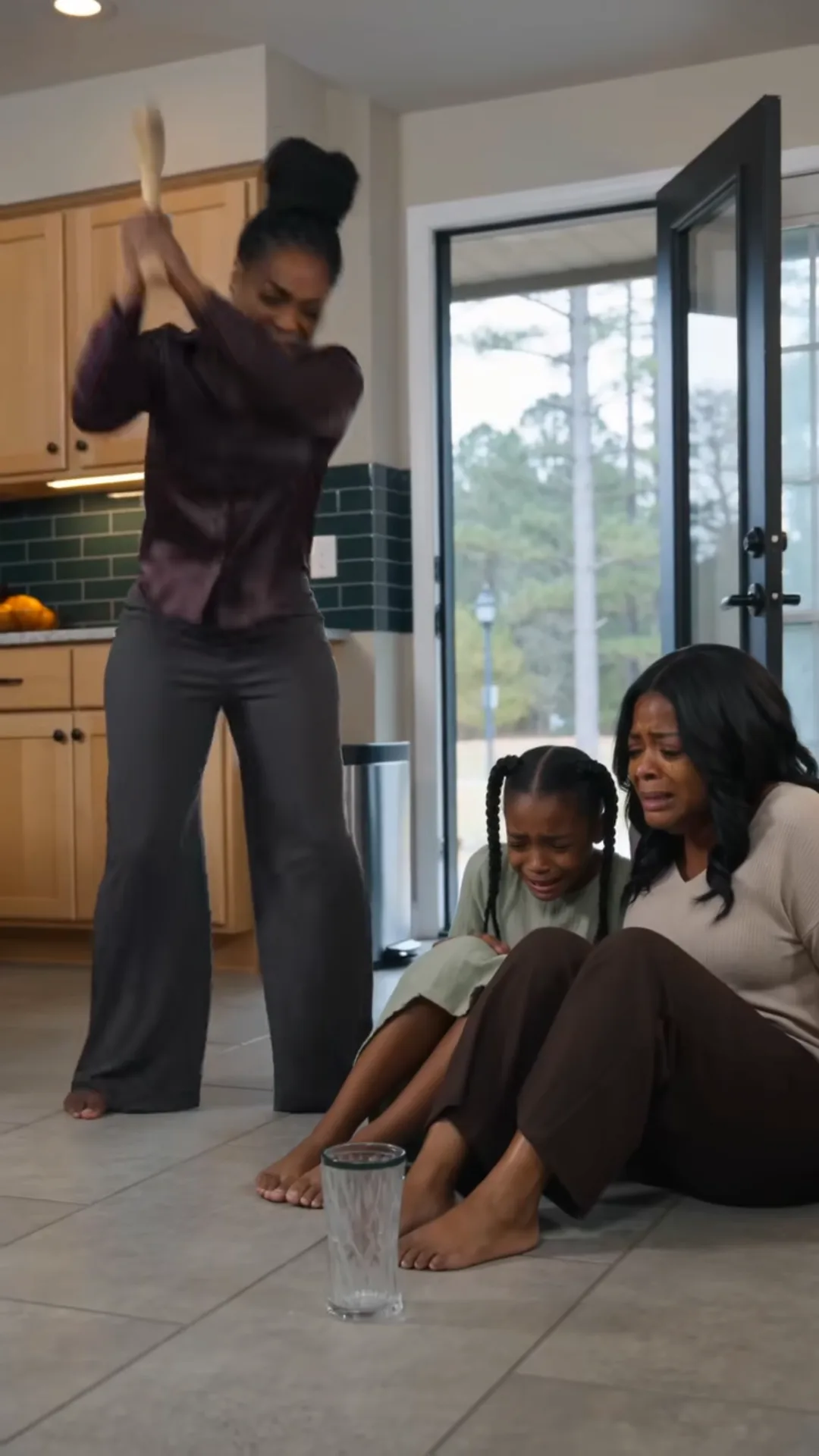
Diane doesn't leave the property.
She sits on the porch steps outside, out of the house but not gone, staring at nothing, her mustard-yellow blouse still faintly dusted with drywall from where she hit the cabinet.
She doesn't hear the slap through the closed door. But she feels something shift in the air of the house behind her anyway — a specific, terrible quality of silence that she recognizes from thirty years ago, from a kitchen very much like this one, from a marriage that ended in a courtroom instead of a divorce because by the time she finally called the police on her own husband, there wasn't much marriage left to end quietly.
Her hands, still shaking, come up to cover her face.
She thinks about her son's voice, thirty seconds ago, roaring don't you ever touch them with a fury she recognized because she has heard that exact fury before, from a different man, in a different decade, in a kitchen that also had a vase that didn't survive.
Like father, she thinks, and the thought arrives whole and terrible and impossible to put back once it's out. Like father, like son. And I never once let myself see it, because seeing it would have meant admitting what I let him grow up watching.
---
Inside, Emma is still on the kitchen floor, Ruby folded against her side, when the sound of the front door opens again — not Jack moving toward them, but Diane, stepping back inside, moving past her son without looking at him, crouching instead in front of Emma with an expression Emma has genuinely never seen on this woman's face in three years of marriage.
"Let me see," Diane says.
"Don't touch me."
"I'm not going to touch you. I want to see what he did."
Something in the flatness of her voice — no fury left in it now, none of the wild, bat-swinging rage from ten minutes earlier — makes Emma lift her chin, just slightly, enough to let the light from the window catch the reddening mark along her cheekbone.
Diane's jaw tightens.
"Jack," she says, without turning around, "get out of this kitchen. Now."
"Mom—"
"NOW."
Something in her voice carries enough of its old fury that Jack actually moves, retreating toward the hallway, shoulders hunched, a grown man suddenly smaller in his own house than his six-year-old daughter currently sitting on the floor.
---
Diane sits down on the tile across from Emma, ignoring the broken glass entirely, ignoring the mess of apples still scattered near the door.
"I need to tell you something," she says, "and I need you to actually hear it, not just survive it, the way you've clearly been surviving things in this house for a while now."
Emma says nothing. Ruby, tucked against her side, watches Diane with the same flat, cataloguing attention she brought to her father a minute earlier.
"His father did this," Diane says. "Not once. More times than I can count, over eleven years, and I told myself every single time that it was an accident, a bad mood, a thing that wouldn't happen again if I just didn't make him angry. I raised Jack in that house. I told myself he didn't see it. I have spent thirty years telling myself he didn't see it."
Her voice cracks, just slightly, on the last sentence.
"I came in here today because I found out he's been doing the same thing to you," she continues. "Someone told me. Weeks ago. And instead of believing it, instead of doing anything useful with it, I came in here and screamed at both of you like it was somehow your failure. Like you were the ones who broke this family instead of the two men who actually did."
Emma stares at her, the pieces of the last ten minutes rearranging themselves into a shape she didn't expect.
"That's why you said we were both useless," she says slowly. "You weren't talking about the house."
"No," Diane says. "I was talking about myself. I just aimed it at the wrong two people, the way I've spent my whole life aiming things at the wrong two people."
---
Ruby, who has been quiet through all of this, looks up at her grandmother with the particular directness only a six-year-old can manage.
"Grandma," she says. "Did you know Daddy hits Mommy, and you came here anyway to yell instead of to help?"
Diane's face crumples entirely.
"Yes," she says, and it costs her something visible to say it plainly, no softening, no excuse. "Yes, baby. That's exactly what happened. And it was wrong. I should have come here to help from the very beginning."
"You can still help," Ruby says, matter-of-fact, six years old and utterly unburdened by the weight adults usually attach to moments like this one. "Helping doesn't have an expired date. That's what my teacher says about library books being late. You can still bring it back even if it's late. You just have to actually bring it."
Diane looks at this small, fierce person — her granddaughter, telling her, in the plain arithmetic of library fines, exactly how redemption works — and something in her, cracked open thirty years too late, finally starts, slowly, to mend in the right direction.
May you like



"Okay," Diane says. "I'm bringing it back. Starting right now."
---







