Chapter 10 - What the Rug Remembers Now
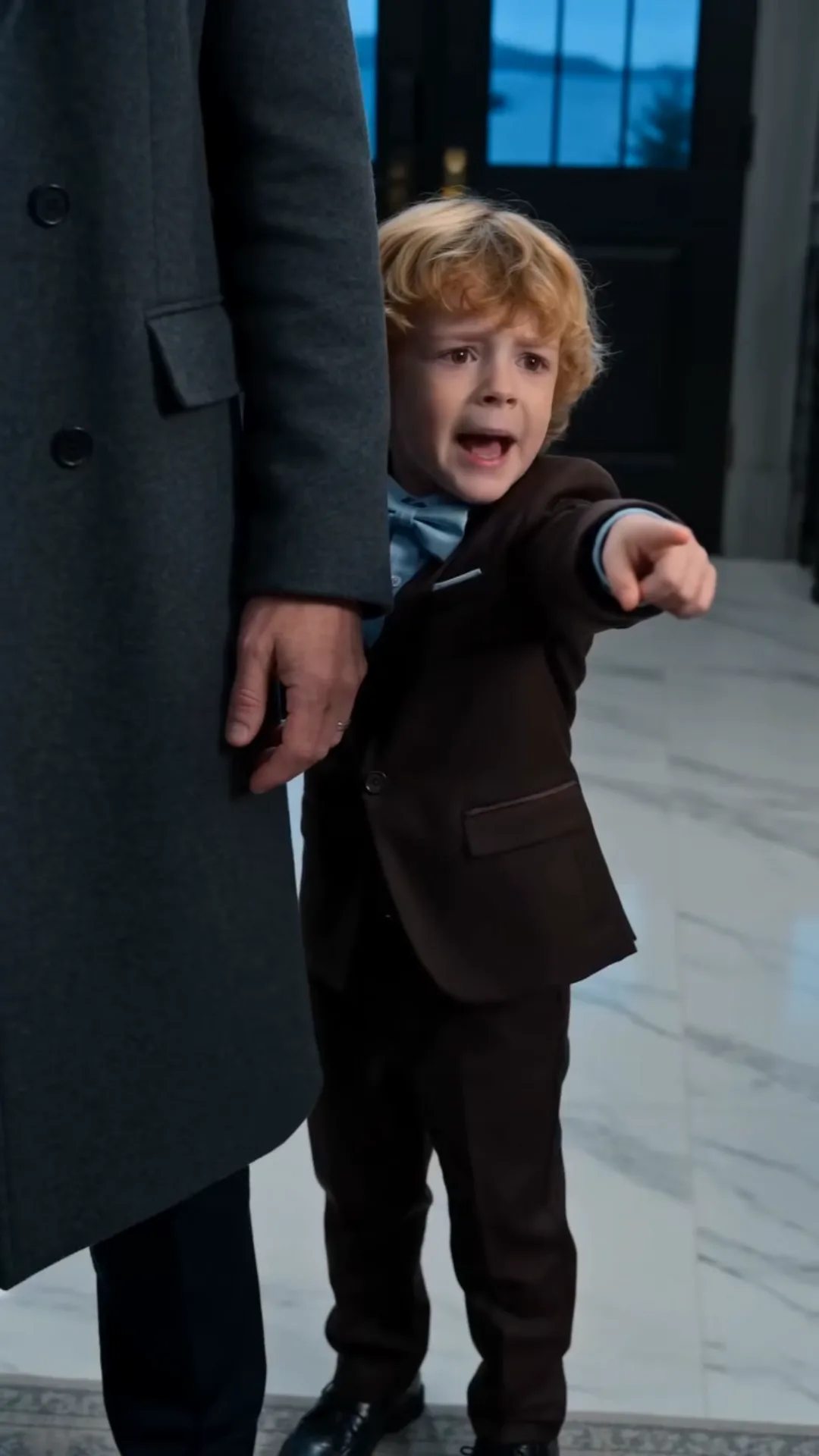
Six weeks later, the fireplace in the library was lit for the first time since Claire Vance had died.
Marcus had done it himself, kneeling at the hearth with a box of matches, refusing Marta's offer to do it for him, because some things a father needed to do with his own hands to prove to himself he was capable of warmth again.
Noah sat cross-legged on the rug in front of the fire — the same rug with the worn paths and the vine-and-bird pattern, the one that had watched two years of this family's worst moments happen on top of it — building something out of wooden blocks that had, until recently, belonged in a box in the attic, forgotten during the years the house had run on tension instead of play.
"Daddy, look," he said, holding up a lopsided tower. "It's the house. That's the library. That's the foyer."
Marcus came and sat beside him on the rug, folding his large frame down to his son's level in a way that had become, in the past six weeks, less of an effort and more of a habit.
"Where's my room," he asked.
Noah pointed to a single block, set slightly apart from the rest.
"Right there. Next to mine. So you can hear if I have a bad dream."
Marcus's throat tightened. He didn't trust himself to speak for a moment, so he just nodded, and reached out to steady the tower before it toppled.
The trust fund had been restored in full, plus damages — a court-ordered settlement that would take Elina and Victor years to pay off from whatever assets remained after the criminal proceedings concluded. Marcus hadn't followed the details closely. He'd hired people whose entire job was to follow the details, and he had used the freed-up hours, for the first time in longer than he could remember, to simply be in the house with his son instead of defending it.
"Noah," he said. "Can I ask you something?"
"Okay."
"When you saw Victor through the window that day — weren't you scared? Telling us? You could have stayed quiet forever and no one would have known you saw him before."
Noah considered the question with the seriousness he brought to everything now, a seriousness Marcus suspected he'd earned too early and hoped, someday, his son might get to trade back in for something lighter.
"I was scared," Noah admitted. "But I was more scared of you not knowing. Because if you didn't know, then it was just going to keep happening. And if it kept happening, I was going to keep being the only one who knew, and that's — "
He paused, searching for the word.
"That's really heavy," he finished. "Knowing things by yourself. It's heavy like a backpack full of rocks."
Marcus thought about the trust fund, drained slowly over fourteen months while he was overseas closing deals that had, in retrospect, mattered far less than he'd believed at the time. He thought about the bruise, long healed now, that had once mapped itself across his son's small face. He thought about a rug that had watched this house pass through generations of Vances, none of whom, he suspected, had gotten it entirely right either.
"You don't have to carry heavy things by yourself anymore," Marcus said. "That's the deal now. Whatever it is. Even if it's small. Even if you think I'll be too busy."
"Even if it's about you?" Noah asked. "Like — if you did something wrong?"
Marcus almost smiled at that, the small unflinching honesty of a child who had learned, the hard way, that adults were not always the safe harbor they were supposed to be.
"Especially then," he said.
Noah nodded, satisfied, and went back to his blocks, adding a small square window to the library section of his miniature house, humming something tuneless under his breath.
Outside, past the tall windows, the garden had gone green again after weeks of gray, gray weather, and the front doors — closed properly now, locked at night for the first time in years — kept the house quiet in a way it hadn't been quiet before, not the flat, careful quiet of people avoiding each other, but something closer to peace, fragile and new, like a bruise finally fading back into skin that remembered, underneath everything, how to heal.
The fire crackled. The blocks rose, unsteady, into the shape of a house that had finally stopped being a battlefield.
And on the rug beneath them both, the old woven birds kept flying nowhere, the way they always had, patient witnesses to whatever came next — but for the first time in longer than the rug itself could probably remember, what came next, in this particular house, was quiet in the good way.
May you like



The kind of quiet you don't have to walk on your toes to keep.
— END —







