Chapter 6 - Small Feet in a Big Doorway
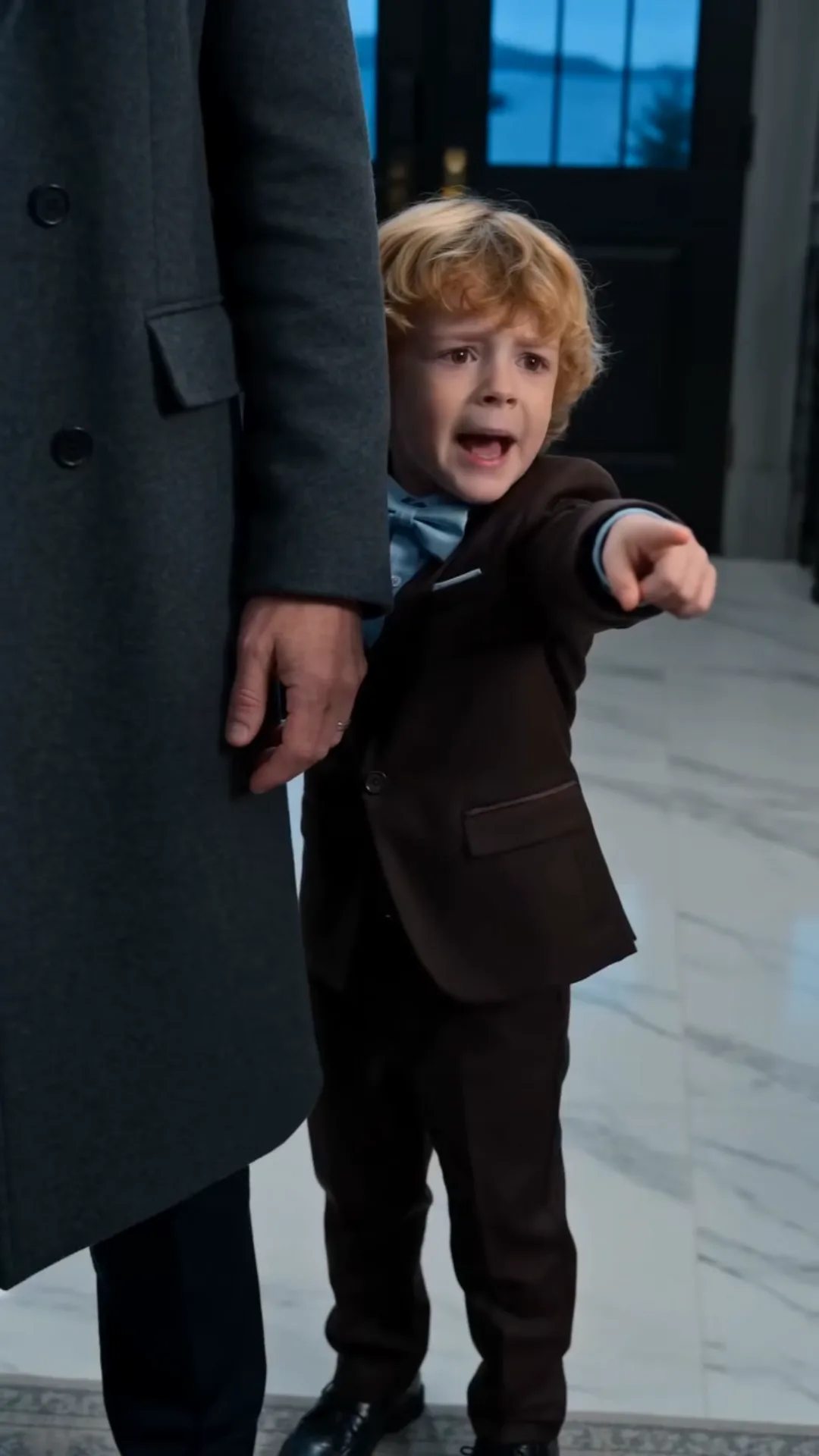
Noah had learned, over the past two days, that the best place to hear things was the second-floor landing, where the old iron railing had a gap wide enough to see through but the shadows were deep enough that nobody looked up and noticed a seven-year-old crouched there in socked feet.
He was crouched there now.
He'd seen the keys land on the sofa. He'd seen Elina lunge and fall. He didn't fully understand co-signer or forensic accounting, but he understood the shape of the sentence she wasn't working alone, because he'd been hearing shapes like that his whole short life — the shape of a secret about to become not-a-secret anymore.
His cheek still hurt where the bruise had settled into its full purple weight. He touched it sometimes without meaning to, the way you touch a loose tooth.
Downstairs, his father's voice, quiet and dangerous: "Who is he."
Noah leaned forward on the landing, careful, careful, the way Grandma taught him to be careful around things that could break.
He knew who he was.
He'd known for three weeks.
The man in the dark coat had come to the house twice while his father was in Singapore for work — Noah remembered because both times it had been raining, both times Elina had told him to go play in his room with the door closed, both times he had not gone to his room, because seven-year-olds are curious in ways that get them in trouble and sometimes, rarely, get them somewhere useful instead.
He remembered the man's shoes. Black, shiny, expensive-looking, the kind his father wore to important meetings. He remembered the man's voice through the library door, low, careful, the same careful his father used when he was choosing his words with tongs.
He remembered one sentence, clear as a bell through the old wood: "If Marcus finds out before the transfer clears, we lose everything."
Noah hadn't understood transfer or clears.
He had understood lose everything, because that was a shape of fear every kid understood, rich or poor, whether it was about money or about the last cookie or about a father who might, someday, stop coming home at all.
Downstairs, the argument had stalled into a heavy silence.
Noah stood up.
His socked feet made no sound on the stairs — better than his shoes, better than the tuxedo, this was a version of quiet he'd chosen for himself instead of one someone else had taught him — and he came down slowly, one hand trailing the banister, until he was standing in the library doorway where everyone could see him.
His father turned first.
"Noah. I told you to stay upstairs."
"I know who it is," Noah said.
The room went very still. Elina, still on the sofa, went the stillest of anyone, her whole body arranging itself into a kind of dread that even a seven-year-old could read without trying.
"Noah," she started, "sweetheart, you don't need to—"
"You told me to go to my room," Noah said, not to her, to his father, the words coming out in the flat, factual way children report things they've decided finally matter more than obedience. "Two times. When you were in Singapore. There was a man. He came in the black door — the side one, not the front one. His shoes were shiny like yours."
Marcus knelt, the way he had in the foyer two days before, bringing his face level with his son's.
"Would you know him if you saw him again?"
Noah nodded.
"He's here," Noah said. "Right now."
The room seemed to tilt.
"What do you mean, here," Marcus said, very carefully, very quietly, the tongs-voice.
Noah pointed — past his father, past the cold fireplace, toward the tall library windows that looked out onto the side garden and, beyond it, the narrow service drive that ran along the west wing.
Through the glass, distorted by rain that had started again sometime in the last hour, a figure stood near the hedges. Dark coat. Still. Watching the house the way people watch something they used to own and are trying to decide whether they still do.
"That's him," Noah said. "The man that came here before."
Desmond was already moving toward the window. Priya had her phone out. Marcus rose slowly from his knee, his eyes fixed on the blurred shape in the rain, and something in his face went from fury to something colder, more focused — the face of a man who has just realized the war he thought he was fighting was smaller than the one actually happening.
Elina made a sound from the sofa, low and involuntary, somewhere between a name and a curse.
"You knew he'd come here," Marcus said, not looking at her. "You knew he'd get this close."
"Marcus, I can explain—"
May you like



"Not to me," Marcus said. He was already moving toward the door, toward the foyer, toward the front doors that were, once again, standing open to the gray afternoon. "Explain it to him."
---







