Chapter 3 - The Man from the Rain
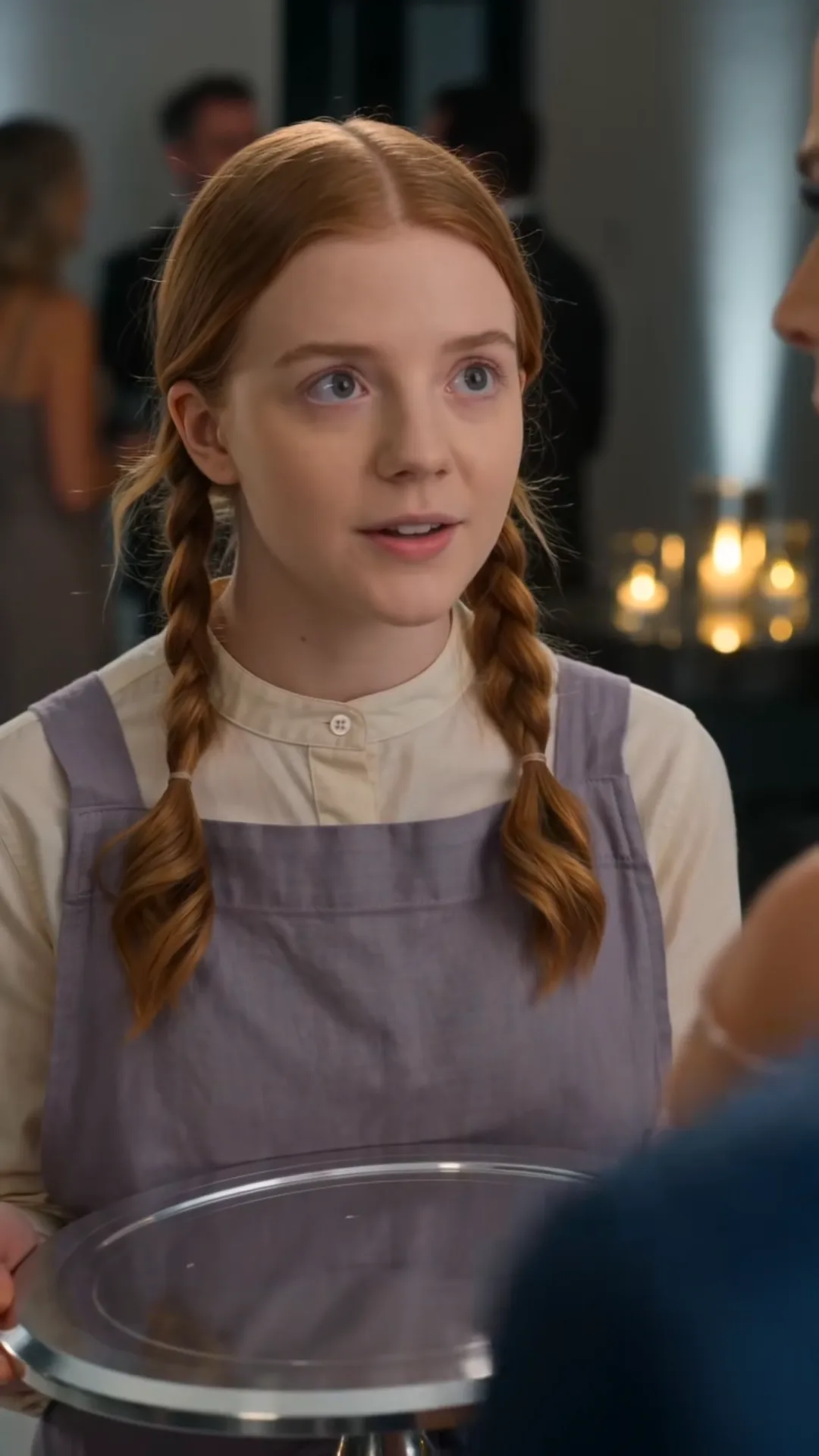
To understand what had happened in that ballroom, you would have needed to go back four months.
To a Tuesday.
To rain coming down in sheets thick enough to blur the streetlights into halos, and a small bakery on the corner of Fountain Street with a blue door and a bell that hadn't rung properly in years.
Gisela had been closing up. Flour on her forearms. The display case nearly empty except for one lonely tres leches cake nobody had wanted, and a single almond tart with a slightly crooked edge she'd been planning to eat herself.
The bell over the door had rattled — not rung, just rattled, the way it always did — and a man had walked in soaked to the bone, his coat dark with water, his dark curls plastered to his forehead.
"Please tell me you're not closed," he'd said, breathless, half-laughing at his own bad luck.
"We close in five minutes."
"Four minutes is enough. I just need something. Anything. I've had the worst day of my life and I would like to end it with something that doesn't taste like disappointment."
Gisela had almost smiled. Almost.
"I only have the almond tart left. It's a little crooked."
"Perfect. I'm a little crooked myself today."
He had sat by the window, the one seat in the shop, and eaten that lopsided tart slower than any customer she had ever watched — small bites, eyes half-closed, like a man trying to memorize a feeling before it disappeared.
"This is the best thing I've had since I got back," he'd said. "And I've been eating in some very expensive places."
"You don't have to say that."
"I'm not saying it to be kind. I'm saying it because it's true, and because I'm too tired tonight to bother being polite instead of honest."
Something about the rain, and the empty shop, and the particular exhaustion in his voice had made Gisela set down her rag and lean against the counter.
"Rough day?"
"Rough year." He'd turned the fork over in his fingers. "My father wants me to marry into a shipping fortune to save our family's business. I haven't told him yet that I don't want to marry a fortune. I want to marry someone who looks at me the way you're looking at that empty tray right now — like it's the only real thing left in the room."
Gisela had laughed then, surprised into it. "That's a strange thing to say to a stranger."
"Strangers are the only people you can say true things to. Everyone else wants you to perform."
He had asked her questions after that — gentle ones, careful ones, the kind that made space instead of demanding answers. And somewhere between the rain outside and the low light inside, Gisela had told him about her mother. About the small kitchen where she'd learned to bake standing on a wooden crate because she was too short to reach the counter. About the year her mother got sick and the recipes became the only inheritance Gisela would ever receive, written in a shaking hand in the back of a notebook with a cracked spine.
"She sounds like she built something that outlasted her," he'd said.
"I hope so."
"I know so. I'm sitting in it."
He had left forty minutes later, once the rain had eased, without giving his name, without asking for hers beyond what she offered — Gisela, just Gisela — and she had assumed, the way you assume about strangers in the rain, that she would never see him again.
She had thought about him more than she wanted to admit over the following weeks. Not with longing exactly. With something quieter. A kind of wondering. The way you wonder about a song you heard once on the radio and never learned the name of.
She had not, in her wildest imagining, pictured him standing beside a three-tier cake in a ballroom, in a tuxedo, engaged to a woman dripping in family diamonds.
She had certainly never imagined that the reason he'd looked so tired that rainy Tuesday was because he had just come from a meeting where his engagement to Isabela Duarte was finalized — a business arrangement dressed up as a love story, the way these things so often were among people whose families had more money than affection.
Adrián Cortez had gone home that night, after the bakery, and told his father he needed more time.
His father had given him four months.
Four months to fall in love with the idea of Isabela Duarte, or at least to fall into a convincing enough performance of it.
He had tried.
He had gone to dinners. He had learned Isabela's favorite flowers, her favorite composers, the exact temperature she liked her wine. He had smiled in enough photographs to fill an engagement announcement in three newspapers.
But some nights, lying awake in his enormous, empty bedroom in his father's enormous, empty house, he had found himself thinking not of Isabela's practiced laugh, but of a crooked almond tart, and a girl leaning against a counter with flour on her arms, telling him true things because she didn't yet know who he was.
He had gone back to the bakery twice, after that night.
Both times, the blue door had been locked, a small sign in the window reading closed for family matters — because Gisela, unknown to him, had spent those weeks nursing Don Alvaro through the flu that would eventually keep him home the night of the engagement party, running the shop alone, exhausted, never once expecting the man from the rain to return.
He had given up looking, eventually. Told himself it had been a strange, lovely accident, nothing more. A memory to keep, not a door to open.
And then, on the night of his own engagement party, in a ballroom filled with people he barely knew celebrating a marriage he had not chosen, a girl in a grey linen dress had walked through the side hall carrying a tray of tarts.
And the entire careful architecture of his four months of performance had come apart in the space of a single, stunned breath.
Because it was her.
May you like



It had always, somehow, impossibly, been going to be her.
---







