Chapter 6 - The Investigation
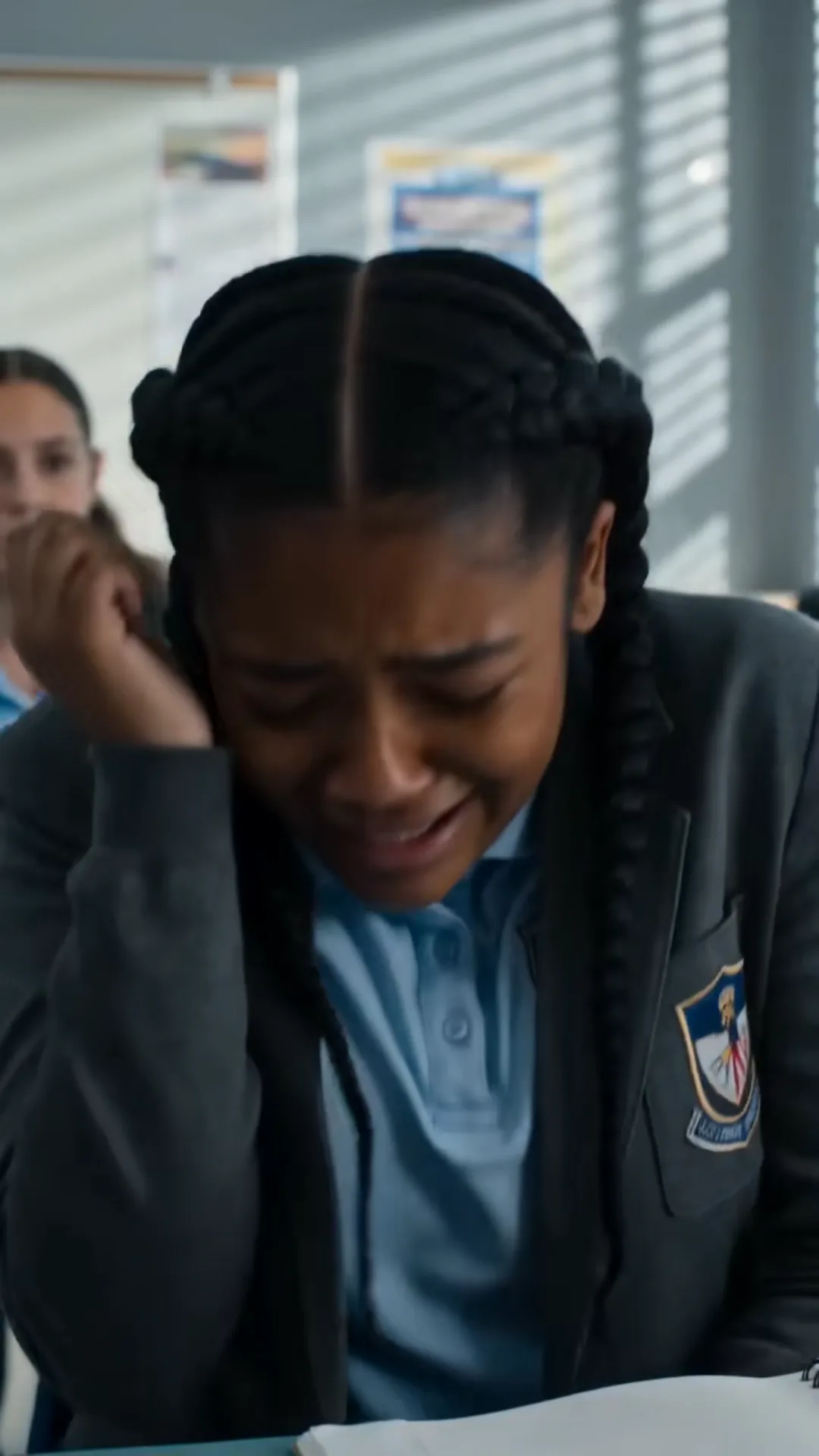
The district's investigation took eleven days, moving with a speed that surprised even Principal Alvarez, who had warned Maya's mother, in an early phone call, that these processes could sometimes stretch on for months.
"Marcus's real-time account changed everything," Alvarez explained, in a follow-up meeting with Maya and her mother, the small conference room now familiar after three separate visits. "An eyewitness with law enforcement background, watching live, with a timestamp — that's not something the district could slow-walk, even if they'd wanted to. Combined with Maya's documentation and seven other students corroborating the pattern, the evidence was, frankly, overwhelming."
Maya's mother, sitting stiffly in her chair, exhaustion visible beneath her composed exterior — she'd taken an unpaid morning off her home health job to be there, a sacrifice Maya understood the full weight of — reached over and gripped her daughter's hand.
"I should have known something was wrong sooner," she said quietly. "You should have told me, mija."
"I didn't want you to worry," Maya said. "You already have enough to worry about."
Her mother's eyes filled, briefly, with something that looked like grief layered under relief. "That's not your job. Never think that's your job."
---
The consent form question, it turned out, had been the deciding factor.
Corporal punishment remained technically legal within the district, under a narrow set of circumstances requiring specific, signed parental authorization renewed annually — a policy few parents even knew existed, buried deep in enrollment paperwork most families skimmed and signed without close reading.
Maya's mother had never signed such a form.
Neither, investigators discovered, had the parents of at least four other students Ms. Harlan had disciplined similarly over the preceding three years, each incident quietly unreported, each family either unaware of their rights or too intimidated by Ms. Harlan's institutional standing to formally complain.
"She'd apparently been operating well outside policy for years," Alvarez told them. "The security footage from your classroom that morning was the first time it happened somewhere a supervisor was actually watching in real time. Everything before that had simply gone unwitnessed."
---
Eli's statement about the camera became, unexpectedly, a small point of contention during the investigation — not because anyone doubted his account, but because district lawyers seemed unusually focused on why he'd disconnected the feed at all.
"I keep getting asked if I was trying to hide something," Eli told Maya, frustrated, during a lunch period midway through the investigation. "Like I was the problem, not her."
"What did you tell them?"
"The truth. That the camera had clearly been recording all this stuff for years without anything changing, so I figured cutting the feed mid-incident might actually force someone to physically show up and see it instead of just filing it away in some server nobody ever reviews."
Maya considered this. "That's actually a pretty smart insight for a sixteen-year-old."
"Yeah, well." Eli shrugged, though something in his posture suggested he was still bracing for consequences that hadn't fully arrived yet. "Turns out it worked. Marcus came running. I just hope they don't decide to punish me for the cable thing separately, on top of everything else."
---
They didn't. Principal Alvarez made that decision explicitly clear in a meeting the following week, sitting Eli and his parents down alongside Maya's family, treating the two incidents — the camera disconnection and the corporal punishment — as connected rather than separate offenses.
"Given the full context," Alvarez said, "the disconnection directly led to real-time intervention, likely preventing further harm. I'm not going to discipline a student for an action that ultimately protected another student, even if the method was unconventional."
Eli's shoulders visibly loosened, the tension he'd been quietly carrying for over a week finally, audibly, releasing in one long exhale.
"Thank you," he said. "I wasn't trying to cause more trouble. I just didn't know what else to do in the moment."
"Sometimes," Alvarez said, "the unconventional response is exactly the right one. You didn't cause the trouble, Eli. You helped end it."
---
Marcus Bennett's testimony, delivered formally to the district review board in the investigation's second week, proved decisive in ways even he hadn't fully anticipated.
"Twenty years in law enforcement teaches you to trust what you see with your own eyes, in real time, over almost anything else," he told the board, his account precise, professional, utterly unshakeable under cross-examination. "I watched a teacher strike a student's open palm with a wooden ruler, after ordering another student to sit down for trying to intervene. There's no ambiguity in what I observed. None."
He didn't mention, in his formal testimony, the specific detail he shared privately with Maya afterward — that he'd nearly quit his security job three separate times over six years, worn down by the low-stakes monotony of the role, and that watching that monitor that particular Tuesday had reminded him, with sudden and unwelcome clarity, exactly why the job mattered in the first place.
"Some days you think you're just watching hallways for fire drills," he told Maya, the two of them talking briefly outside the front office one afternoon. "Then one day you're the only reason something like this doesn't just get buried. Made the whole six years worth it, honestly."
---
By the investigation's tenth day, the district's findings had solidified into an unambiguous conclusion: Ms. Harlan had violated corporal punishment policy on multiple documented occasions, retaliated against a student for reporting academic dishonesty, and created what the final report termed "a sustained pattern of favoritism and intimidation inconsistent with district conduct standards."
The recommendation, delivered to the school board on the eleventh day, called for immediate termination, pending a formal hearing Ms. Harlan was entitled to under her tenure protections — a hearing that would take place, the board announced, within thirty days.
Maya read the summary of the findings in a letter mailed to her mother's address, sitting at the same kitchen table where she'd once studied flashcards for a midterm that had started this entire chain of events.
May you like



She felt, reading it, less triumph than a kind of quiet, hard-won relief — the specific relief of watching a system that had nearly failed her completely finally, belatedly, do the thing it was supposed to do all along.
---







