Chapter 8 - What Tyler Understood, Eventually
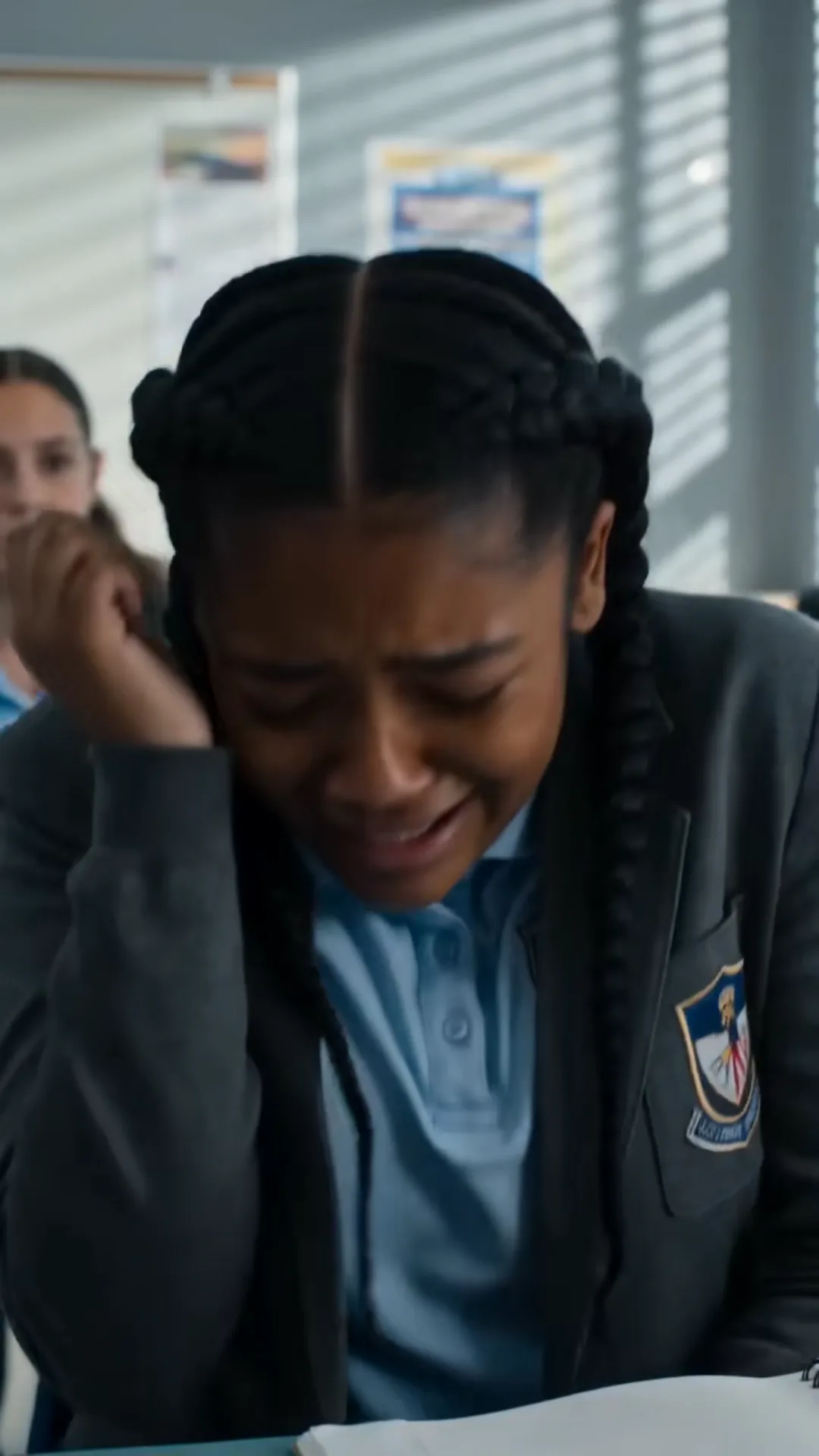
Tyler Harlan did not return to Westbridge High that spring.
His mother's termination, and the accompanying local news coverage — a brief segment on the evening news, a longer piece in the regional paper, both featuring careful, anonymized language about "a teacher terminated following a corporal punishment investigation" — had made the building, understandably, an uncomfortable place for him to continue attending.
He finished the semester through an online program instead, a fact Maya learned secondhand, through the same rapid, informal information network that had once spread news of the incident itself.
She thought about him, occasionally, in the weeks that followed — not with anger, exactly, though anger would have been reasonable. Something closer to a complicated, unresolved curiosity about what, if anything, he'd actually understood about his own role in everything that happened.
---
She got a partial answer in May, unexpectedly, in the form of a letter mailed to her house — an actual letter, handwritten, which struck Maya as strange before she'd even opened it, in an era when nobody her age wrote anything by hand anymore.
Maya,
I don't know if you want to hear from me. You probably don't. I get that.
I just wanted to say I'm sorry. Not the "sorry because I got caught" kind. The actual kind.
I asked you to help me cheat because it never occurred to me that you'd say no. That's messed up, now that I actually think about it. I got so used to things just — working out, because of who my mom was, that I never really had to think about whether what I was asking was fair.
I don't think I knew, until all of this happened, how many other things she'd been doing that I never noticed, because they never happened to me. I keep thinking about that. About how easy it was for me to just not notice, for years, because none of it ever landed on me.
Anyway. I'm sorry. I know that doesn't fix anything. I just needed to say it somewhere other than in my own head.
— Tyler
---
Maya read the letter twice, sitting on her bed, trying to sort through the complicated tangle of feelings it produced — something that wasn't quite forgiveness, wasn't quite continued anger, something more like the specific, uneasy relief of watching someone finally, belatedly, begin to understand something that should have been obvious from the start.
She showed it to Eli the next day, at lunch, sliding it across the table the way she'd once slid her notebook across a desk during the investigation.
He read it slowly, expression unreadable.
"Do you believe him?" he asked finally.
"I don't know," Maya said honestly. "I think I believe that he's starting to understand something he didn't understand before. Whether that actually changes how he acts going forward — I guess we'll never really know. He's not coming back here."
---
"Are you gonna write back?" Eli asked.
Maya considered the question for a long moment, turning the letter over in her hands.
"I don't think so," she said finally. "Not because I'm still mad, exactly. I think I've mostly worked through the mad part. I just don't think it's my job to help him feel better about what happened. He can figure that part out on his own, with his own therapist, or his own conscience, or whatever. I did enough work processing all of this. I don't need to do his part too."
Eli nodded slowly. "That's fair. Honestly, that's more generous than I'd have been."
"I'm not being generous," Maya said. "I'm being done. There's a difference."
---
She kept the letter anyway, tucked into the same small notebook where she'd once tracked her scholarship countdown and, later, the long list of small cruelties that had built toward the incident itself.
It felt, somehow, important to keep — not as a wound to reopen, but as a kind of closing bracket, proof that the story hadn't simply ended with a termination hearing and a news segment, but had continued rippling outward into at least one unexpected, complicated moment of genuine reckoning.
She didn't know what would become of Tyler, ultimately — whether the lesson would stick, whether he'd carry it forward into whatever came next in his life, or whether it would fade, over time, into just another uncomfortable memory he'd eventually stop examining too closely.
That part, she understood now, was no longer hers to carry.
---
Her mother, reading the letter over her shoulder one evening, was quiet for a long moment afterward.
"You know," she said finally, "it takes something, for a kid that age to write a letter like that. Doesn't excuse anything. But it takes something."
"I know," Maya said. "I just don't know what to do with it, exactly."
"You don't have to do anything with it," her mother said. "You already did the hard part, months ago, when you said no in the first place. Everything since then has just been the world slowly catching up to the fact that you were right."
---
Maya thought about that sentence for a long time afterward — the idea that she hadn't needed to do anything else, that the courage had already been spent, fully and completely, in one quiet moment back in November when she'd simply kept her arm angled over her own test paper and refused to move it.
Everything since — the ruler, the investigation, the hearing, the letter — had simply been consequence unfolding from that single, small, stubborn act of integrity.
May you like



It was, she thought, both a heavier and a lighter realization than she'd expected. Heavier, because it meant the whole cascading disaster had, in some sense, started with her. Lighter, because it also meant she'd done exactly the right thing, all along, and everything after had simply been the slow, difficult process of the world catching up to that truth.
---







