Chapter 9 - The New Third Period
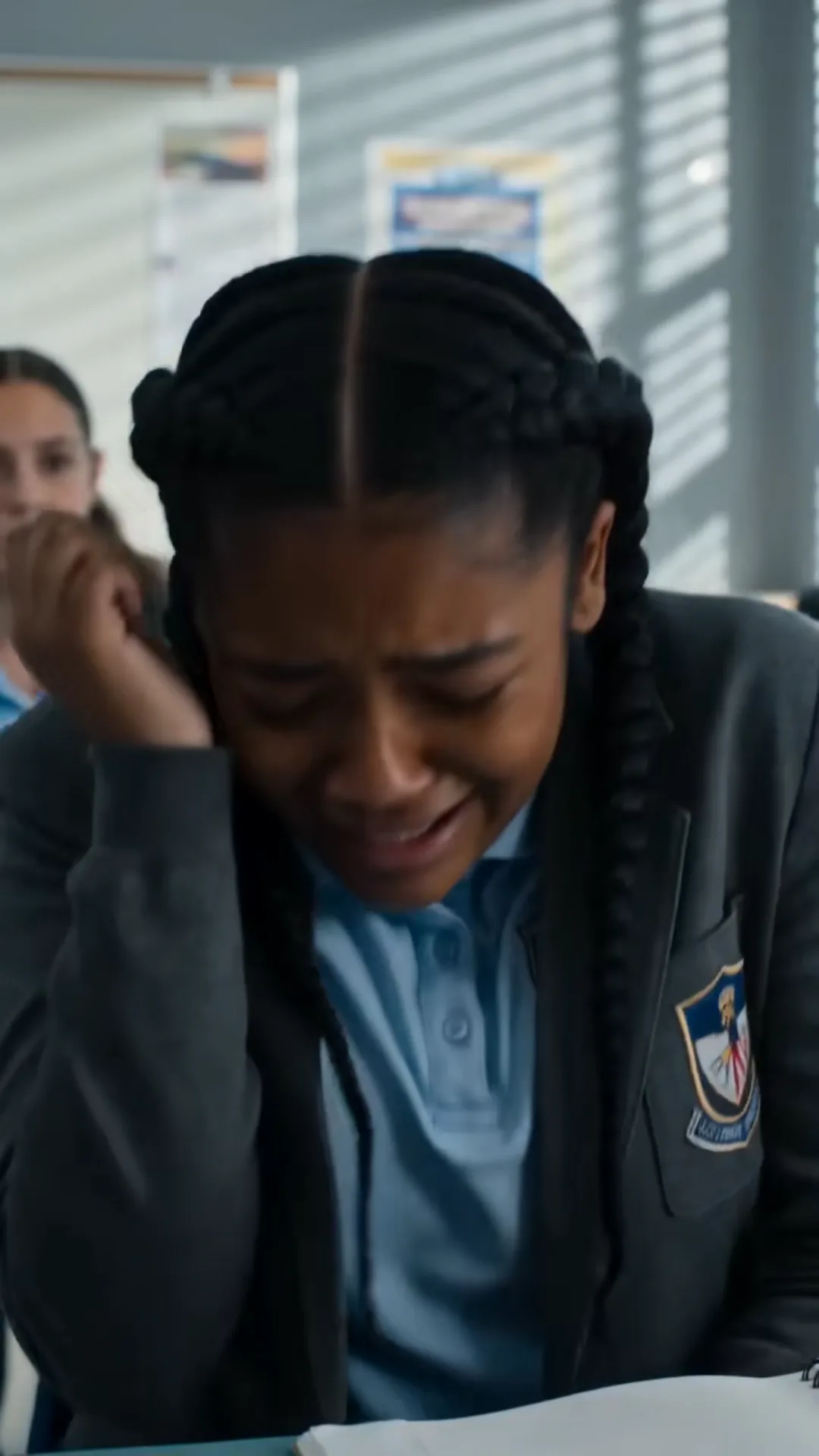
September came again, and with it, a new chemistry teacher — a young man named Mr. Osei, fresh from a graduate program, visibly nervous during his first week, overcorrecting toward excessive fairness in a way that struck Maya, now a junior, as almost touchingly deliberate.
He announced, on the first day, an open-door policy regarding academic concerns, and made a point, within the first week, of publicly, explicitly stating that any suspected academic dishonesty would be reported through official channels, never handled through private intimidation.
Maya doubted he knew the specific history behind that particular policy.
She suspected, watching Principal Alvarez observe his classroom unusually closely during the first month, that someone above him certainly did.
---
The security cameras had been upgraded over the summer — new, higher-resolution models, mounted with backup battery systems specifically designed to keep recording even if a cable was disconnected, a detail Maya learned from Marcus Bennett, still working security, now visibly proud of the incident that had, indirectly, prompted the district-wide upgrade.
"Funny how one kid pulling a plug can change an entire security policy," he told her, during a brief hallway conversation in October. "Wasn't exactly the outcome anyone planned for, but I'll take it."
"How's it feel?" Maya asked. "Knowing you're the reason things changed?"
Marcus considered the question seriously, the way he seemed to consider most things.
"Feels like the job finally mattered the way I always hoped it would, when I first took it," he said. "Six years of watching quiet hallways, and then one Tuesday, it turned out watching mattered more than I ever expected. I'll take that trade."
---
Eli remained Maya's closest friend through junior year, the two of them occasionally, quietly, revisiting the events of the previous spring — not obsessively, not in a way that kept the wound open, but with the specific, comfortable ease of people who had survived something significant together and no longer needed to treat it as fragile.
"You ever think about what would've happened if I hadn't stood up that day?" Eli asked once, during a study session at Maya's kitchen table, the same table where she'd once prepared for the midterm that started everything.
"All the time, actually," Maya admitted. "I think you standing up is what made me brave enough to actually hold my hand out instead of running. I was scared enough, in that moment, that I might have just — I don't know. Frozen completely. Watching you get told to sit down, and sitting down anyway, and still being furious about it — that reminded me that being scared and doing the right thing aren't opposites."
"That's a very grown-up way of putting it," Eli said.
"I've had a very grown-up year," Maya said, and they both laughed, the specific dark, survivor's laugh of two people who had, in fact, earned the right to find some humor in what they'd been through.
---
The scholarship, when the decision finally arrived in April of her junior year — early admission to a summer research program, with a partial academic scholarship attached that would carry forward into her senior year applications — felt, to Maya, like something she'd earned twice over.
Once for the grades themselves, the years of careful, disciplined work at that kitchen table.
And once for something less quantifiable — the specific, hard-won knowledge that integrity sometimes cost you dearly before it ever paid you back, and that the paying back, when it finally arrived, was worth every difficult month in between.
She called her mother at work to tell her the news, standing in the school parking lot, unable to wait until evening.
"I'm so proud of you," her mother said, voice thick with emotion even through the tinny connection of a work phone. "You have worked so hard for this, mija. You have no idea how proud."
"I think I do, actually," Maya said, smiling, the parking lot sunlight warm on her face. "I think I finally understand exactly how much this cost, and exactly how much it's worth."
---
Ms. Harlan, Maya learned through the same informal information network that had once spread news of her termination, had eventually found work outside education entirely — a corporate training position, according to rumor, though nobody seemed entirely certain, and Maya found, examining her own feelings about it, that she genuinely did not care enough to investigate further.
She had spent seven months of her sophomore year deeply, painfully entangled with that woman's cruelty.
She did not intend to spend one more unnecessary minute thinking about her, now that the entanglement was finally, completely severed.
Some chapters, she'd learned, deserved to simply close, without an epilogue chasing down every remaining thread.
---
The wooden ruler itself — she learned this detail almost by accident, from Principal Alvarez, during a casual conversation about the district's new corporal punishment policy, fully banned now, no exceptions, no consent forms, following the fallout from the investigation — had been formally logged as evidence, then, once the case concluded, simply destroyed, along with several other confiscated items from that same investigation.
Maya found something quietly satisfying in that detail. Not dramatic. Not triumphant.
May you like



Just a simple, physical fact: the object that had once represented the worst afternoon of her sophomore year no longer existed anywhere in the world, reduced finally to exactly the kind of harmless nothing it should have been all along.
---







