Chapter 2 - Rules of the House
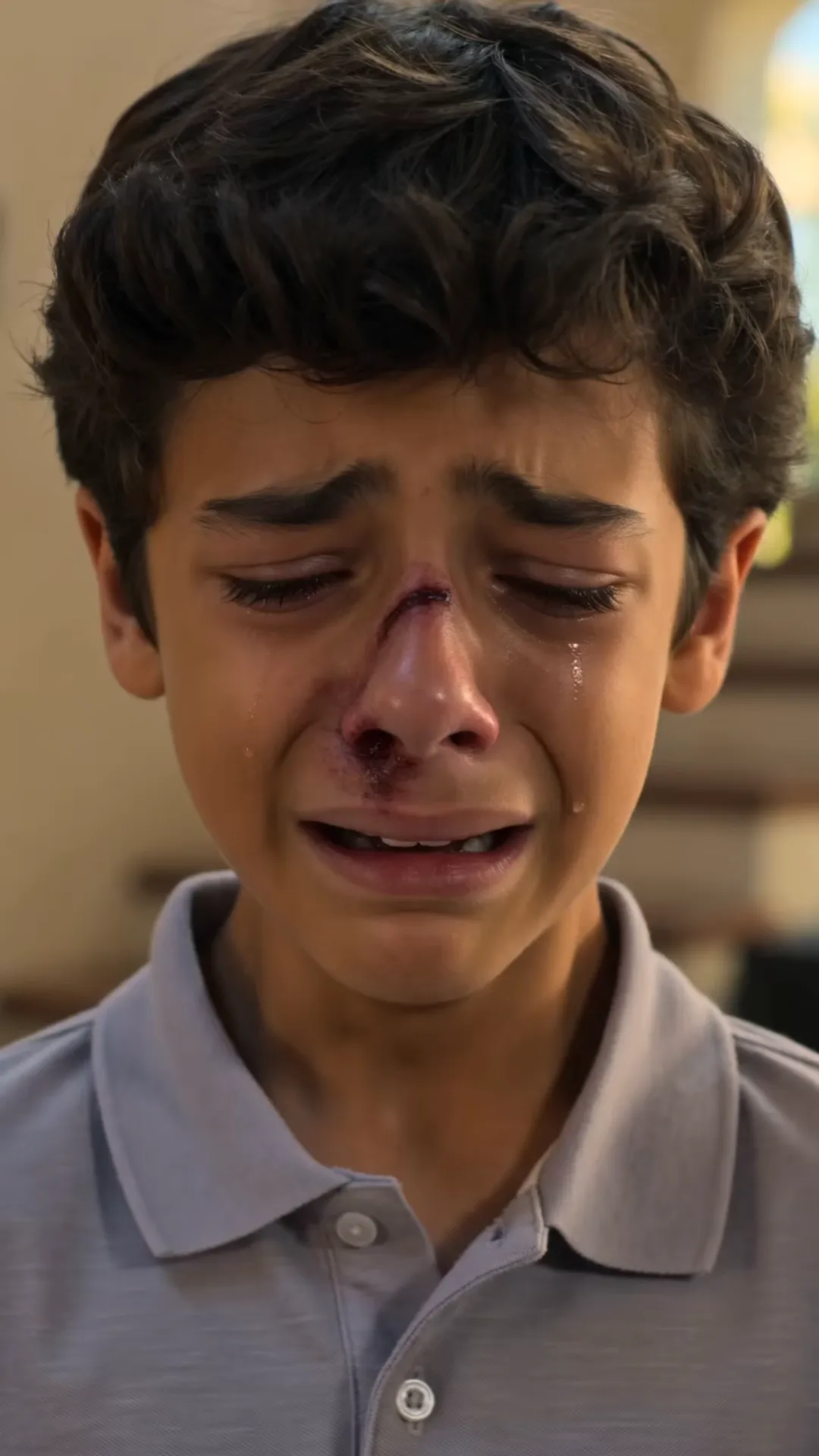
The vase was blue.
Eli would remember that detail long after he had forgotten almost everything else about that particular Tuesday — not blue like the sky, blue like the inside of a mussel shell, a color his mother used to call storm blue when she painted her toenails that shade every August.
It had belonged to Meredith's mother.
Eli did not know that when his backpack caught the edge of the hallway table on his way to get his shoes, because Meredith had never told him the vase mattered, only that it existed, the way she never told him most things mattered until after they had already stopped existing.
The sound it made hitting the tile was smaller than he expected.
Not a crash. More of a clap, one hard note, and then the quieter percussion of pieces finding their own places to land.
He stood very still.
Stillness, in the taxonomy of survival strategies Eli had built for himself, was the first line of defense. If he did not move, maybe the moment would not fully arrive. Maybe it would stay suspended, like a held breath, forever almost-happening instead of happening.
Meredith came out of her study already knowing something was wrong, the way house cats know a storm is coming before the sky changes color.
She looked at the blue pieces on the tile for four full seconds.
Eli counted them.
Then she looked at him, and her face did the thing it did — not screaming, not yet, just a kind of closing, like a door swinging shut on a spring hinge, slow and total and impossible to stop by hand.
"Pick it up," she said.
Her voice was calm in the particular way that scared him more than yelling ever had, because calm meant she had already decided something and was simply waiting to see if he would make it worse.
He knelt down. His hands were shaking in the way hands shake when a body has decided, correctly, that it is in danger, and he reached for the largest piece first, a curved shard with a painted flower still visible on its surface, half a petal, and it opened a thin red line across his palm before he understood the piece was sharp.
He did not cry.
Crying, in the taxonomy, was the last line of defense, the one you saved for when every other strategy had already failed, because crying made Meredith's face do a different closing, one that ended in the study door shutting and Eli eating dinner alone at the kitchen island with the three yellow lemons watching him like small suns that gave no heat.
"That was my mother's," Meredith said, from somewhere above him, in the same too-calm voice. "Do you understand that? That was the only thing of hers I have left."
He did not know what to do with this information.
He was eight. He understood, in the abstract, that grown women had also once been girls with mothers, that grief did not stop existing just because you'd had thirty extra years to practice hiding it. But understanding a thing and being able to use it to save yourself are different skills entirely, and nobody had ever taught Eli the second one.
"I'm sorry," he said. His voice came out smaller than he wanted it to.
"Sorry doesn't put it back together."
This was true. Eli filed it away with the other true things Meredith said that were also, somehow, weapons. Sorry doesn't put it back together. Actions have consequences. I am not your mother and I never claimed to be. True sentences, spoken at true moments, that landed on him like stones dropped from a great and deliberate height.
He picked up every piece of the vase with his bleeding hand and did not ask for a bandage.
He had learned, three incidents ago — a spilled glass of orange juice, a scuffed doorframe, a dead phone charger he was blamed for breaking — that asking for anything in the minutes after a mistake only extended the minutes.
Better to disappear into the task. Better to be small and quiet and useful until the room forgot, again, that he was in it.
That night his father called at six exactly.
"How was school?"
"Good."
"Did you eat your dinner?"
"Yes." This one was a real lie. He had eaten four bites of chicken and left the rest, his stomach too full of the day's math to hold food as well.
"Are you being good for Meredith?"
Eli looked at his hand, at the thin dark line across his palm that had already stopped bleeding, at the bandage he'd finally put on himself using the box under the bathroom sink, uneven and too large, the kind of bandage a person applies when no one is there to help them apply it properly.
"Yes," he said.
His father exhaled on the other end of the line, a sound Eli had come to associate with relief, though relief from what, exactly, Eli never let himself ask. Relief that the call was almost over. Relief that whatever lived at home did not require his father's presence to keep functioning.
"That's my boy," Daniel said. "Two more weeks and I'm home for a whole month. We'll do something big. Anywhere you want."
"Okay," Eli said, and meant it, because hope was not yet a thing his body had learned to distrust completely, even though every part of the last two years should have taught him to.
Down the hall, Meredith's study light was still on. Eli could see the thin gold line of it under her door as he brushed his teeth, and he found himself, without deciding to, counting the tiles on the bathroom floor. Sixteen white. Four black, arranged in a pattern he had never been able to make sense of, though he'd tried.
Counting to sixteen and back again, three times, before he felt steady enough to turn off the light.
He climbed into bed and reached under his pillow for the photograph — his mother laughing at something outside the frame, sun in her hair, a version of joy so uncomplicated it almost hurt to look at now — and held it against his chest the way other children held stuffed animals.
"I broke Meredith's vase," he whispered to the photograph, because it was the only audience in the house who would not make him pay for the confession. "I didn't mean to. I'm trying to be good. I don't know what else to try."
The photograph, being a photograph, said nothing back.
But Eli imagined, the way children do when the world has given them no better options, that his mother's paper smile widened just slightly, just for him, just enough to get him through until morning.
Two floors up in the northern hemisphere and six time zones away, his grandfather Arthur was sitting in a hotel bar in Rotterdam, phone in hand, staring at a text message from Daniel that had arrived twenty minutes earlier and said only: Eli broke something of Meredith's today. She's pretty upset. Might need you to talk to him next time you're around, he could use a man's perspective.
Arthur read it four times.
He did not know, could not have known, about the shard, the palm, the bandage applied without help behind a closed bathroom door.
But something in the phrasing — she's pretty upset, as though the boy's grief and the woman's vase were weights on the same scale, worth measuring against each other — sat wrong in his chest in a way he could not immediately name.
He would name it soon enough.
May you like



He ordered a second coffee instead of the whiskey he'd been about to ask for, and he opened his calendar, and he began, quietly, to see if his flight home could be moved earlier than planned.
---