Chapter 9 - The Slow Work of Ordinary Days
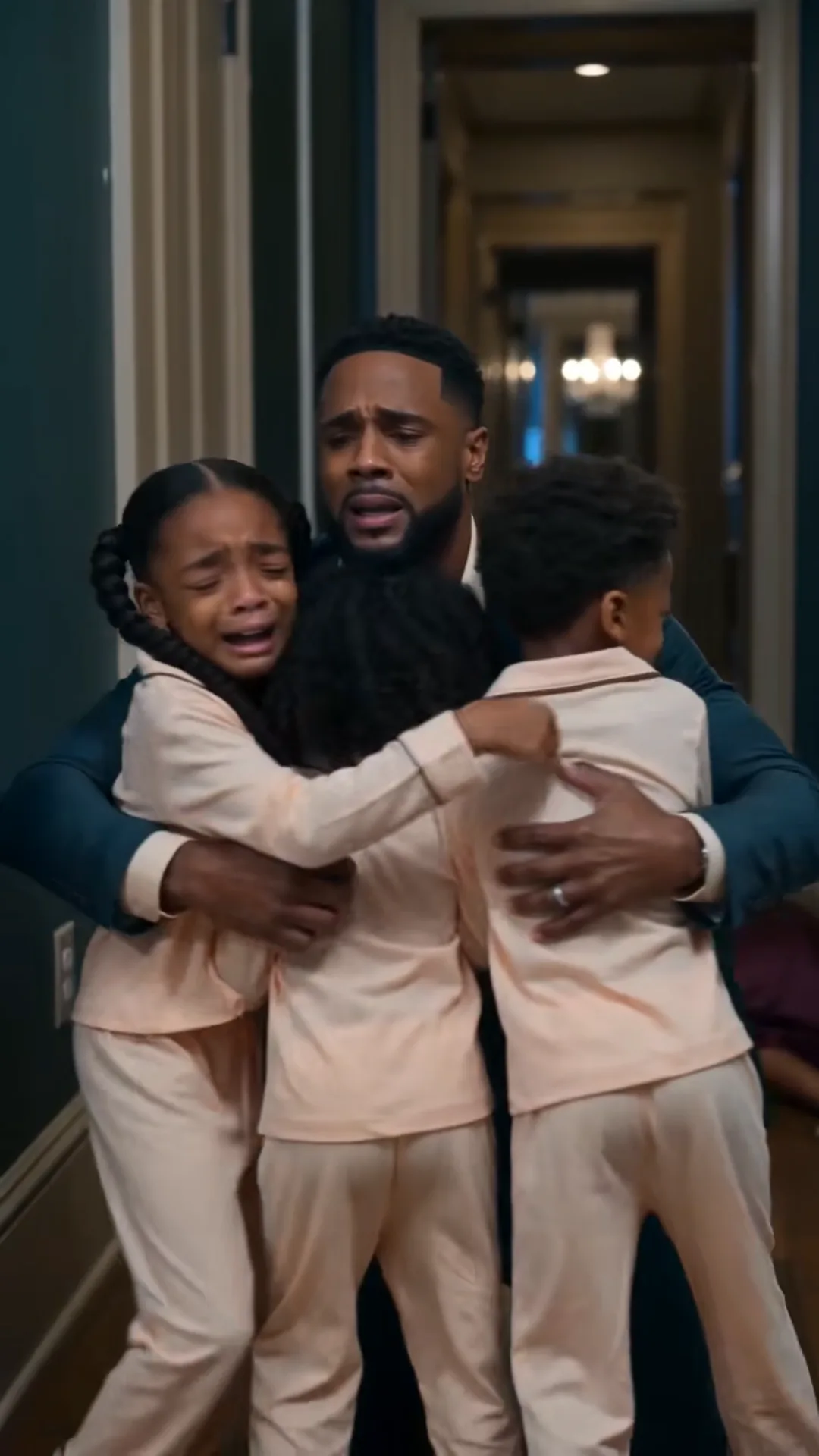
Six weeks later, there was a different apartment, smaller than the house, two bedrooms instead of four, a kitchen with a window that looked out on a parking lot instead of a backyard.
Nobody complained about the size.
Sizes stop mattering once a place has earned the word safe.
Leo had a shoelace problem again — not the same lace, a new one, but the same seven-year-old stubbornness about tying it himself, and Daniel let him struggle with it every morning because some independence, hard-won and irritating, is exactly the kind of ordinary a kid needs after a night like that one.
Mia's night-light had come with them, of course. It sat now on a permanent shelf by her new bed, no longer packed and unpacked, no longer part of any grocery bag. Just a fixture. Just a fact of the room, the way ceilings and doorframes are facts.
That permanence mattered more than either of them said out loud.
---
Emma had started seeing someone.
A therapist with a small office above a bakery, a room with a rug covered in soft geometric shapes and a box of tissues that never seemed to run empty.
She didn't talk much, the first few sessions.
Then, slowly, she started bringing things in — the crayon drawing, eventually, unfolded on the low table between them, its creases gone soft and pale from being folded and unfolded so many times.
"I don't know if I should throw it away," she told the therapist one afternoon. "It's not true anymore. The five people. The sun. It's not us anymore."
"Does it have to be true right now to matter?" the therapist asked. "Or can it just be true about a moment that happened, once, and still count?"
Emma thought about that for a long time.
"I think I want to keep it," she finally said. "Not because it's still true. Because it happened. And because I want to remember I knew, even then, that I hoped for something better. I think that means something. Hoping, even when I didn't get what I hoped for exactly."
---
Renata called on Thursdays.
Supervised, for now — a court arrangement, a caseworker's careful scheduling, thirty minutes on a video call with someone from family services quietly present in case anything needed intervening.
The calls were awkward, some weeks. Stilted. Renata's voice sometimes cracking around apologies that came too fast, too eager, the kind of apology that's really asking to be forgiven rather than actually making room for the person it's meant to comfort.
Daniel had learned, in the therapy he'd started attending too — his own, separate, on Tuesdays — that this was called urgency without accountability, and that it was a pattern worth naming so his kids could learn to recognize it, too, someday, in whatever relationships came after this one.
But some weeks, the calls were different.
Some weeks, Renata just listened. Asked Leo about the shoelace. Asked Mia if the night-light still worked. Asked Emma, gently, without pushing, what she'd been drawing lately.
Those weeks were slower to build trust than the calls where she talked more.
But they were the calls that mattered.
---
"She's doing the program," the caseworker told Daniel, on one of the calls he took alone, after the kids had gone to their rooms. "Inpatient for the anger management piece, outpatient for the depression underneath it. It's slow. It's not linear. But she's doing it."
"Is it enough?" Daniel asked. Not rhetorically. He genuinely didn't know the answer, and some nights the not-knowing kept him up longer than the memory of the bat did.
"Enough for what?" the caseworker asked back.
"Enough for them to ever trust her again. Enough for me to ever let her be alone with them again."
The caseworker didn't answer that one directly. Nobody could, honestly — not with certainty, not this early.
"It's enough to keep going," she said instead. "That's the only measurement that matters right now. Not the destination. Just whether the next step is still happening."
---
On a Saturday, six weeks and four days after the hallway, Daniel took all three kids to a hardware store, of all places, because Leo had asked, out of nowhere, at breakfast, if they could build a birdhouse.
Nobody knew why a birdhouse. Not even Leo, probably.
But they built it anyway, in the small parking-lot-facing kitchen, glue and small wooden pieces spread across newspaper, Mia insisting on painting it purple even though nobody had asked what color it should be, Emma quietly sanding down a rough edge with more focus than the task strictly required.
"Why a birdhouse?" Daniel finally asked, halfway through.
Leo shrugged. "I don't know. I just wanted to build something that was only for good things. Like, birds live in it. Nothing bad happens in a birdhouse. It's just, like, a safe little house. For something small."
Daniel had to turn away for a second, pretending to look for the glue.
Some sentences a seven-year-old says without knowing their own weight.
This was one of them.
---
That night, after the kids were asleep, Daniel sat on the small balcony that came with the new apartment — barely big enough for one chair, but his, entirely his, no bat-shaped shadow anywhere near it — and let himself, for the first time in six weeks, think forward instead of backward.
Not about what had happened.
About what might, slowly, carefully, over years and not weeks, still be possible to build.
He didn't know the ending yet.
Nobody in that family did.
But for the first time since the stairs, since the hallway, since the sound of a chair leg dragged too fast across wood, the not-knowing felt like room to grow into.
Not like a threat.
May you like



Just like an open door, and on the other side of it, an ordinary, unremarkable, blessedly boring life, waiting to be built one small wooden birdhouse at a time.
---







