Chapter 1
The artificial light of Terminal 4 did not warm the air; it mer
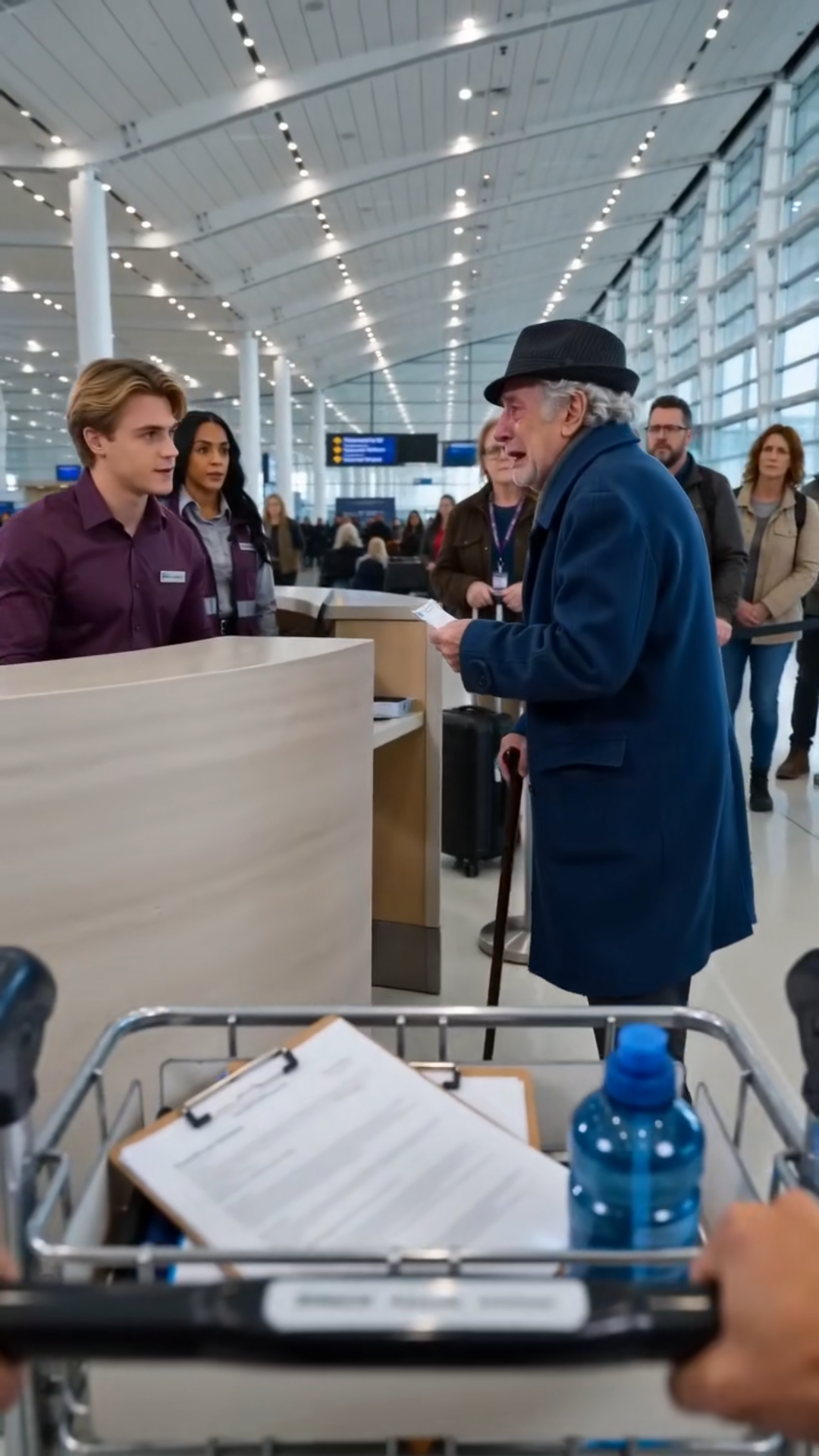
ely illuminated the chill. It was 04:15 AM, the dead hour when the human body craves deep REM sleep, yet hundreds of tired souls drifted across the polished terrazzo floor like ghosts trapped in a modern purgatory of glass, steel, and cheap linoleum. Fluorescent tubes hummed overhead, a high-frequency buzz that vibrated directly against the base of my skull, triggering the dull, familiar throbbing of a migraine that had been building since I left Chicago.
I stood behind the black handle of a heavy metal luggage cart, my hands raw from the cold metal. Resting in the upper basket was a half-empty plastic water bottle and a thick folder of subpoena documents—case file 88-B, the ongoing investigation into cross-state labor trafficking that I had spent the last fourteen months of my life trying to unravel. My eyes burned. Every breath smelled of stale coffee, industrial floor wax, and the damp wool of coats worn by people who had been traveling for far too long.
Three yards ahead of me, the line had stalled at Service Counter 7.
Behind the curved stone desk stood Arthur Vance. He was thirty-four years old, wearing a burgundy polo shirt with the terminal’s golden logo embroidered over his left breast. His collar was frayed, stained slightly yellow around the neck from dried sweat, and his facial expression was a masterclass in bureaucratic cruelty—that precise, practiced sneer of a minor authority figure who knows he holds total power over a terrified stranger's next six hours.
On the public side of the counter stood an old man. He was small, frail, his spine curved like a dry bowstring beneath a faded beige jacket that hung loosely off his bony shoulders. A grey flat cap covered a head of thin, silver hair. His right hand, gnarled with advanced arthritis and spotted with liver marks, clutched a wooden cane carved from ash wood. The rubber tip was worn down to the bare metal ring, clicking rhythmically against the floor whenever his legs trembled.
"I told you three times already, old man," Vance’s voice cut through the low murmur of the terminal. It was flat, loud, intentionally projected so the entire queue could hear. "Expired. Expired yesterday. Look at the numbers. You want to get on the 04:30 bus to Cedar Ridge, you buy a new ticket or you step aside. You’re holding up the line."
Vance tossed the slip of white thermal paper back across the counter. It slid across the smooth stone and fluttered to the floor near the old man’s scuffed leather shoes.
The old man didn’t reach for it immediately. He couldn't bend down quickly without risking a fall. He slowly lifted his chin, revealing a face deeply lined by decades of hard labor—weathered skin, sunken cheeks, and eyes so cloudy with incipient cataracts that it seemed miraculous he had found his way to the terminal at all.
"Please, son..." the old man’s voice trembled, frail as dry leaves scraping across pavement. He lowered his eyes, his knuckles whitening around the neck of his cane. "It's my daughter’s funeral... down in Millfield. It’s... it’s all the money I had left. I sold my wife's ring to buy this seat."
The line behind me stirred with discomfort, a collective intake of breath, but nobody moved. We were all conditioned by the sterile apathy of transit hubs: mind your business, don't miss your departure, don't interfere with the authority behind the glass.
Vance didn't blink. He reached for his barcode scanner, tapping it against the plastic pad with a monotonous clack-clack-clack. "Not my problem. Terminal policy. Next in line!"
I watched Vance's eyes carefully. As an investigator specializing in behavioral profiling, I had spent a decade studying the micro-expressions of predators. When a human being feels genuine annoyance, the inner brows pull down and together; the eyelids narrow. But Vance’s eyelids were relaxed. His upper lip twitched slightly upward on the right side—a classic, unmistakable indicator of contempt, accompanied by a subtle flare of the nostrils. He wasn't bored. He was enjoying this. He derived a dark, pathetic pleasure from watching this broken man crumble.
The old man slowly knelt, his knees popping audibly, to retrieve the paper from the floor. His hands shook so violently he could barely pinch the thermal paper between his thumb and forefinger.
"Hold on."
The voice didn't come from the queue. It came from the side entrance near the security office.
A woman walked into the bright frame of the terminal lights. She wore a pristine white uniform shirt beneath a black tactical vest, her dark hair pulled back into a tight, professional bun. Her name tag read SECURITY SUPERVISOR - M. RICE. She moved with the deliberate, efficient stride of someone who had served in military law enforcement before taking a civilian supervisory role—low center of gravity, hands resting comfortably near her utility belt, eyes sweeping the environment in a continuous 180-degree scan.
She didn't look at the crowd. She looked directly at Vance.
"What seems to be the delay here, Arthur?" Officer Rice asked, her tone deceptively calm.
Vance shifted his weight, his smug posture faltering for a fraction of a second before he recovered his arrogant grin. "Just enforcing policy, Supervisor. Customer’s trying to use an expired ticket. Won't clear the line."
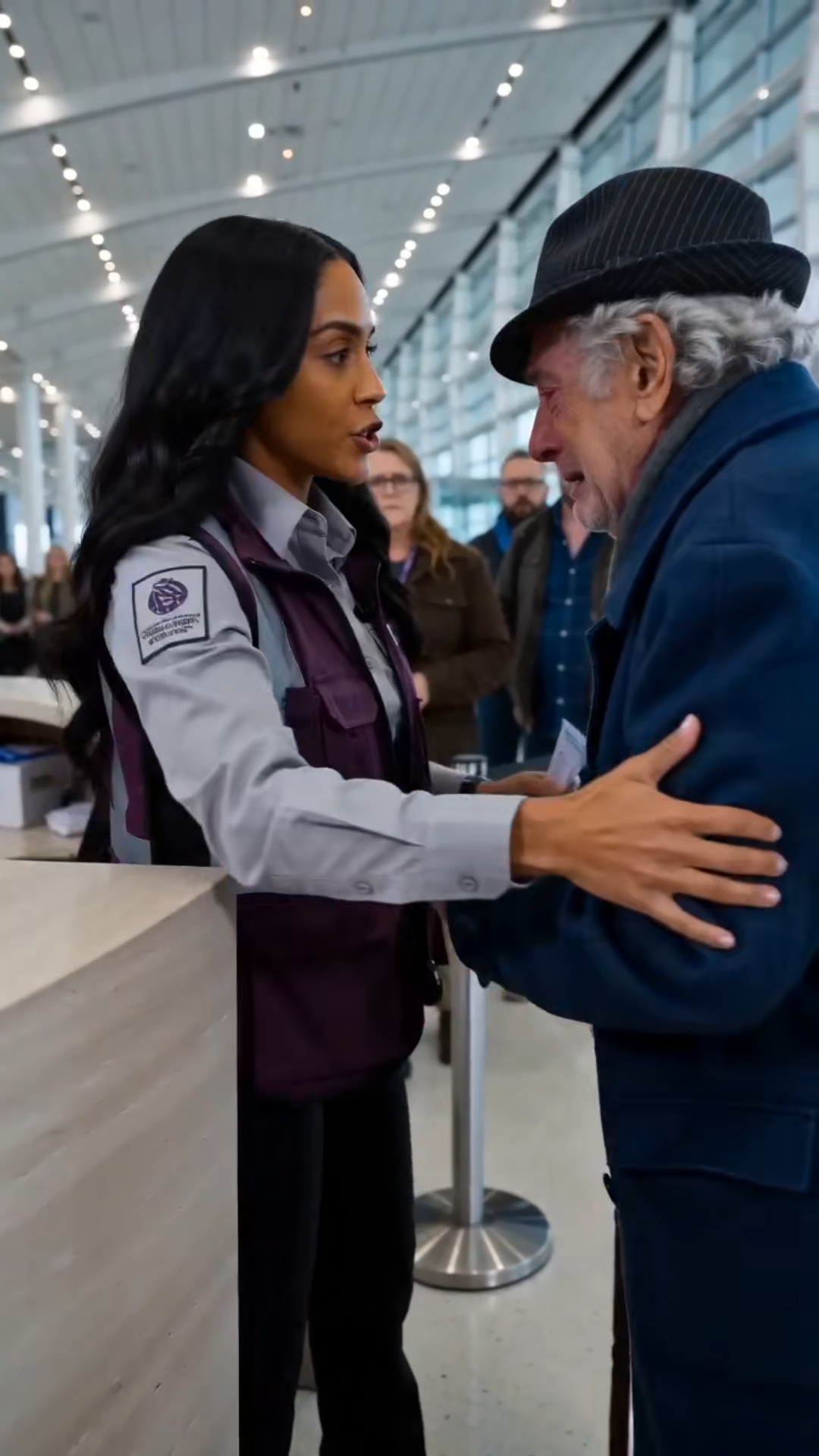
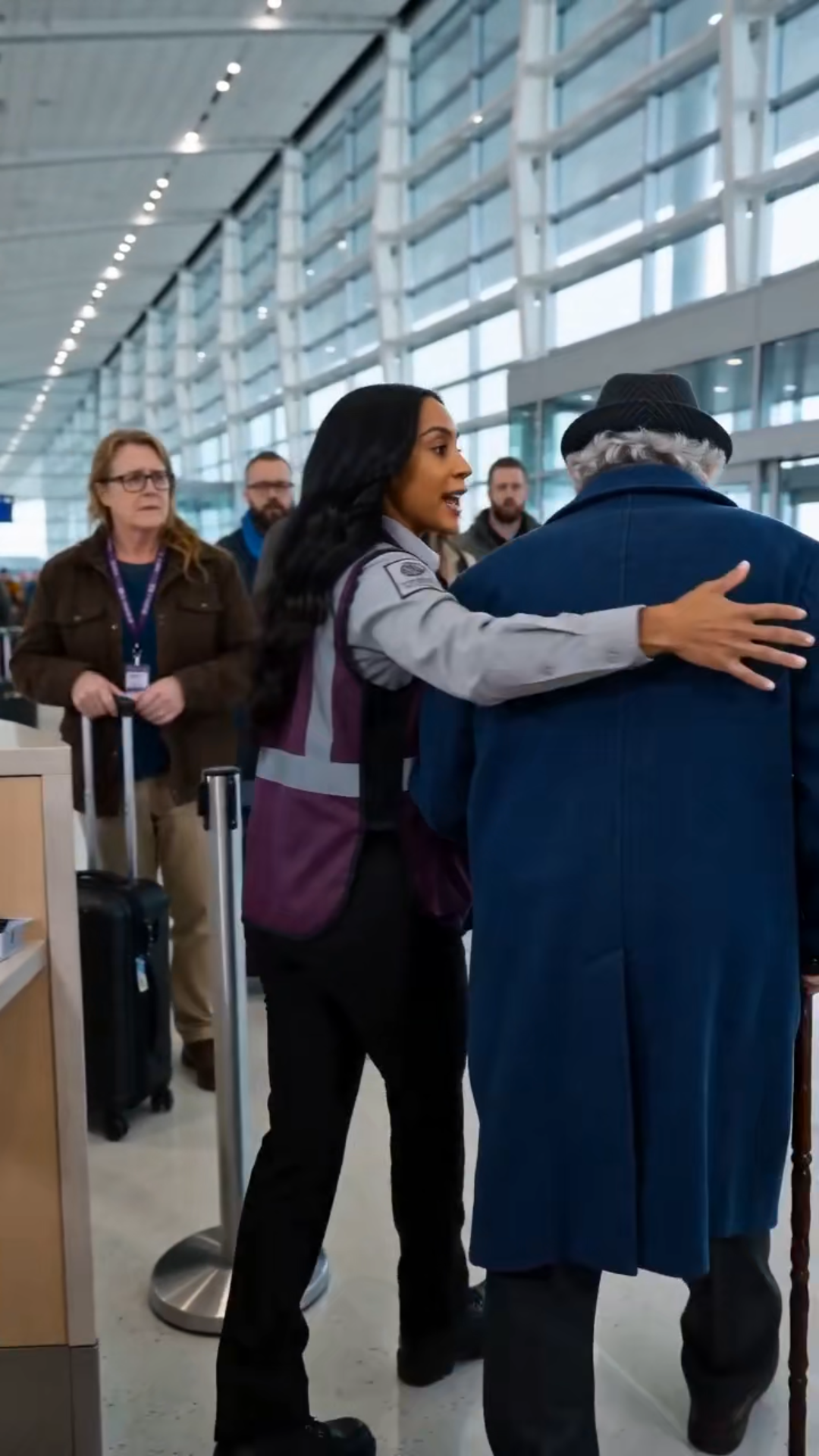
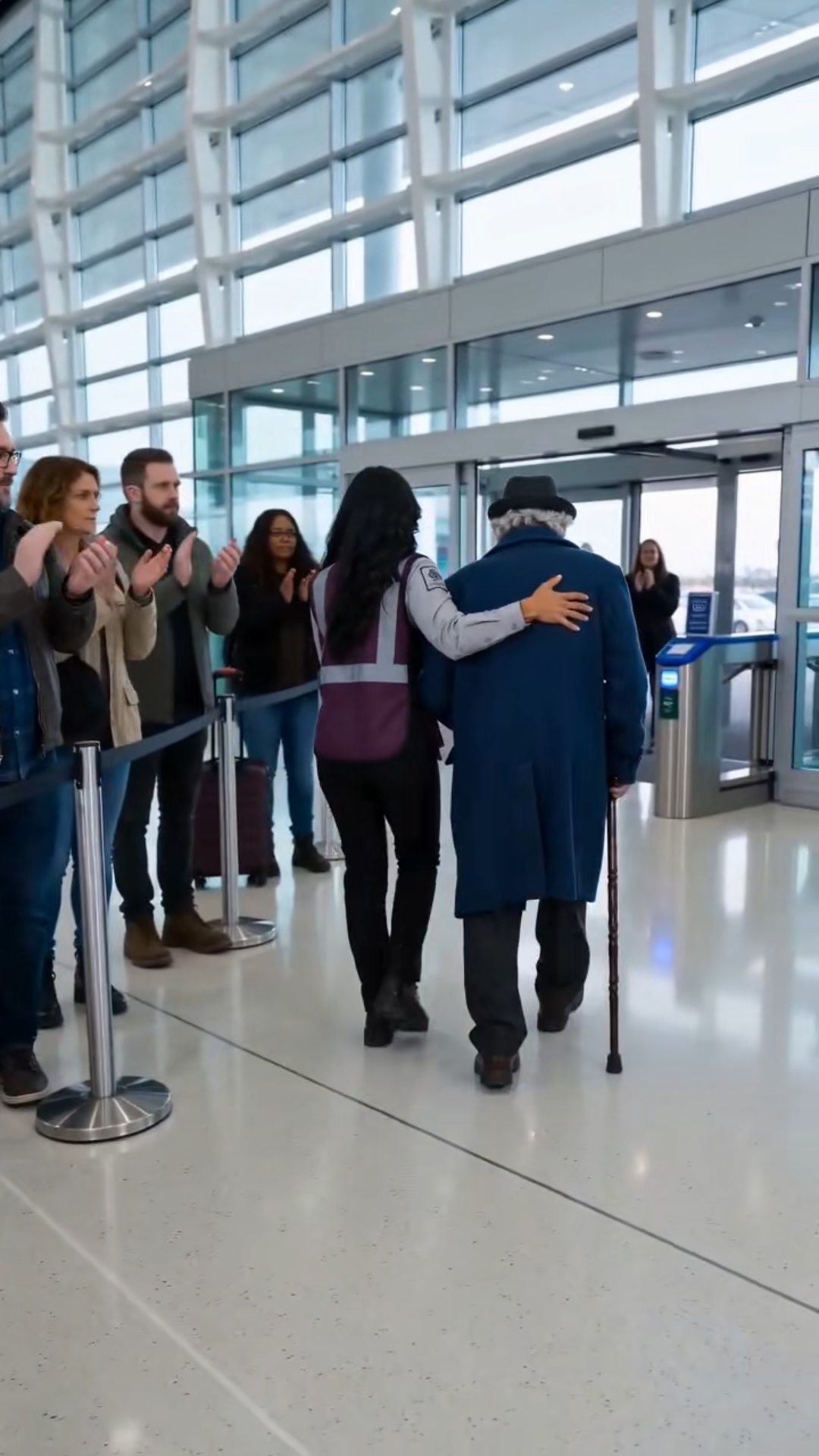
Officer Rice didn't answer him immediately. She stepped closer to the old man, reaching down with a swift, fluid motion to gently take his elbow and help him back to his feet. Her touch was respectful, firm without being aggressive.
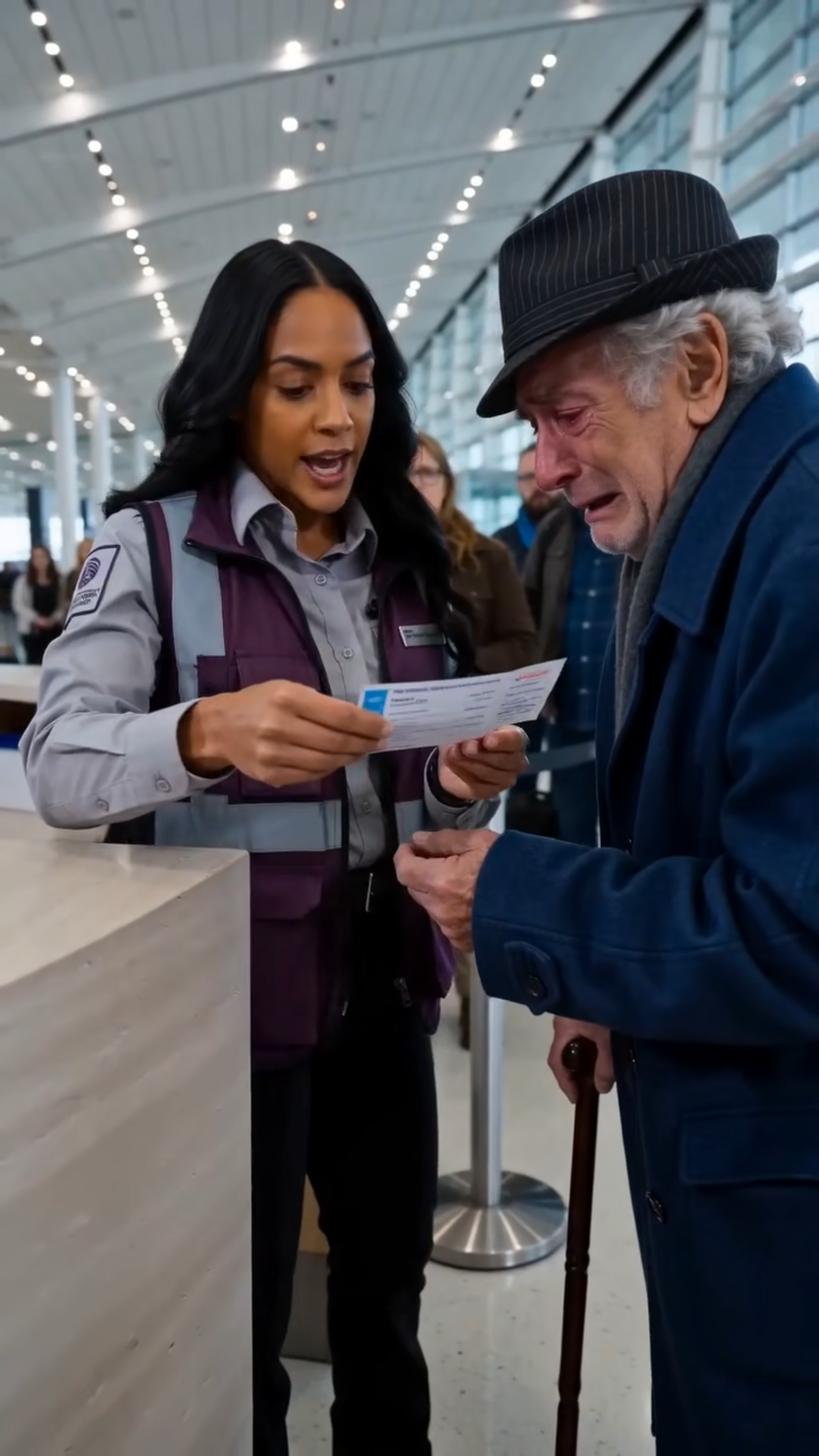
"May I see that, sir?" she asked gently.
The old man handed her the crumpled piece of paper, his lips moving soundlessly as if praying.
Rice smoothed the thermal printout against the palm of her hand. She stared at it for three full seconds. The air in the terminal seemed to drop several degrees. I saw the muscles along her jawline tighten, a tiny pulse thumping near her ear.
May you like



She looked up at Vance. Her eyes were like ice.
"Arthur," she said softly, her voice carrying a edge that cut through the background noise of the terminal. "You read it upside down."