Chapter 4
The word neurotoxin hung in the cold stairwell air like a physical threat.
My heart hammered against my ribs like a trapped bird. My breath came in short, shallow gasps. Forty kilos. That wasn't a criminal heist; that was a mass casualty event waiting to happen. The 04:30 bus to Cedar Ridge wasn't just a commuter route; Cedar Ridge was home to the regional water purification facility and the state capitol building.
I leaned closer to the gap, trying to get a clearer angle of the titanium device in the man's hand.
CLICK.
It was a tiny, almost imperceptible sound—the sound of my phone's autofocus lens resetting against the steel edge of the doorframe. In a quiet room, it would have been invisible. But in the echo chamber of the concrete stairwell, it sounded like a gunshot.
Instantly, the man’s head snapped toward the door. His eyes locked onto the dark crack where I was standing.
"We have a shadow," he said flatly.
Before I could even register the thought of running, the heavy steel door was kicked open with brutal force.
The edge of the door slammed directly into my left shoulder, throwing me backward onto the hard terrazzo floor of the corridor. My phone flew from my hand, skidding across the polished tile and spinning out of sight under a row of plastic terminal seats.
Pain exploded through my collarbone. I scrambled backward on my hands and knees, but before I could regain my feet, a heavy combat boot crushed down on my right wrist, pinning it to the floor with agonizing pressure.
I looked up. Officer Maria Rice stood over me. Her eyes were empty, stripped of all humanity, as cold and impersonal as the steel barrel of the suppressed 9mm pistol she was aiming directly at the bridge of my nose.
"Don't move," she said. Her voice didn't carry a hint of panic. It was the calm, measured tone of a professional technician executing a routine task.
The man stepped out of the stairwell behind her. He was wiping the liquid latex off his cheeks with a microfiber cloth, revealing a faint, jagged scar running from the corner of his left eye down to his jawline. He looked down at me, his gaze scanning my suit, my posture, my hands.
"He's not airport security," the man noted, his voice smooth. "Look at the shoes. Italian leather, worn heels. And he was carrying a luggage cart with legal files. An investigator? A lawyer?"
"It doesn't matter what he is," Rice said, her thumb pulling back the hammer of the silenced pistol with a soft, metallic click. "He heard the manifest description. He dies here."
"Wait," I choked out, forcing myself to look Rice dead in the eye, leveraging every ounce of psychological training I possessed. "If you shoot me here, the suppressor will muffle the report, but the wet impact and the blood pattern on this light tile will leave an undeniable scene. The cleaning staff passes this corridor every fifteen minutes. You trigger a lockdown now, and Bus 402 never leaves the bay."
Rice’s finger paused on the trigger. A fraction of a millimeter of pressure was all that separated me from a bullet through the brain. She evaluated my statement not with emotion, but with cold, algorithmic logic.
She glanced at the man with the scar. "He's right about the lockdown. Security protocols automatically seal the outer perimeter gates if a bio-hazard or violent crime is reported before 05:00 AM."
The scarred man walked over, picked up my fallen phone from beneath the plastic seats, and smashed it beneath his heel with a single, devastating blow. He reached down, grabbed me by the back of my coat collar, and hauled me to my feet with terrifying strength.
"He comes with us," the man said. "We put him in the luggage bay with the cases. Once the bus reaches the highway speed on I-95, we blow the remote pressure seal. He dies of asphyxiation before anyone even knows he's missing."
Rice didn't argue. She stepped behind me, shoving the cold muzzle of her gun hard into the small of my back. "Move. Walk normally. If you look at anyone, if you try to catch a security camera angle, I will put a bullet through your spine and leave you paralyzed on this floor before anyone can react."
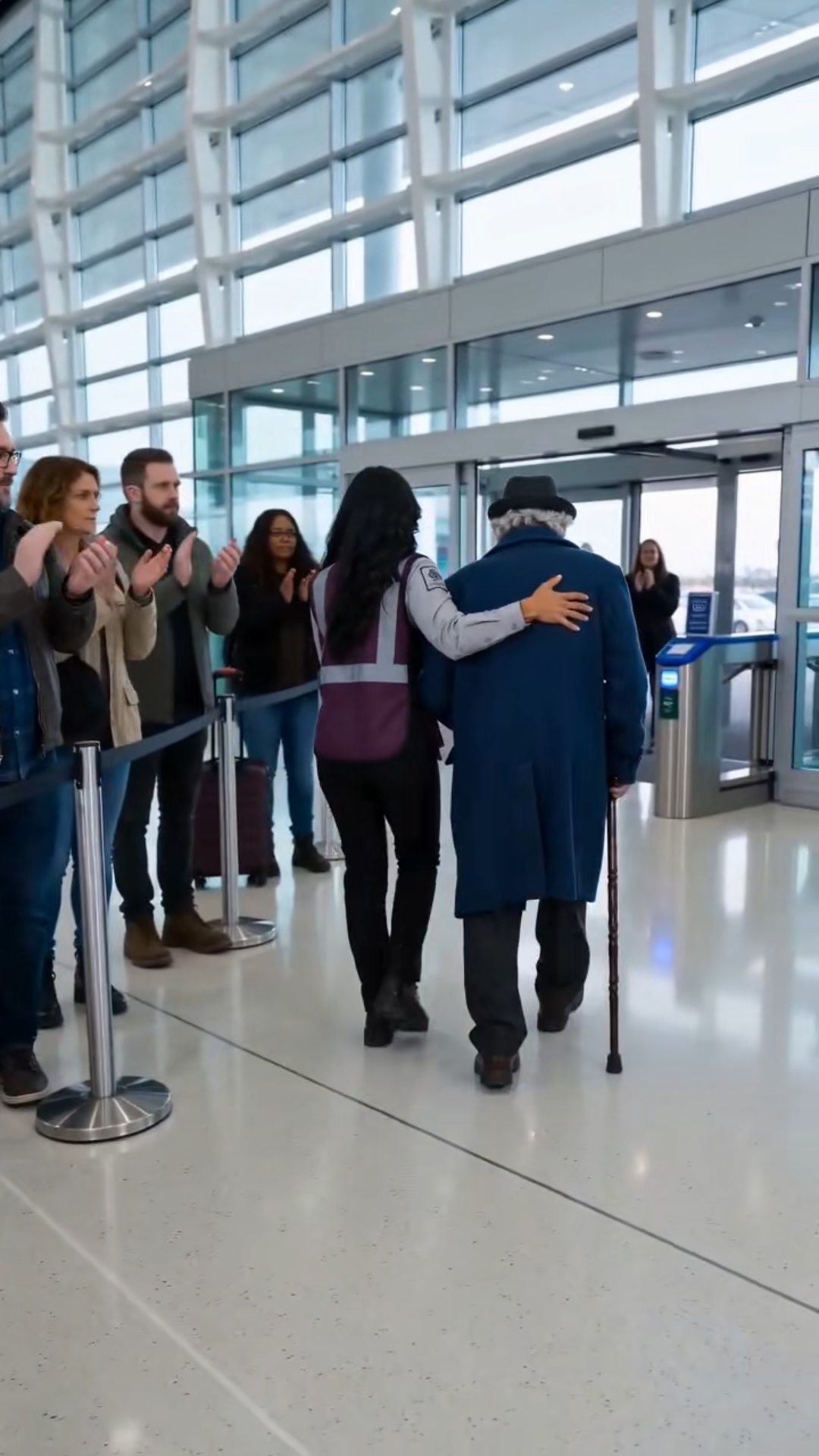
They marched me down the dark rear service hallway, away from the bright lights, away from the crowd that had just been clapping for the heroic female officer, away from the world of safety and sanity.
May you like



As we approached the heavy industrial doors leading out to the bus loading bays, I looked through the small wired-glass window. Sitting in Bay 4 was the long, metallic blue silhouette of Bus 402. Its engine was idling, sending thick plumes of grey exhaust swirling up into the freezing morning air.
And sitting in the very front seat—visible through the tinted glass window—was an old man's hat, resting empty on the dashboard like a prop left behind after a play had ended.