Chapter 2 - The Sister Who Almost Was
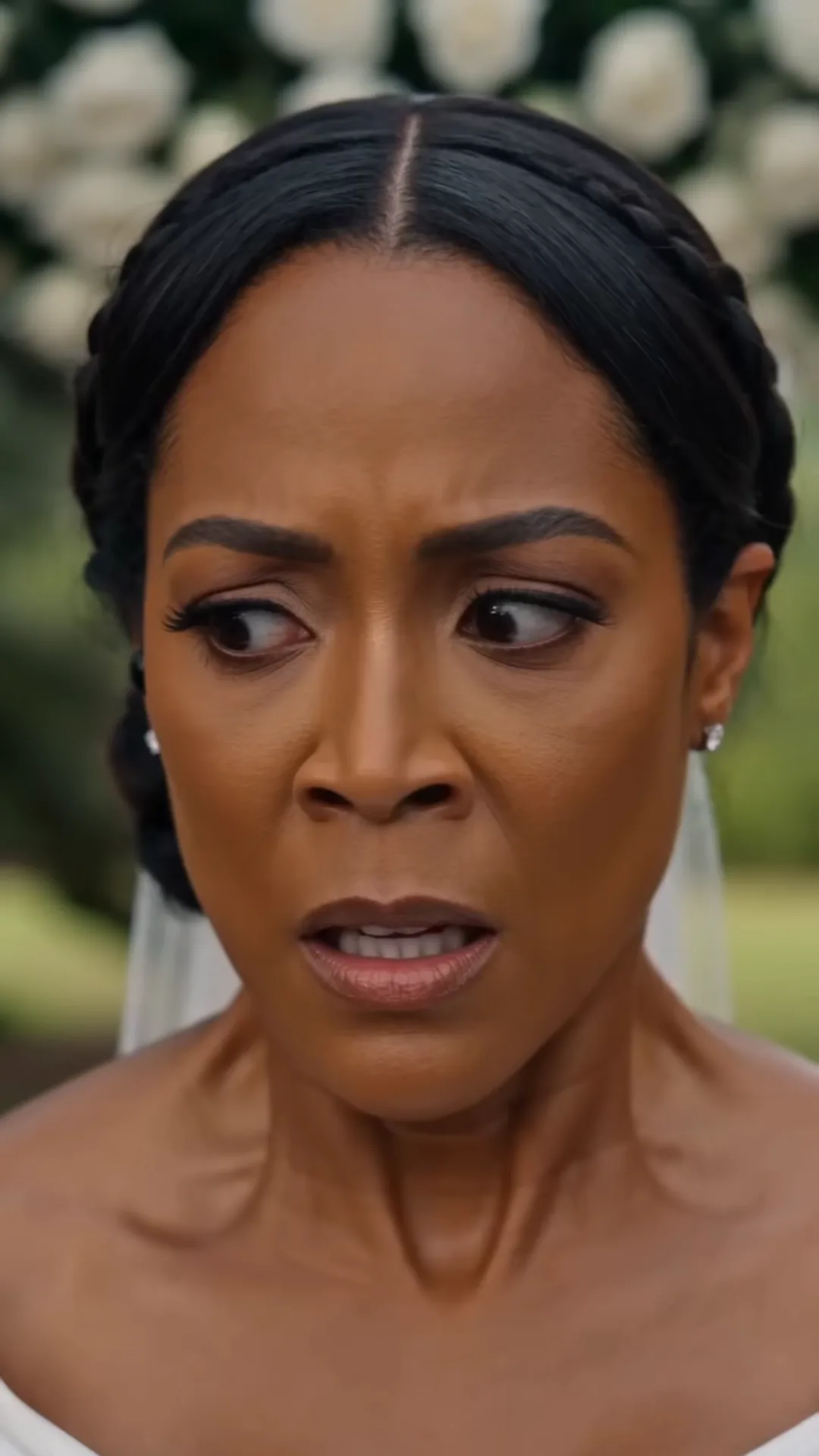
Vivian Cross was born four years before Emma, to the same father and two different mothers, in two different kinds of houses.
Her mother left when Vivian was nine. Not dramatically — no slammed doors, no final speech — just a note on the kitchen table and a car that didn't come back. Her father remarried within the year. Emma's mother was soft-spoken, gentle, the kind of woman who remembered everyone's birthday and nobody's grudges.
Vivian hated her instantly and completely.
Not because she was cruel. That would have been easier to hate. She hated her because she was kind, kind in a way that made the house feel warm for the first time in years, kind in a way that made Vivian's father laugh again — and every laugh felt like a theft, one more piece of him going somewhere Vivian couldn't follow.
Then Emma was born, and the theft became permanent.
---
Children learn the shape of unfairness early, long before they have the vocabulary for it.
Vivian learned it at eleven, watching her father read bedtime stories to a baby who wasn't her, in a voice she didn't remember him using for her own bedtime stories, though she might have imagined that. Memory is generous to old wounds. It exaggerates them just enough to keep them alive.
By thirteen, she had learned to smile at family dinners while doing arithmetic in her head — she gets this, I got that, she gets this much more. By sixteen, the arithmetic had a name: replacement. She was the daughter from before. Emma was the daughter from after. And "after" always wins, in families, the way spring always wins over winter, not through virtue, just through timing.
Nobody in that house ever said Vivian was loved less.
Nobody needed to. She could count.
---
Their father died when Vivian was twenty-six and Emma was twenty-two.
He left behind a modest fortune — a paid-off house, a small chain of dry-cleaning shops he'd built from nothing over thirty years, and one deeply strange clause in his will that would detonate, slowly, like a fuse laid a decade in advance.
The estate — the shops, the house, the accounts, nearly everything — was to pass to whichever daughter married first, held in trust until that date, "because," the will read, in his own uneven handwriting, "I want my girls to build lives, not wait on inheritances. Let love, not money, decide who moves first."
He had meant it as a blessing. A nudge toward joy instead of greed.
He could not have known — because good men rarely can — exactly what that clause would grow into, in the hands of a daughter who had spent her whole life doing arithmetic.
---
For two years after his death, nothing happened. Vivian dated sporadically, breakups that ended before they began. Emma didn't date at all, still grieving, still working double shifts at the library, still living like inheritance was the last thing on her mind — which it was, genuinely, which was somehow the most infuriating part.
Then Daniel Reyes walked into a library on the wrong day of the week.
Vivian found out about the engagement from a cousin at a funeral, of all places, standing over someone else's casket, hearing the words Emma's getting married, can you believe it delivered with the same casual cruelty as weather small talk.
She smiled. She said how wonderful. She drove home and sat in her car in the driveway for forty minutes without turning off the engine, doing arithmetic that no longer balanced no matter how she rearranged the numbers.
She gets the house. She gets the shops. She gets the money. She gets the man who looks at her like she invented mornings.
And I get to watch. Again. Still. Forever.
---
Marcus Doyle had been a private investigator for eleven years, mostly divorce cases, mostly boring, mostly beneath what he considered his actual talents, which were — in his own private estimation — considerable.
He met Vivian at a bar in a part of the city where people go specifically to be forgotten for an evening. She hired him, initially, to "look into" Emma. Simple things. Where she worked. Her routine. Nothing illegal, she said. Just information.
He gave her information for three months before he understood what she actually wanted.
By then, he was in too deep to pretend he hadn't understood the shape of it from the start.
"You look like her," he said one night, studying a folder of photographs spread across a motel bedspread like a crime scene, which, in a sense, it was becoming. "Same jaw. Same height. If you did something with your hair —"
"Don't," Vivian said.
"I'm just saying what you're already thinking."
She didn't answer, because he was right, and there is a particular kind of silence people fall into when a stranger says out loud the thing they've been circling in private for weeks.
---
The plan built itself slowly, the way all bad plans do — one small, defensible step at a time, each one only slightly worse than the last, so that by the time you're standing at the bottom of the staircase you built, you can't quite remember agreeing to build stairs at all.
Step one: information. Emma's mannerisms. Her laugh. The way she held a fork, tilted her head when listening, the small hum she did when nervous — a snatch of an old song, three notes, always the same three notes, over and over, like a tic she didn't know she had.
Marcus recorded it all. Weeks of surveillance disguised as ordinary city noise — a man on a park bench, a man in a coffee shop, a man simply there, the way men are always simply there in cities, unnoticed, unremarkable, dangerous precisely because nobody looks twice.
Step two: access. A wedding has a hundred moving parts and a hundred strangers moving through them — caterers, florists, a hired sound technician, a car service. Vivian did not need to infiltrate the wedding. She needed only to become, for nine minutes, one indistinguishable shape among many white dresses in a bridal preparation suite full of nervous women who had never really looked closely at each other's faces to begin with.
Step three — the part Marcus called, without irony, "the swap" — required only one thing: getting the real bride alone, and getting her out, cleanly, quietly, for long enough.
"And after," Vivian asked him once, very late, very drunk on two glasses of wine she wasn't used to drinking, "what happens to her? After?"
Marcus didn't answer right away.
"After doesn't matter," he finally said, "if the wedding goes through. Marriage is marriage. Once the paperwork's signed, once she's Mrs. Reyes on record, the trust releases. You could produce the real Emma in a courtroom a year later and it wouldn't undo a signature."
It was, Vivian would later understand, one of the only true things he ever told her.
---
She did not sleep well in the final months.
Not from guilt — she was careful, at first, to keep the word "guilt" out of her own internal vocabulary, the way you keep a knife out of reach of a child — but from something closer to vertigo. The sensation of watching herself from slightly outside her body, doing things a version of her from ten years ago would not have recognized.
She practiced Emma's voice in the mirror until her own throat ached from the unfamiliar registers.
She practiced Emma's laugh until it stopped sounding like mimicry and started, terrifyingly, to sound almost natural — which frightened her more than anything else in the entire plan, the ease of it, the way a stolen thing can start to feel, with enough repetition, like something you always owned.
She practiced the three-note hum without knowing what it meant, without knowing it was a habit born from an anxious little girl squeezing an even littler girl's hand under library tables, three times, I'm here, you're here, we're both here so it's fine.
She had studied the tune. She had never studied the meaning.
That gap — the space between mimicking a gesture and understanding it — was the crack the entire plan would eventually fall through.
Small gaps like that always find the smallest people to notice them.
---
Two weeks before the wedding, Vivian sat across from Marcus in his car outside the venue, scouting the grounds under the pretense of "checking sightlines," a term she'd picked up from him and repeated back like she understood it fully.
There was a wooden barn near the edge of the property, used for storing folding chairs and extra linens during the off-season. Heavy doors. Old iron latch. Far enough from the ceremony space that sound wouldn't carry, not over string quartets and clinking champagne glasses.
"There," Marcus said, nodding toward it. "For however long we need her out of the way."
Vivian looked at the barn for a long time.
"It's not permanent," she said. Not quite a question. Closer to a thing she needed him to confirm out loud, so she could keep believing it herself.
"Nothing has to be permanent," Marcus said, in the tone of a man who had already decided, privately, that some things were about to become exactly that. "We just need a few hours. A signature. That's all this is. A few hours."
He was, in this too, only partially honest. But partial honesty, delivered smoothly enough, is often all a person needs to keep walking toward the edge of something they already suspect is a cliff.
Vivian nodded.
May you like



Somewhere across the city, in a library that smelled like orange peels, a six-year-old girl was squeezing a woman's hand three times under a reading table, and the woman was squeezing back three times without knowing it was the last ordinary Thursday they would ever share.
---







