Chapter 4 - The Morning It Happened
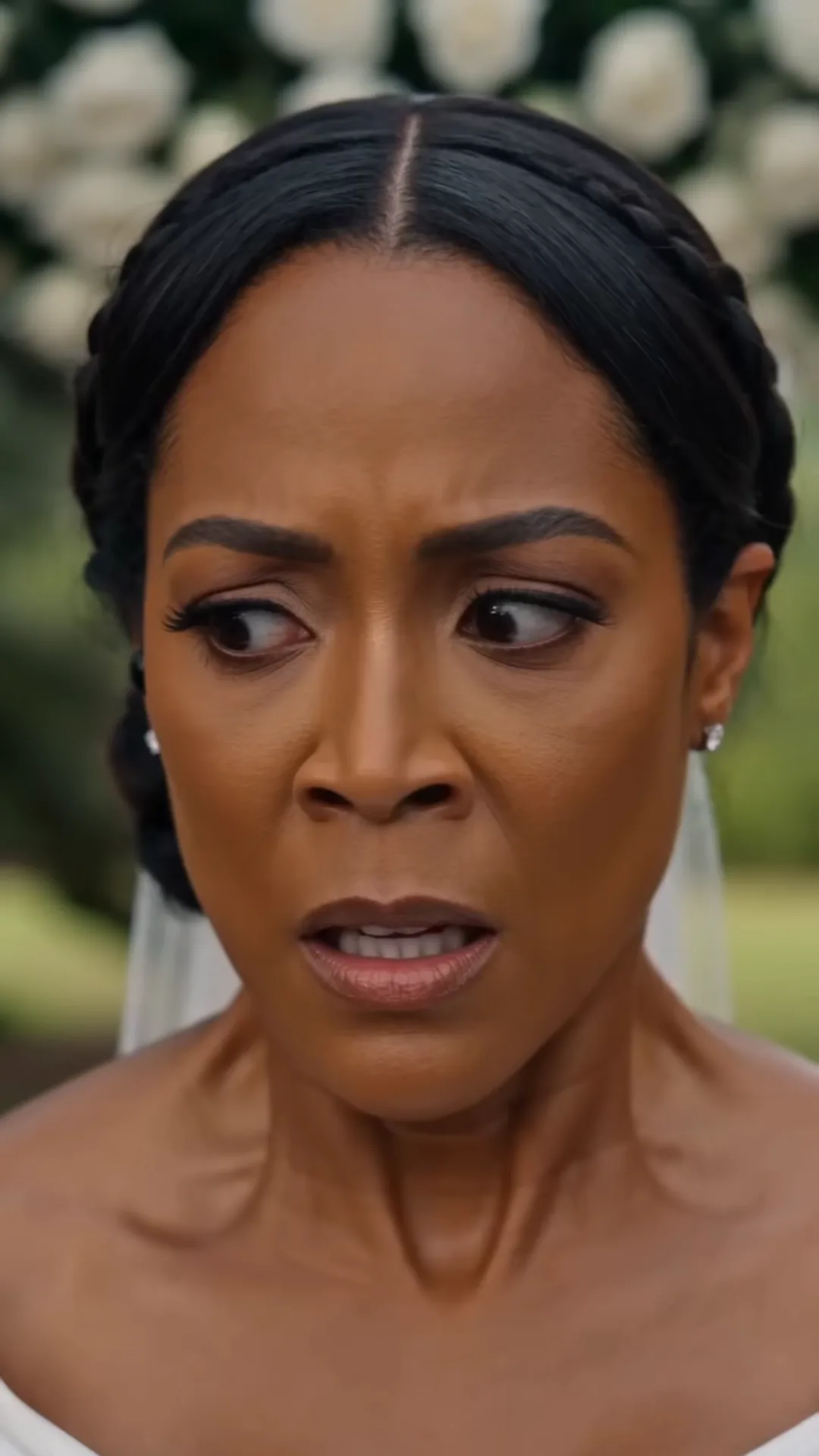
The morning of the wedding was, by every objective measure, beautiful.
Sun already warm at eight a.m. Sky scrubbed clean of clouds, the particular saturated blue that photographers call "wedding weather" and pray for months in advance. Somewhere on the venue grounds, a string quartet was tuning instruments beneath a rose-covered arch, and somewhere in a farmhouse kitchen, caterers were arranging trays of food nobody involved in this story would end up eating on time.
Emma woke at six, unable to sleep past it, and lay in bed for a long moment just breathing, feeling the specific, electric stillness of a day that has been circled on a calendar for a year.
Her phone buzzed at seven-fifteen.
Unknown number: Emergency at the boutique — your gown's hem came apart in transit. Need you to come confirm repair before we bring it to the venue. 20 min, please, we're already behind.
She frowned at it. Odd, that the boutique would text from an unfamiliar number instead of calling the number already saved in her phone. Odder still that they wouldn't simply bring a backup seamstress to the venue itself, as originally planned.
But brides do not, on the morning of their weddings, run cost-benefit analyses on strange texts. They run on adrenaline and a desperate desire for nothing — nothing at all — to go wrong.
She texted her mother: Small dress emergency, going to sort it, back in an hour, don't worry.
She did not tell Daniel. She didn't want him worrying on his side of the morning, in the room he was getting ready in with his groomsmen and a bottle of champagne nobody had opened yet.
She got in her car alone and drove toward an address that was not, in fact, the boutique at all, but a quiet side street two miles away, where a van with tinted windows waited at the curb like something patient and hungry.
---
What happened next took less than four minutes.
A man in a courier's uniform approached her car as she parked, asking if she was here about "the dress mix-up," gesturing toward a side door of a building that, from the outside, looked plausibly like a boutique's rear entrance — because Marcus had chosen it specifically for that plausibility, weeks in advance, the way a good liar always builds his lies out of things that are almost, but not quite, true.
She followed him three steps before the smell hit her — chemical, sweet, wrong — and by the time her body understood what was happening, her legs had already stopped fully obeying her.
She had time for one clear thought before the world tilted sideways: Lily.
Not Daniel. Not the wedding. Not her mother, or the dress, or the guests already boarding cars toward the venue.
Lily is going to notice something's wrong. Lily always notices.
It was, in its way, the truest premonition of her entire life.
---
Vivian arrived at the venue forty minutes later in a car with dark windows, wearing Emma's exact perfume — purchased weeks earlier under a different name, applied with careful precision to pulse points she had studied in photographs — and stepped out into the golden morning looking, to every casual eye that fell on her, entirely and completely like a woman about to marry the love of her life.
The bridal suite was chaos in the specific, forgivable way all bridal suites are chaos — three bridesmaids doing three different tasks at once, a makeup artist packing brushes, someone's mother crying happy tears into a tissue nobody had thought to bring extras of.
Nobody looked closely at Vivian's face for longer than a glance.
Nobody except, briefly, one bridesmaid who paused mid-sentence and said, "You seem different today," before being swept immediately into a conversation about bouquet ribbon and never finishing the thought.
People see what they expect to see, Marcus had said, and for the first ninety minutes of that morning, he was, infuriatingly, correct.
---
Lily arrived with her mother at nine-thirty, dressed in her cream flower-girl gown, a small woven basket of rose petals looped over one arm, hair braided so tightly her scalp still tingled from it.
She ran, immediately, toward the bridal suite, the way she always did, expecting Emma's laugh to greet her from across the room.
What she got instead was a woman turning around with Emma's face and Emma's dress and Emma's carefully applied version of Emma's smile — and something underneath all of it that made every hair on Lily's arms stand up at once, though she could not, in that moment, have named a single specific thing that was wrong.
"There's my favorite flower girl," Vivian said, in a voice pitched exactly to Emma's register, a voice Marcus had drilled into her for eleven weeks.
Lily stopped three feet away.
She did not run into the hug the way she always did.
"Your voice sounds funny," Lily said.
The room went very slightly, imperceptibly still — the kind of stillness only a child would have noticed, adults too busy with ribbon and tissues to register the small silence at all.
"I'm just nervous, sweetheart," Vivian said, recovering, crouching slightly the way Emma always did to meet Lily at eye level — a gesture she had rehearsed a hundred times in a mirror and executed now with near-perfect muscle memory. "Big day nerves. Even brides get them."
It was, technically, a perfect performance.
But Lily wasn't looking at the performance. She was looking at the hands — watch the hands, not the mouth, hands don't know how to lie as well as mouths do — and Vivian's hands, reaching toward her now, palms slightly too smooth, nails filed to a shape Emma never wore, moved with a stranger's confidence borrowed from careful study but owned by no one.
Lily did not take the offered hand.
"I have to go find my mom," she said, and backed out of the room, her small heart hammering with a fear she had no evidence for and no adult vocabulary to justify, only the old animal certainty children carry before the world teaches them to override it with manners.
---
Outside, in the corridor, she found her mother arranging chair ribbons with two other volunteers.
"Mom."
"Not now, baby, we're behind schedule —"
"Mom, something's wrong with Emma."
Her mother glanced up, distracted, half-present. "What do you mean, wrong?"
"Her voice is wrong. Her hands are wrong. She didn't hug me right."
Her mother softened, crouched, brushed a loose strand of hair from Lily's face with the particular gentle dismissal reserved for children's fears on high-stress days. "Baby, everyone's nervous today. Even grown-ups get funny on wedding mornings. It's probably nothing."
Probably nothing.
There it was again. The phrase that always, in this story, meant the opposite.
"Promise me you'll watch her during the ceremony," Lily said, with a seriousness that made her mother pause, just slightly, just for a second, before smiling and pulling her into a hug.
"I promise. Now go find your basket, it's almost time."
She did not watch. She was too busy, like everyone else that morning, watching the parts of a wedding that are meant to be watched — flowers, dresses, the particular light — and not the parts that only a six-year-old, trained for two years in the grammar of one specific woman's hands, had learned to see at all.
---
In the wooden barn at the edge of the property, Emma woke slowly, her mouth dry, her wrists bound loosely but firmly to an old iron ring bolted into a support beam decades ago for reasons no longer relevant to anyone but her, in this moment, desperately.
Light came in thin lines through gaps in the wood siding. She could hear, faintly, muffled by distance and old timber, the unmistakable warm murmur of a string quartet tuning somewhere across the property.
My wedding, she thought, with a clarity that felt almost calm, almost strange in its calmness, the specific eerie calm that arrives sometimes directly on the heels of true terror, when the mind, unable to hold panic any longer, simply sets it down for a moment to think.
Somebody is marrying Daniel right now, wearing my dress, and nobody knows.
Except maybe Lily.
Lily always knows.
She began, immediately, methodically, to work at the rope with fingers already going numb, and she screamed — once, experimentally, into the thick wooden silence — and heard nothing come back except her own voice, swallowed whole by distance and old barn wood, and understood, with the particular loneliness of the truly unheard, that she would need another kind of rescue entirely.
Not one that came from screaming loud enough.
May you like



One that came from someone, somewhere, small enough and stubborn enough to notice a wrongness nobody else would bother to look for.
---







