Chapter 5 - The Girl Who Noticed
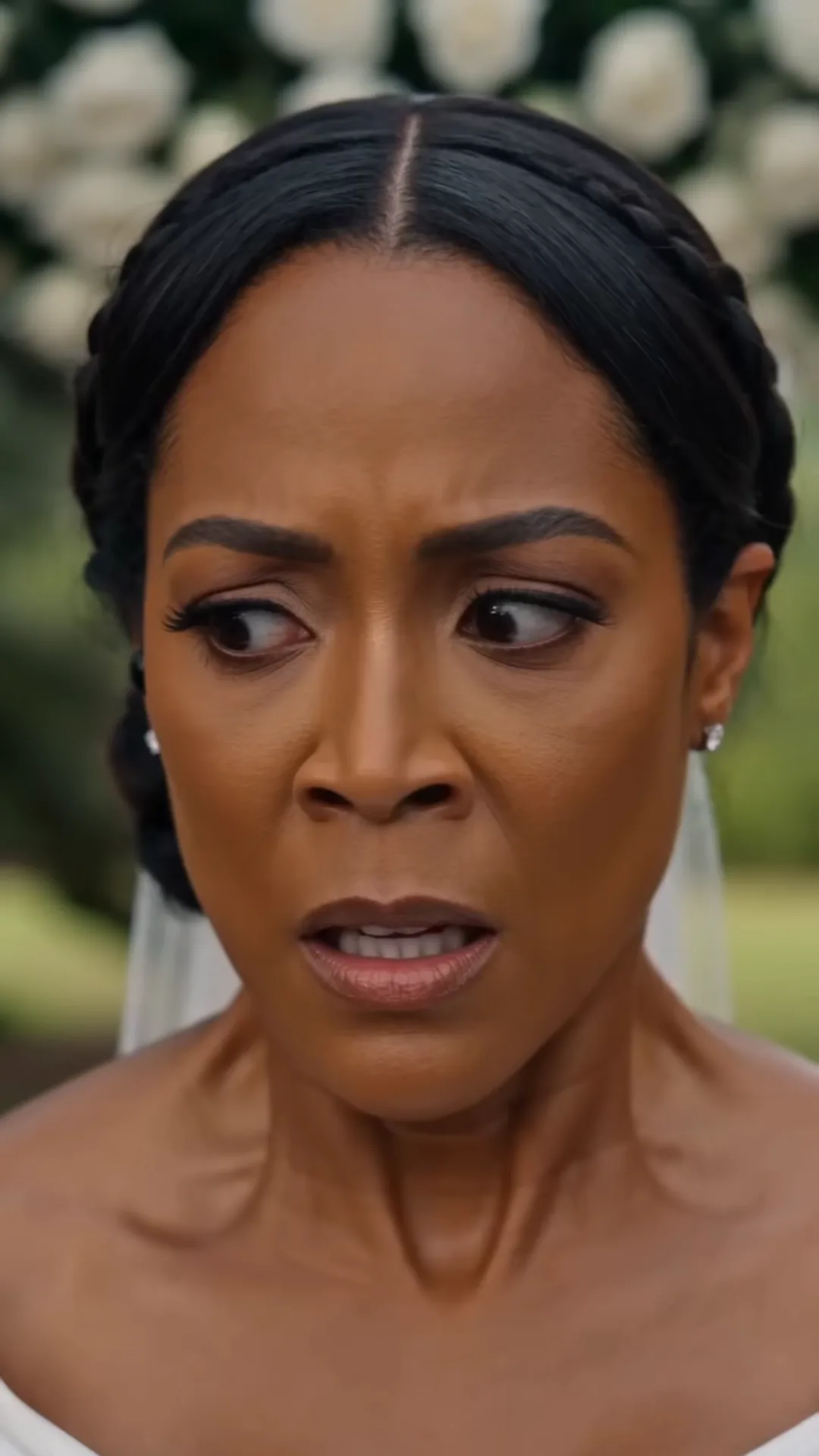
The ceremony space had been transformed since the morning.
White chairs in careful rows. Rose petals scattered along the aisle in a pattern the florist had practiced twice before getting right. The wooden altar, freshly swept, framed by an arch so thick with white roses and green leaves it looked, from a distance, almost like something growing wild rather than something assembled by hand at six that morning.
Guests filled the seats in soft murmurs and rustling programs. Somewhere near the front, Daniel stood beside the officiant, adjusting his cuffs for the fourth time in ten minutes, grinning at nothing, the particular helpless grin of a man about to marry someone he still, after two years, couldn't quite believe had said yes to him.
He had no reason to suspect anything. Why would he? The morning's small crisis — dress emergency, back in an hour — had resolved itself, apparently, on schedule. The woman walking toward him in an hour would be wearing white lace and his fiancée's face, and grief has not yet taught most men the difference between a face and the person behind it, not until the difference is forced on them.
---
Lily stood near the back with the other flower girls' families, gripping her small basket of petals too tightly, watching the aisle with an intensity that made the mother standing beside her glance over twice.
"You okay, sweetie?"
"I don't know."
The woman smiled, mistaking nerves for nerves. "First weddings are exciting. It's a lot to take in."
Lily didn't correct her. There wasn't a way to explain, in words a stranger would accept from a six-year-old, that this wasn't excitement. It was the specific, bodily unease of watching something familiar move through a space in slightly the wrong rhythm — a song played correctly, note for note, on an instrument that had never learned to breathe the way the original player had.
She thought about her mother's words. Probably nothing.
She thought about the hands in the bridal suite. Too smooth. Too confident. Confident in a way Emma never was — Emma who fumbled buttons, who dropped her keys twice a week, who once spent an entire library shift with her sweater on inside out and didn't notice until Lily pointed it out at hour three.
This Emma had not fumbled anything all morning. Not once.
That, more than anything, was what didn't fit.
Emma was a person who fumbled. This wasn't Emma.
---
The processional music began — soft strings, familiar, rehearsed a dozen times over the past week — and the flower girls started up the aisle in their careful, coached line, scattering petals with varying degrees of enthusiasm and accuracy.
Lily walked slower than the others, scanning the crowd, scanning the altar, scanning the woman standing there in white lace with her veil catching a light breeze — searching for something, anything, that would either confirm or dissolve the cold stone still sitting behind her ribs since the dress shop, since the bridal suite, since a hundred small moments across the past two weeks that her mind had been quietly, stubbornly cataloging without permission.
She reached the front and turned, as rehearsed, to take her place beside the other children.
And that's when she saw it.
A small, involuntary flick of the woman's eyes — not toward Daniel, not toward the officiant, but sideways, toward a dark van parked at the far edge of the gravel lot beyond the ceremony space, visible only from this specific angle, at this specific point in the aisle.
A flower girl would not normally notice a parked van.
A flower girl who had spent two years learning to watch a specific woman's every gesture for signs of trouble noticed it immediately, and noticed, more importantly, that the woman at the altar's chin lifted afterward in the smallest, most private way — the exact small motion Marcus had drilled into her as checking the earpiece is seated properly — a motion so subtle it registered as nothing to two hundred adult guests and as everything to one child standing eight feet away with two years of specialized, unknowing training in exactly this kind of noticing.
---
The ceremony proceeded. Vows were exchanged in a voice that trembled, convincingly, at all the correct moments — trembling Marcus had specifically coached, whispered through an earpiece disguised as wind against a microphone he swore was "just for the recording," a lie told to the wedding planner with the same smooth confidence he'd used on everyone else in this entire operation.
"I, Emma, take you, Daniel..."
Vivian's voice caught, right on cue, right where Marcus had told her genuine emotion tends to catch in real weddings, based on eleven years of watching other people's marriages both begin and end.
Guests dabbed at eyes. Daniel's throat worked visibly, moved beyond words.
Nobody noticed the girl in cream at the edge of the altar, standing very still, watching not the vows but the hands delivering them — hands that trembled in the wrong places, hands that reached for Daniel's at the wrong moment, half a beat too early, the way a person reaches for something they've merely memorized the position of, rather than something they've held a thousand times before and could find blind, in the dark, without thinking at all.
---
There is a particular kind of certainty children reach that adults have long since trained themselves out of — a certainty built entirely from physical evidence, unclouded by social politeness, unburdened by the adult fear of causing a scene.
Adults, faced with mounting evidence of wrongness, will often keep quiet specifically because the evidence is mounting — because the stakes of being right, and having to act on it, feel too large, too disruptive, too embarrassing if wrong.
Children have not yet learned to weigh embarrassment against truth. It is, depending entirely on the situation, either their greatest liability or their single most useful gift.
Lily stood at that altar, watching a stranger wear her favorite person's face, and felt the last thread of doubt dissolve completely.
This is not Emma.
Emma promised. Emma promised she would know the signal, even in front of everybody, even when she's ninety.
This isn't Emma, because Emma isn't here to keep her promise.
Which means something happened to her.
Which means somewhere, right now, Emma needs someone to notice.
---
The officiant moved toward the closing lines of the ceremony — the part where he would ask, formally, ritually, if anyone present had cause to object, a line most weddings treat as pure ceremony, a rhetorical gesture nobody expects an actual answer to.
Lily's small hand tightened around the handle of her flower basket until her knuckles went pale.
She thought of her mother's voice: promise me you'll watch her.
She thought of Emma's voice, two nights earlier, at the rehearsal dinner: I'll always know that language, even when I'm ninety.
She thought of hands, and mouths, and the specific gap between them that only she, apparently, in a crowd of two hundred adults, had bothered to measure.
And somewhere behind the ceremony space, faint, carried on a shift of wind nobody else registered over the sound of the quartet, she heard something.
A voice. Distant. Muffled. Human.
Calling from a direction that had nothing to do with the altar at all.
She turned her head, just slightly, toward the old wooden barn at the edge of the property — the one nobody used, the one that had sat closed and forgotten through the entire wedding preparation — and felt the last piece slide into place with the sudden, total clarity that only comes to people, of any age, who have finally stopped doubting what their own senses have been telling them all along.
She did not scream. She did not cry.
She did the only thing that made any sense to a six-year-old standing at the edge of a lie two hundred adults had failed to see.
May you like



She ran.
---







