Chapter 10 - Ten Years, One Number
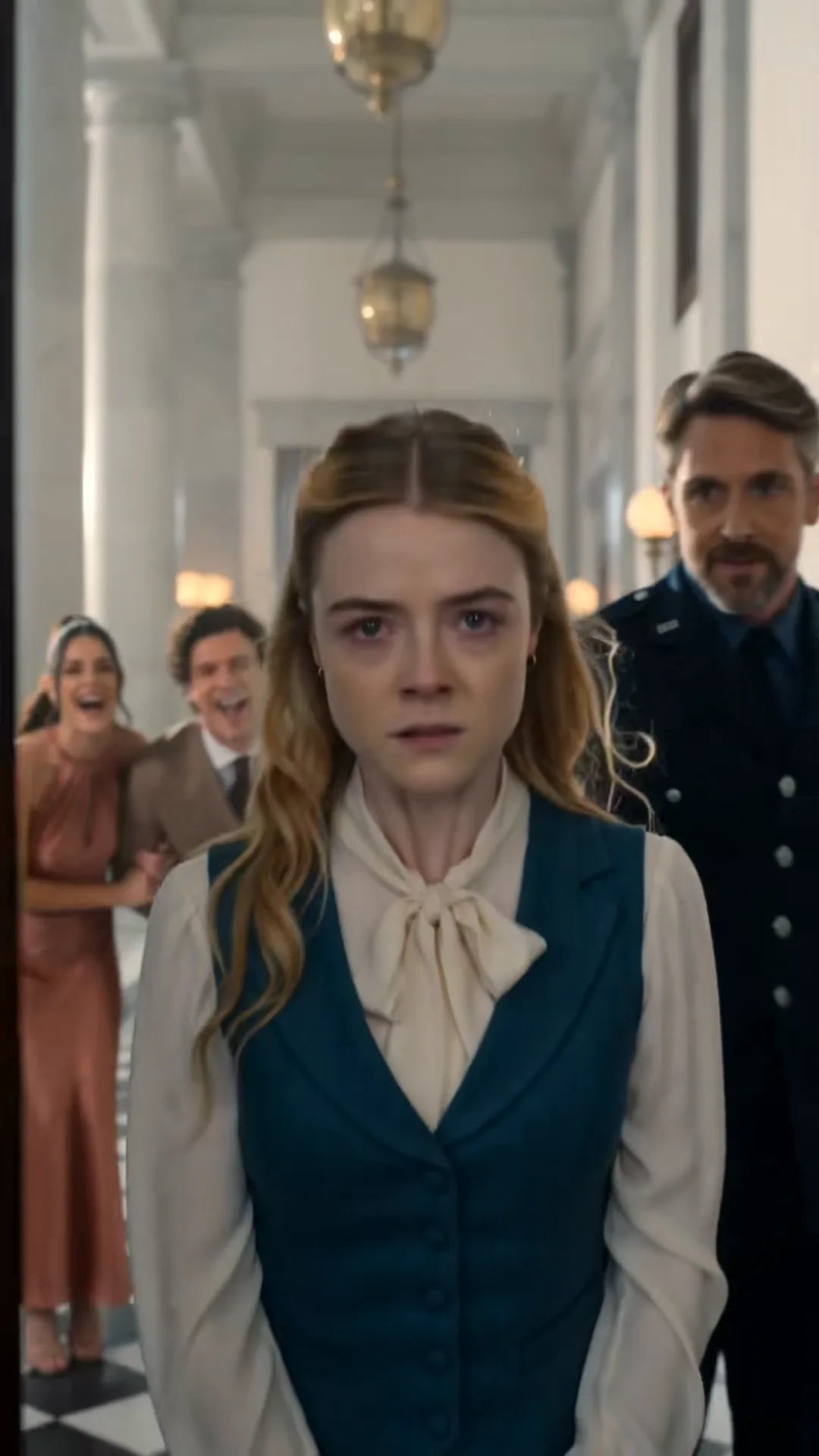
A year after her release, Genevieve stood in a different hallway — not marble, not grand, just the ordinary carpeted corridor of a community center where her father's foundation was holding its annual gala, a foundation that now funded, among other things, a legal aid program specifically dedicated to overturning wrongful convictions built on fabricated financial evidence.
She had named it herself.
The Number Project, after a phone number scrawled on a torn piece of paper, after the specific, fragile hope of a single small act of decency in a hallway designed to strip everyone of exactly that.
Frank Doran stood near the entrance in an unfamiliar suit, looking as uncomfortable in formalwear as he had looked comfortable in a police uniform, nursing a glass of sparkling water he clearly wished was something stronger.
"You clean up nice, Sergeant," Genevieve said, approaching him with a smile that had, over the past year, slowly relearned how to be easy, how to arrive without the specific careful management it had required during nine years of marriage to a man who studied her expressions the way a jeweler studies a stone.
"Detective, actually," Frank said, a little sheepishly. "Got promoted. Your father may have made some calls."
"He does that."
"I told him I didn't want special treatment."
"He's not very good at hearing that particular sentence." Genevieve glanced across the room, where Christopher stood talking animatedly with a group of donors, Lily perched on a nearby chair in a dress the exact shade of yellow she'd worn to the hearing a year earlier, now slightly too small for her, refused to be retired despite her grandmother's protests. "For what it's worth, Frank — I don't think I ever properly thanked you. For the hallway."
Frank looked down at his glass for a moment.
"You know what I keep thinking about," he said. "Eleven years on the force. Hundreds of transports. I did everything by the book, every single time, because that's what you're trained to do, and mostly the book is right." He looked up at her. "That day, something in your face told me the book was wrong. I still don't fully understand what it was. But I'm glad I listened to it instead."
"What was it that made you listen? If you had to name it."
Frank thought about this seriously, the way he thought about most things.
"You didn't look guilty," he said finally. "I've walked a lot of guilty people down that hallway. They cry different. They talk different. Guilty people, even when they're scared, there's a kind of — resignation, I guess. Like some part of them always knew this hallway was where they'd end up." He shook his head slowly. "You didn't have that. You looked like someone who'd just discovered the floor wasn't where she thought it was. That's a different kind of face entirely."
Genevieve felt her throat tighten.
"Thank you," she said, "for knowing the difference."
Across the room, Lily had spotted her mother and was making her way over with the specific determined weaving of a six-year-old moving through a crowd of adult legs, arriving finally at Genevieve's side and taking her hand.
"Mommy, Grandpa says I can stay up until nine because it's a special party."
"Grandpa spoils you."
"Grandpa says that's his job now. He says he didn't do enough of it before, so he's doing extra now." Lily considered this with her usual seriousness. "Is that true? Did he not do enough spoiling before?"
Genevieve crouched down to her daughter's level, the exact posture her own father had used with her, thirty years earlier, over a broken toy.
"Your grandpa," she said carefully, "made a mistake a long time ago. Not a mean mistake. Just a mistake where he trusted someone he shouldn't have trusted, and it took him a while to see it clearly."
"Like Daddy?"
The question landed with the particular unguarded precision only children managed, and Genevieve felt the old familiar tightness in her chest, the one that came whenever Marcus's shadow crossed her daughter's understanding of the world.
"Yes," she said honestly, because Rosalind had been right, all those months ago in a cell that smelled like industrial soap — the truth, delivered plainly, was usually kinder than the elaborate softness adults constructed to protect children from things children could usually handle better than expected. "Like Daddy. Grandpa trusted him. I trusted him too. We were both wrong, and it cost us some time we didn't get to spend together."
Lily nodded slowly, processing this with the gravity of a much older person.
"But we get time now," she said. "Extra time. Because Grandpa's spoiling me and you got shorter shoes again and everything's regular now."
Genevieve laughed, a real laugh, the kind that came without calculation or management, the kind she hadn't fully recovered until months into her freedom.
"Yes, baby," she said. "Everything's regular now."
Later that evening, after the speeches, after her father stood at a podium and talked about second chances and the particular debts some families carry across generations without knowing it, Genevieve found herself alone on a small balcony overlooking the city, the same city that contained a courthouse with a marble hallway she still, occasionally, dreamed about.
Her father joined her, two glasses of wine in hand, offering her one.
"You did good tonight," she said. "The foundation. The program. All of it."
"We did good," he corrected. "You're the one running the legal side now. I just write checks."
"You write very large checks."
"It's the one thing I'm actually good at." He smiled, looking out at the skyline. "You know what I think about, sometimes? That hallway. I wasn't there. I've never even seen it, except in my imagination, piecing it together from what Frank told me and what you told me later. But I think about it more than almost anything else in my life."
"Why?"
"Because for thirty seconds, everything came down to whether one stranger would choose to do something small and dangerous for no reason except that it was right." Christopher turned to look at his daughter, and in the low evening light, she could see, for a moment, the same crouched figure who had once told a seven-year-old not to cry over what she couldn't fix today. "I spent my whole life building systems. Companies. Contracts. Structures designed to protect what mattered to me. And in the end, none of that saved you. A folded piece of paper and one honest man in a hallway saved you."
Genevieve considered this, turning her wine glass slowly in her hand.
"I don't think that's quite right," she said. "The systems mattered too. Adaeze. The investigation. The evidence. Frank's note got the door open. But you're the one who walked through it, Dad. For twenty-nine days straight, barely sleeping. That wasn't luck. That was you."
Christopher was quiet for a long moment.
"Your brother used to say something similar," he said finally. "That luck opens doors, but it's what you do in the next room that actually matters." He looked at her, eyes bright with something that might have been tears, might have been simple exhausted relief a year in the making. "I think Danny would have liked knowing his one favor, saved up for fourteen years, went to his sister. Even though he never got to meet her."
Genevieve reached out and took her father's hand, the same gesture, she realized, that Lily used with her constantly now, a small habitual anchor between two people who had learned, in the hardest possible way, not to take each other for granted.
"Tell me about him sometime," she said. "Danny. Properly. Not just the story about the phone number."
"I will," Christopher said. "I have a lot of stories I should have told you years ago. I think I have time to tell all of them now."
Below them, the city moved through its ordinary evening business, indifferent to the two people on the balcony and the ten years that had almost, so nearly, become the entire remaining shape of Genevieve Zukowski's life.
Somewhere across town, in a hallway she would never walk again, the marble floors reflected the same overhead lights they always had, waiting for the next person who would need, more than anything else, one stranger willing to risk something small for the sake of something right.
May you like



Genevieve raised her glass, and her father raised his, and neither of them said anything else, because after everything, some things were better held in silence than spoken aloud — the specific, hard-won silence of two people who had finally, after everything, found their way back to trusting the floor beneath their feet.
THE END







