Chapter 9 - What Was Owed
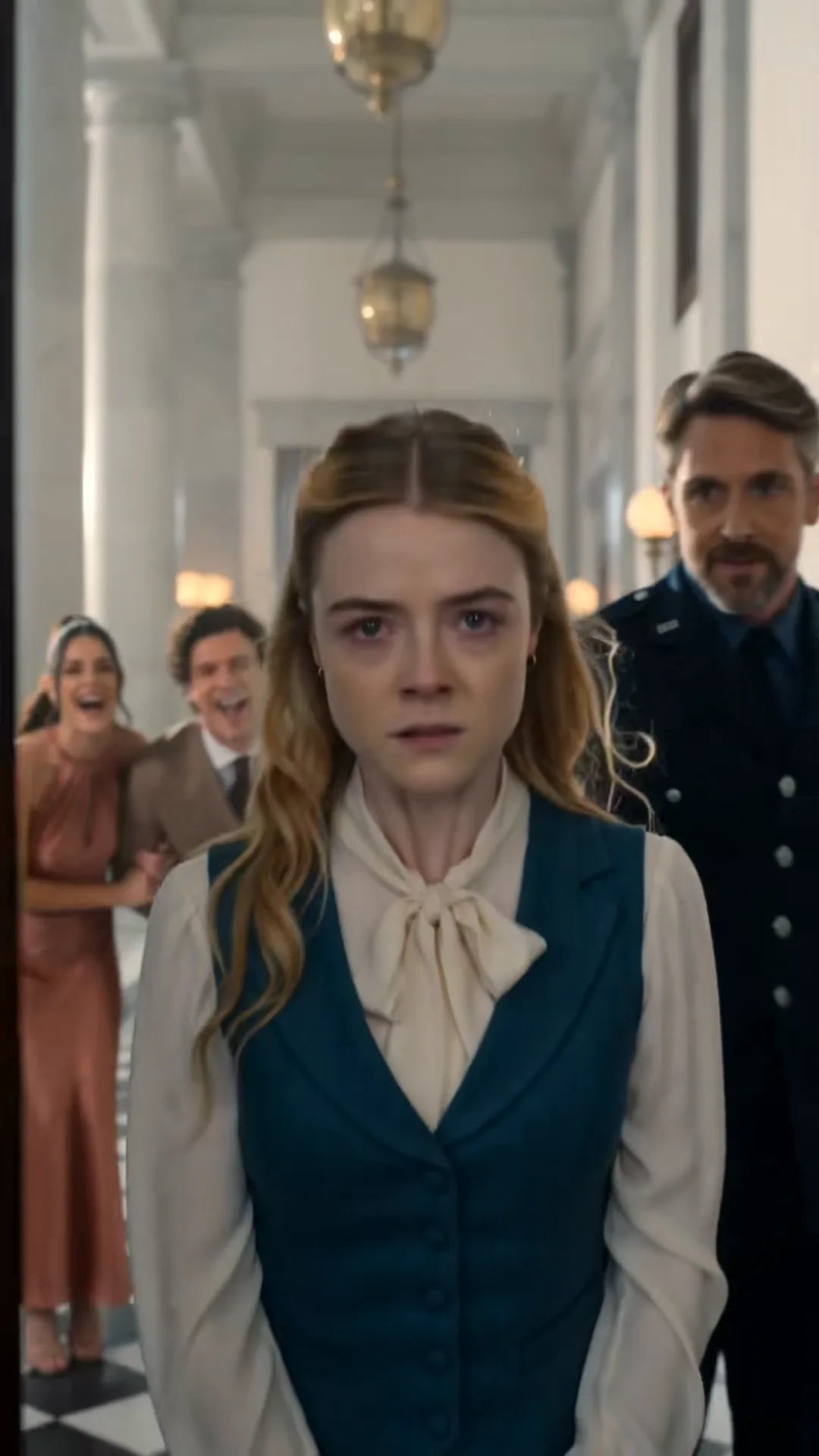
Marcus Doyle was arrested eleven days after the hearing, at an airport, attempting to board a flight to Zurich with a suitcase containing, among other things, three passports under variations of his own name and roughly two hundred thousand dollars in cash that had not yet made it into an untraceable account.
Bianca was arrested the same afternoon, at a hotel two miles from the airport, having apparently believed, with a naivety that surprised even Adaeze, that Marcus intended to bring her along.
He had not.
The recovered emails, entered later into evidence during the criminal proceedings, showed that Marcus's actual plan had been to leave the country alone, having already transferred the bulk of the liquid funds into accounts Bianca had no access to and did not know existed.
Betrayal, it turned out, had been the architecture of Marcus's entire life, not just something he had done to Genevieve. He had simply run out of people to betray before running out of road.
Victor Alderman was picked up two days later, attempting to destroy records in a storage unit that Adaeze's team had already photographed and cataloged in full three weeks earlier.
The criminal trial, when it eventually happened eight months later, was almost anticlimactic by comparison to the emergency hearing that had preceded it — the evidence was so thorough, so meticulously documented, that Marcus's new lawyer spent most of the proceedings negotiating a plea deal rather than mounting any real defense.
Twelve years for Marcus.
Eight for Victor.
Eighteen months for Bianca, whose lawyer successfully argued that she had been, in some genuine if legally insufficient sense, manipulated by both her uncle and her lover into a scheme she hadn't fully understood the scope of until it was already in motion.
Genevieve did not attend most of the criminal trial.
She had told her father, in the weeks following her release, that she had already spent enough of her life watching Marcus perform, and she had no interest in watching him perform contrition or outrage or whatever expression he chose to wear for a jury that would decide his fate.
She spent those months instead with Lily.
Rebuilding, slowly, the particular rhythm of a mother and daughter who had lost a month of each other's lives and were now relearning each other's edges — the way Lily had started saying "actually" before nearly every sentence, a verbal tic she'd picked up from a preschool friend during Genevieve's absence, the way Genevieve herself had developed a habit of checking locks twice before bed, a small residual anxiety from a month spent somewhere she couldn't lock anything at all.
Her father visited every Sunday.
Not the distant, careful visits of the years before, the ones shaped quietly by Marcus's whispered comments about controlling in-laws, but something closer to what she remembered from childhood — long afternoons, real conversations, a man who seemed determined, in whatever years he had left, to make up for two years of distance he hadn't fully understood he'd been manipulated into.
"I should have investigated him properly," Christopher told her one Sunday afternoon, watching Lily chase a dog around the backyard. "Before the wedding. I had the resources. I had the instinct. I let you talk me out of it because I didn't want you to think I didn't trust your judgment."
"You couldn't have known, Dad."
"I could have looked harder." He was quiet for a moment. "Your mother used to say I trusted numbers more than people. Maybe if I'd run him through a spreadsheet instead of just my gut, I'd have found something."
Genevieve considered this, watching her daughter's yellow dress flash between the trees.
"You found something eventually," she said. "You found everything, actually. It just took a hallway and a phone number instead of a spreadsheet."
Christopher smiled, faintly, the first real smile she'd seen from him in months.
"Frank Doran," he said. "I gave that man a job offer three separate times. He keeps refusing."
"Why?"
"Says he didn't do it for a reward. Says he did it because Danny — my son, your brother, who died before you were born — once told him, if he ever needed a favor, to call my number." Christopher's voice caught slightly. "Fourteen years he carried that number without ever using it. And the one time he did, it wasn't for himself. It was for you."
Genevieve thought about a marble hallway, about a note pressed between two fingers, about the specific, impossible luck of a stranger's loyalty stretching back through a brother she'd never met, connecting a dead soldier to a living daughter through a debt neither of them had ever expected to collect.
"I want to meet him properly," she said. "Not in a hallway. Not in handcuffs. Just — properly."
May you like



"I think," Christopher said, "he'd like that too."
---







