Chapter 3 - Before
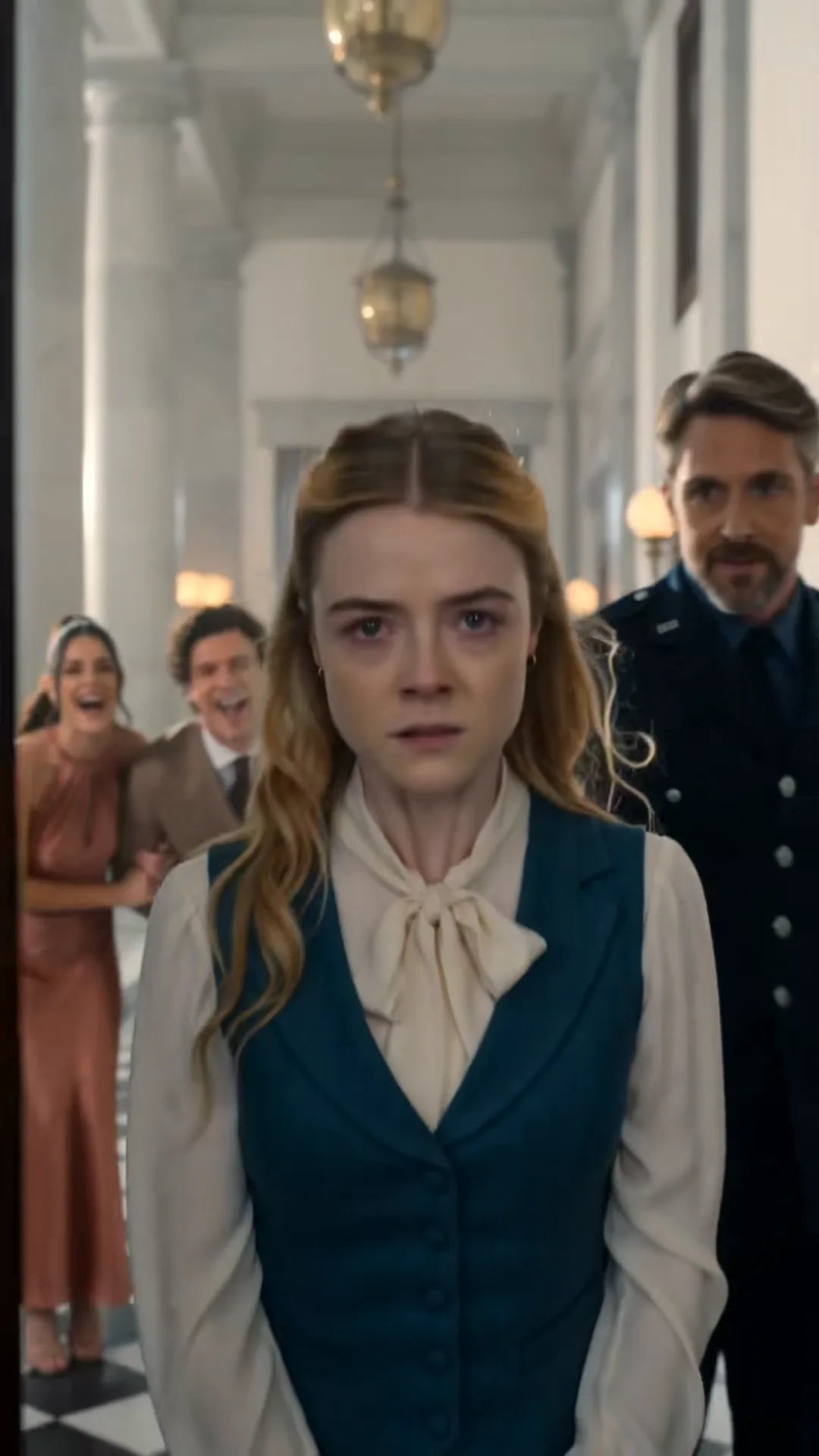
Nine years earlier, Genevieve Zukowski had met Marcus Doyle at a charity gala she hadn't wanted to attend.
She remembered the dress she wore — deep green silk, her mother's pearl earrings, the specific ache of heels she'd worn for four hours before she even spoke to him.
She remembered he'd spilled a glass of champagne on her shoe and apologized so thoroughly, so charmingly, with such perfect self-deprecating humor, that by the time he finished apologizing she was laughing instead of annoyed.
That was the thing about Marcus that she hadn't understood then and understood with terrible clarity now: he was never actually apologizing for the spill.
He was auditioning.
Every word out of his mouth in those early months had been a line delivered to see how she'd respond, adjusted and refined based on what worked. She had thought she was falling in love with a man. She had actually been watching a performance built specifically, meticulously, for an audience of one.
"You don't smile like other people," he told her on their third date, at a small Italian restaurant she'd chosen because it wasn't fancy, because she wanted to see how he'd react to something ordinary.
He'd reacted perfectly. Of course he had.
"Other people smile because they're supposed to," he said. "You smile like you're deciding whether the thing in front of you deserves it."
She had thought that was the most romantic thing anyone had ever said to her.
She understood now that he had studied her for exactly that purpose — to find the one compliment specific enough to feel like he truly saw her, when in reality he had simply catalogued her, the way a jeweler catalogues a stone before deciding how to cut it.
Her father hadn't liked him.
Christopher had said very little, which for a man who usually said everything, had been its own kind of statement. He'd run the background check quietly, the way he ran everything, and found nothing alarming — no criminal record, no obvious debts, no red flags glaring enough to justify interference.
What he hadn't found, because it hadn't existed yet, was the plan.
Marcus hadn't married Genevieve to steal from her.
Not at first.
At first, she believed, genuinely believed even now with everything she knew, that some small part of what happened between them in those early years had been real. She remembered him crying, actually crying, at their wedding, and she had believed those tears completely.
She still didn't know if she'd been wrong about that, or if crying had simply become part of the performance so early that even he couldn't tell the difference anymore.
The turn, as far as she'd been able to reconstruct it in the six months since her arrest, had happened around year six.
Year six was when her father's company hit a rough patch — a supplier dispute, a lawsuit, eighteen difficult months that ate into profits and made everyone in the family a little more anxious about money than usual.
Year six was also when Marcus started spending more time at the office, coming home later, learning — she understood now — every seam and structure of a company that would one day, if things went a certain way, belong partly to his wife.
Year six was when Bianca started at the firm.
Genevieve remembered meeting her exactly once, at an office holiday party, a bright young woman with an easy laugh who worked in a department three floors from Marcus's and had no obvious reason to know him at all.
She had thought nothing of it.
She had thought nothing of a hundred small things over the following three years — the phone that buzzed at odd hours, the business trips that got longer, the way Marcus started asking careful questions about her father's estate planning, dressed up as concern, dressed up as a husband simply wanting to understand the family's financial future.
She had answered those questions honestly.
Every single one.
She had, without realizing it, handed him a map.
By year eight, the plan was already moving, though she wouldn't know that until much later, wouldn't understand until the trial that the affair with Bianca and the financial fraud were not two separate betrayals but one long, patient, single betrayal executed with the kind of discipline most people reserved for careers, not marriages.
The plan was simple, in the way the worst plans always are simple once you see the whole shape of them.
Frame Genevieve for fraud significant enough to destroy her credibility and her freedom.
Use the resulting chaos, the divorce, the disgrace, to gain control of her shares in her father's company — shares that, under the terms of a prenuptial agreement Christopher had insisted on and Genevieve had signed without much thought, would default to Marcus's management if she was legally incapacitated or convicted of certain felonies.
It was an unusual clause. Christopher had included it, ironically, to protect the company from a scenario in which Genevieve herself made a catastrophic decision — never imagining the clause could be weaponized to protect the company from her, by someone else entirely, using her own signature to do it.
Marcus had found the clause in year seven.
He had spent two years building the case that would trigger it.
And on a cold Tuesday morning, standing in a marble hallway with the woman he'd married eight years earlier, he had watched her get led away in cuffs, and he had laughed.
Genevieve thought about all of this in the back of a police transport van, wrists aching, a folded piece of paper hidden between two fingers, and she realized something that struck her with the force of a physical blow.
She had spent nine years being watched.
Studied. Catalogued. Mapped.
And in one hallway, in ten seconds, she had finally, for the first time in her marriage, done the watching herself — and found something Marcus hadn't planned for.
A police officer who knew her father's name.
It wasn't much.
May you like



But it was hers, the first thing that had belonged entirely to her in longer than she could remember, and she held onto it the way a drowning person holds onto anything that floats.
---







