Chapter 3 - The Wide Shot
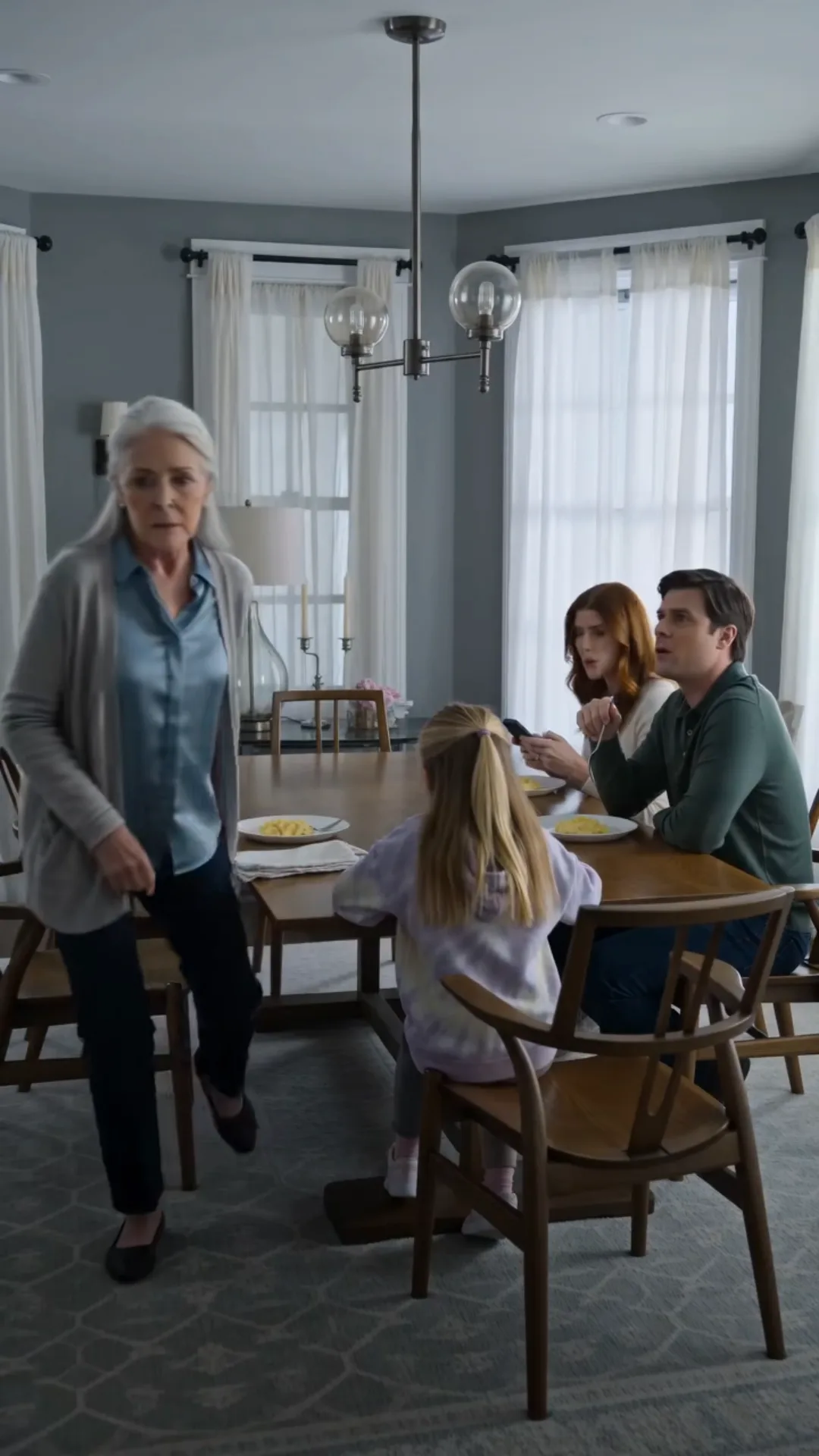
From the doorway to the kitchen, if you stood there long enough, you could see the whole table.
Four people. One rectangle of wood. A hundred years of family furniture underneath a family that had known each other, in this configuration, for less than three years.
Eleanor had moved in fourteen months ago.
Not moved in the way a college student moves into a dorm, full of boxes and plans and a future date circled on a calendar for moving back out.
Moved in the way a widow moves in — with a house she can no longer afford to heat alone, and a son who said of course, Mom, for as long as you need, and a daughter-in-law who had smiled when he said it, in the particular way people smile when they have already decided, privately, how long "as long as you need" is going to feel.
Frank had died in March.
Forty-one years of marriage ending on a Tuesday morning, in a hospital corridor that smelled like antiseptic and vending machine coffee, with Eleanor holding a hand that had gone, over the course of eleven minutes, from warm to something else.
She had sold the house in June.
The house with the kitchen he'd built the cabinets for. The garden he'd complained about every summer and never once let her hire someone to help with. The room that had been Daniel's, still holding, in a box in the closet, a state trophy from a swim meet in 1998.
She had moved four states, into a guest room with a daybed and a window that faced the neighbor's fence, and told herself this was temporary. A bridge. A place to grieve quietly while she figured out the rest of it.
Fourteen months later, the bridge had started to feel like a residence.
And residences, unlike bridges, come with rules that nobody says out loud until you've already broken one.
Claire's phone buzzed against the table.
She glanced down at it, thumb already moving before her eyes had finished reading.
"Sorry," she murmured, to no one, to the table, to the general concept of politeness rather than to Eleanor specifically. "It's the Hendersons, about Saturday."
She typed something. Two-fingered, fast, the particular speed of a woman who has spent a decade texting under tables at PTA meetings.
Eleanor watched her.
She watched the way Claire's face lit faintly blue from the screen, the way her mouth moved slightly as she read, the small furrow of concentration that appeared and disappeared between her eyebrows.
She thought about the version of Claire she had met nine years ago. Younger. Nervous, at that first dinner, asking three times if the wine was all right to bring, laughing too loud at Frank's jokes because she wanted, so badly, to be liked.
She wondered when, exactly, that woman had stopped needing to be liked by her.
She thought she could probably locate the year, if she tried. She did not try.
Eleanor set down her own napkin.
She untucked it from where it had been resting against her lap, folded it — the same tight, careful square she'd made under the table minutes earlier — and placed it beside her plate.
She pushed her chair back.
The legs made no sound this time. She had, over fourteen months, learned exactly how much pressure to apply to make a chair leave a hardwood floor without announcing itself.
She stood.
From the doorway, if anyone had still been standing there — nobody was — this would have been the wide shot. The whole table visible at once. A rectangle with three people still seated at it and one already halfway out of frame.
Claire looked up from her phone.
"Where are you going?"
The question was not unkind. That was, in some ways, the worst part of it. It was asked with the same tone Claire might use to ask a dinner guest if they needed the bathroom — polite, mildly curious, entirely uninvested in the actual answer.
Eleanor did not answer immediately.
She looked at the table. At the potatoes, still cooling, the small tongue-mark still faintly visible near the rim of the plate like a fingerprint left at a crime scene nobody intended to investigate.
She looked at her son, who had not asked the question. Who had let his wife ask it. Who was looking at Eleanor now with an expression she recognized from his childhood — the face of a boy hoping that if he stayed quiet enough, the argument happening around him might simply forget he was there.
"I'm done," Eleanor said.
Two words. No elaboration.
May you like



She turned, and walked toward the hallway, and the wide shot — the one nobody was there to see, the one that existed only in the geometry of the room itself — closed slowly behind her like a held breath finally let go.
---







