Chapter 6 - The Girl in the Hallway
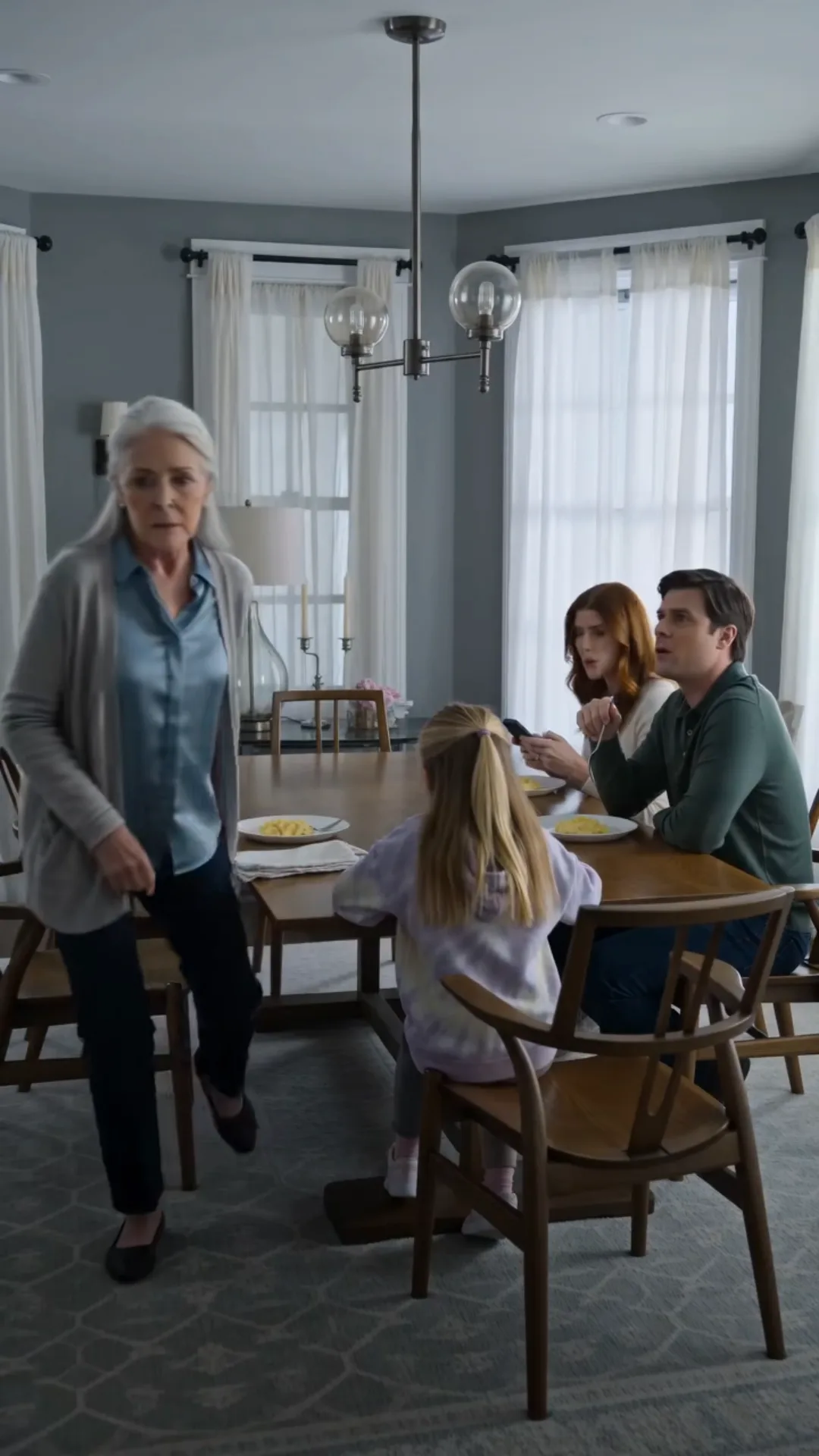
Nora did not think about the potatoes again until bedtime.
This was not unusual. Nora did not think about most things twice. Her mind worked the way a river works — moving forward, never backward, picking up whatever was next without looking too hard at what it had just passed.
But brushing her teeth, watching the foam spiral down the drain, something surfaced. Not guilt, exactly — she was nine, and guilt at nine is still a young, unpracticed muscle — but a kind of static. A rerun playing faintly behind her eyes.
Grandma Eleanor's face.
The way it had gone wide, and then still, and then something else that Nora didn't have a word for yet, but that her body had registered anyway, the way a dog registers a change in weather before the humans in the house notice the sky.
She spat. Rinsed. Wiped her mouth on the towel with the frog on it.
And on the way to her room, she stopped outside the guest room door.
The light underneath it was off. That was strange. Grandma Eleanor usually left her lamp on until at least nine-thirty — Nora knew this because she sometimes crept down for water and could see the yellow line under the door, comforting somehow, proof of another awake person in the sleeping house.
Tonight: dark.
Nora put her hand flat against the door. Didn't knock. Just held it there, the wood cool under her palm, the way she sometimes touched the fish tank glass at school to see if she could feel the fish moving on the other side.
"Grandma?"
No answer.
She wasn't sure what she wanted an answer for. She didn't have the sentence ready, the one that would have needed to come after it — I'm sorry was not a phrase that had occurred to her yet, not as something that applied to tonight, at least. She simply wanted to know if the room on the other side of the door was awake or asleep, the way she wanted to know if a light switch was on or off, a fact rather than a feeling.
She heard, faintly, a shift of fabric. A body turning over.
Not asleep, then.
Just not answering.
Nora took her hand off the door.
She stood there a moment longer in the hallway, in her pajamas with the little cartoon foxes on them, feeling something she would not have been able to name if you'd handed her a hundred words to choose from.
It wasn't guilt.
It was closer to the feeling of watching a glass tip off a counter in slow motion — the moment after you've already knocked it, before it's hit the floor, when you know something is going to happen and you can't do anything about it anymore, and some small animal part of you is already flinching from the crash.
She went to bed.
She did not fall asleep right away, which was, for Nora, its own kind of unusual.
She lay on her back and stared at the glow-in-the-dark stars on her ceiling, the ones her dad had put up two summers ago on a ladder, swearing gently at the adhesive strips the whole time while she handed them to him one by one, giggling.
Mom says you deserve it.
She had said it because her mother said it to her first, that afternoon, in the kitchen, while helping Nora with a math worksheet — an offhand comment, tossed out with the particular careless heat adults use when they think children aren't really listening, when they think the words are just weather passing through a room, meaningless once the room is empty again.
Your grandmother thinks she can just move in here and judge everything I do. Sometimes I think she deserves a little of her own medicine.
Nora had filed it away without deciding to. Children do this constantly — store a thousand overheard sentences the way a squirrel stores a thousand nuts, with no plan for most of them, no memory even of burying half of them, until one surfaces at dinner, dug up by nothing more than boredom and a plate of cooling potatoes.
She had not understood, delivering the line, that she was handling a loaded thing.
She understood a little more of it now, lying in the dark, listening to the house settle around her — a pipe ticking somewhere, her father's low voice and her mother's lower one, muffled through two walls, in the particular tone adults use for conversations they don't want children to hear the words of, only the temperature.
She could not hear what they were saying.
She could hear that it was not a happy sound.
May you like



She pulled her blanket up to her chin and, for the first time that Nora could remember, fell asleep still holding a small, unfamiliar weight in her chest, one she did not yet have the vocabulary to put down.
---







