Chapter 9 - The Suitcase by the Door
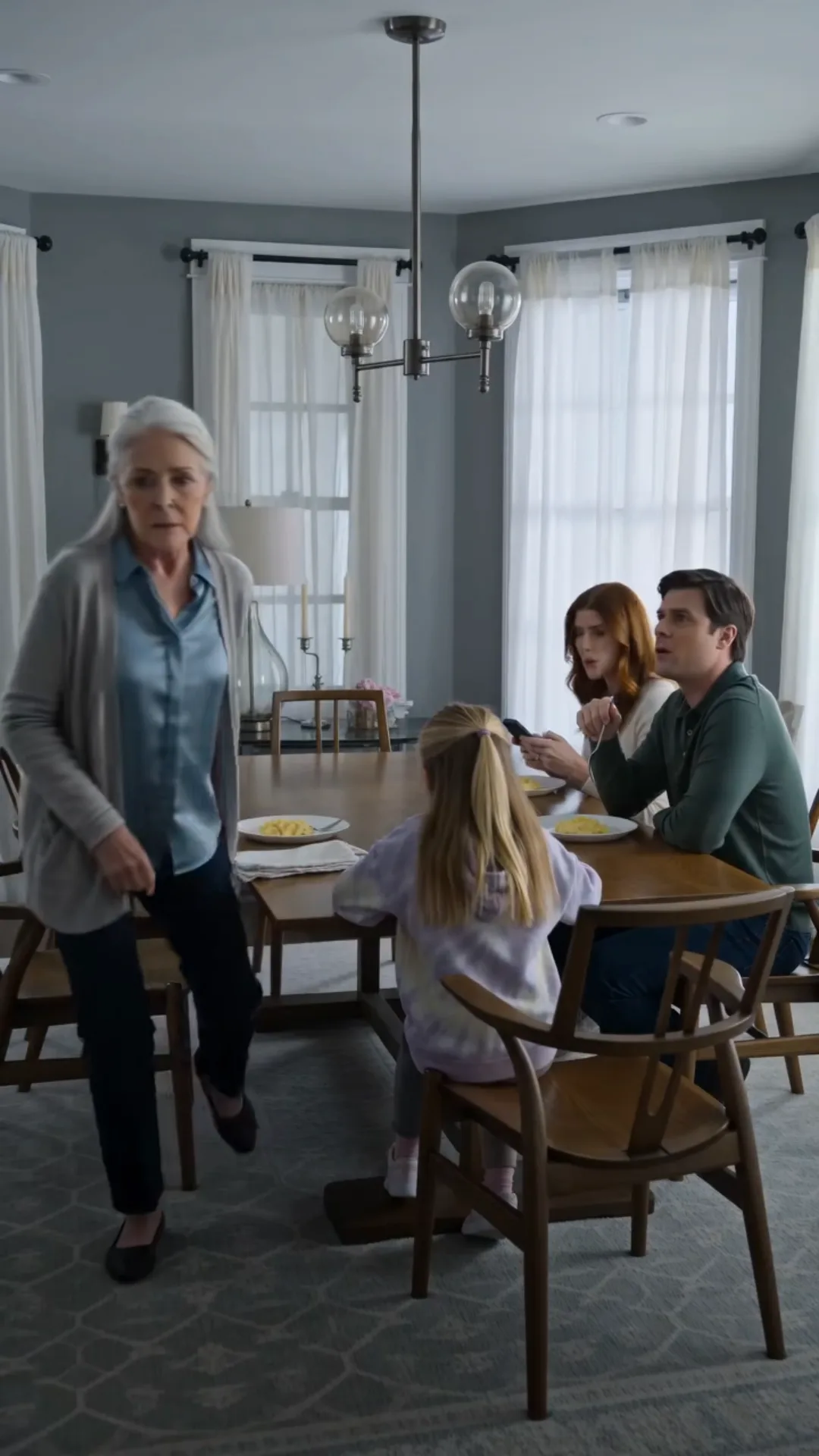
Three days passed the way days pass after something has cracked but not yet broken — carefully, quietly, everyone stepping around the same spot on the floor without ever naming what's underneath it.
Eleanor did not pack a second item.
She also did not unpack the first.
The cardigan stayed folded in the open suitcase on the closet shelf, a small grey flag of unfinished business, visible every time she reached in for something else to wear.
Claire had not apologized directly. Not in words. But something in the house had shifted — the coffee was made a little differently in the mornings now, two cups instead of one, set out before Eleanor even came downstairs. The spice rack had been quietly returned, alphabetical order and all, and left that way, without comment from anyone.
Small repairs. The kind that don't require anyone to say the hard sentence out loud.
It was Nora, in the end, who said it.
Saturday morning. Eleanor was at the kitchen table with her tea, the light coming in pale and ordinary through the window, nothing like the warm gold of that dinner three nights before.
Nora appeared in the doorway in her pajamas, holding something behind her back.
"Grandma."
Eleanor looked up. "Good morning."
Nora crossed the kitchen in the particular deliberate way children walk when they've rehearsed something and are terrified of forgetting it halfway through.
She stopped in front of Eleanor's chair.
Brought her hands out from behind her back.
A drawing. Crayon, on the back of an old worksheet — two stick figures at a table, one with grey scribbled hair, one with yellow. Between them, a plate with something brown and lumpy on it that was, Eleanor understood after a moment, meant to be mashed potatoes.
Above the two figures, in careful, effortful nine-year-old handwriting: SORRY GRANDMA. I DIDNT MEAN IT LIKE THAT.
Eleanor looked at it for a long moment.
"I didn't understand it was a mean thing," Nora said, in a rush now that the hard part — the handing-over — was done. "I thought it was just a thing to say. Like when Mom says stuff and I say it back and it's funny. I didn't know your face was gonna do that."
"Do what," Eleanor asked, gently.
Nora considered this seriously, the way children consider questions that adults ask them almost by accident, forgetting how carefully children will try to answer them.
"Like when I broke my snow globe," she said finally. "The one from Nana Rose. It didn't shatter, it just — cracked. And you could still see through it but it was never the same again. Your face did the crack thing. Not the shatter thing."
Eleanor's chest did something complicated.
She set her tea down.
"That is," she said slowly, "a very precise way of putting it."
"Are you gonna leave?" Nora asked. Direct, the way only children ask the questions the entire house has been circling for three days.
Eleanor did not answer immediately.
"I heard Mom and Dad talking," Nora added, when the silence went on too long. "I heard the word lease."
Eleanor reached out and took the drawing properly in both hands, looked at the two stick figures, at the careful brown scribble of potatoes between them, at the word SORRY, pressed so hard into the paper that it had nearly torn through in one corner.
"I don't know yet," she said honestly. "I might get a small apartment nearby. Somewhere with my own kitchen, and my own spice rack, arranged however I like it."
"Would I still see you?"
"Every week. Probably more, if your mother will let me steal you for pancakes on Saturdays."
Nora considered this. It seemed, on balance, to be an acceptable outcome.
"Can I help you pack the boring stuff? Like towels?"
Eleanor laughed — a real laugh, surprising both of them slightly, the first one that had come easily in days.
"You may absolutely help me pack the boring stuff."
Nora grinned, satisfied, mission apparently accomplished, and reached for the fruit bowl to steal a strawberry, the whole transaction closed and filed away in her mind with the same speed she'd once filed away her mother's careless comment in the kitchen.
Eleanor sat holding the drawing after the girl had wandered off, and did not cry, though she came closer to it than she had in the fourteen months since Frank died — not from the sadness of it, this time, but from something nearer to relief. The particular relief of watching a crack, at least, stop spreading.
It would not go back to being a whole glass.
May you like



But it had, for the first time in three days, stopped getting worse.
---







