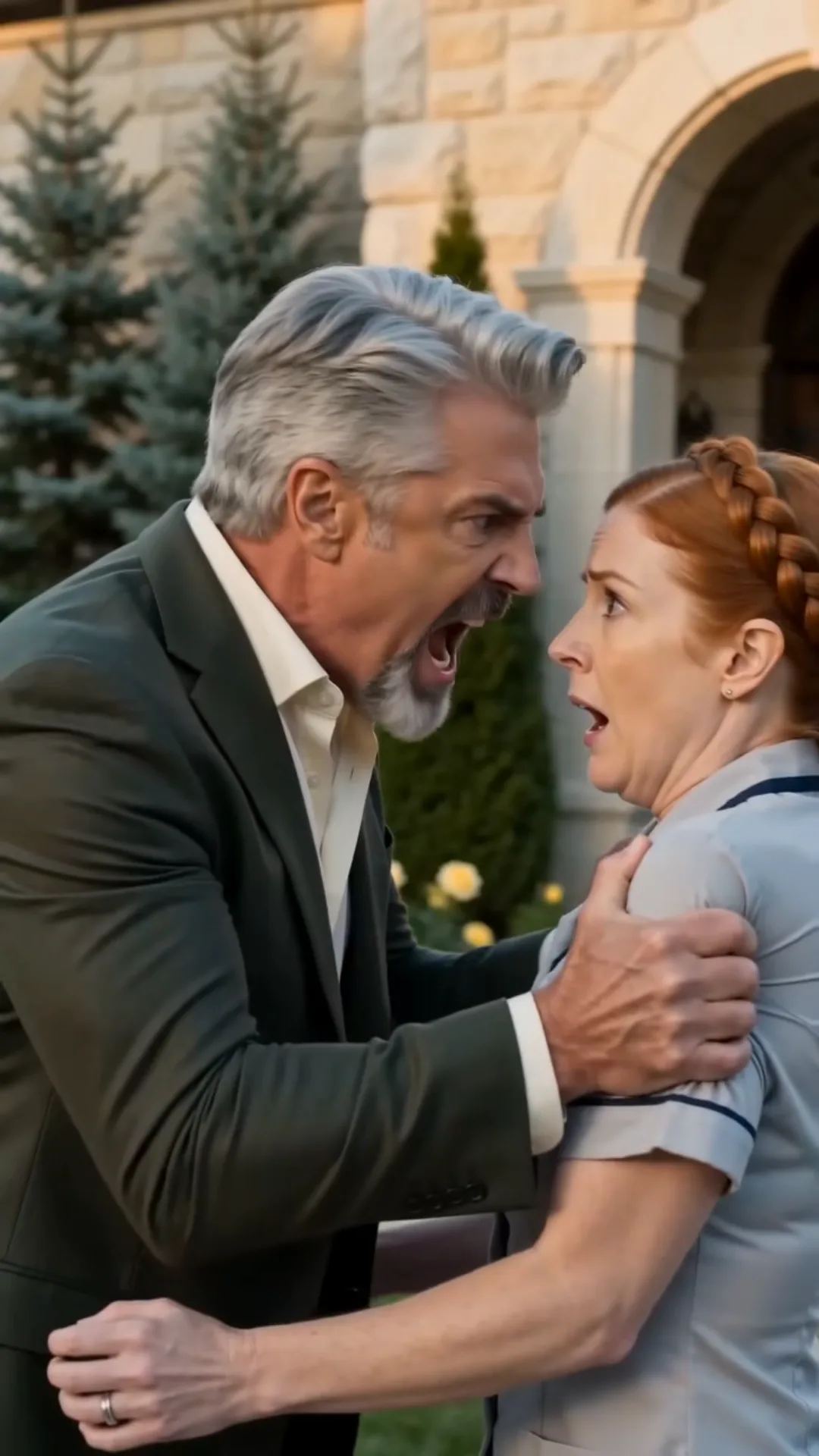
Chapter 2 - The Woman Who Counted Silverware
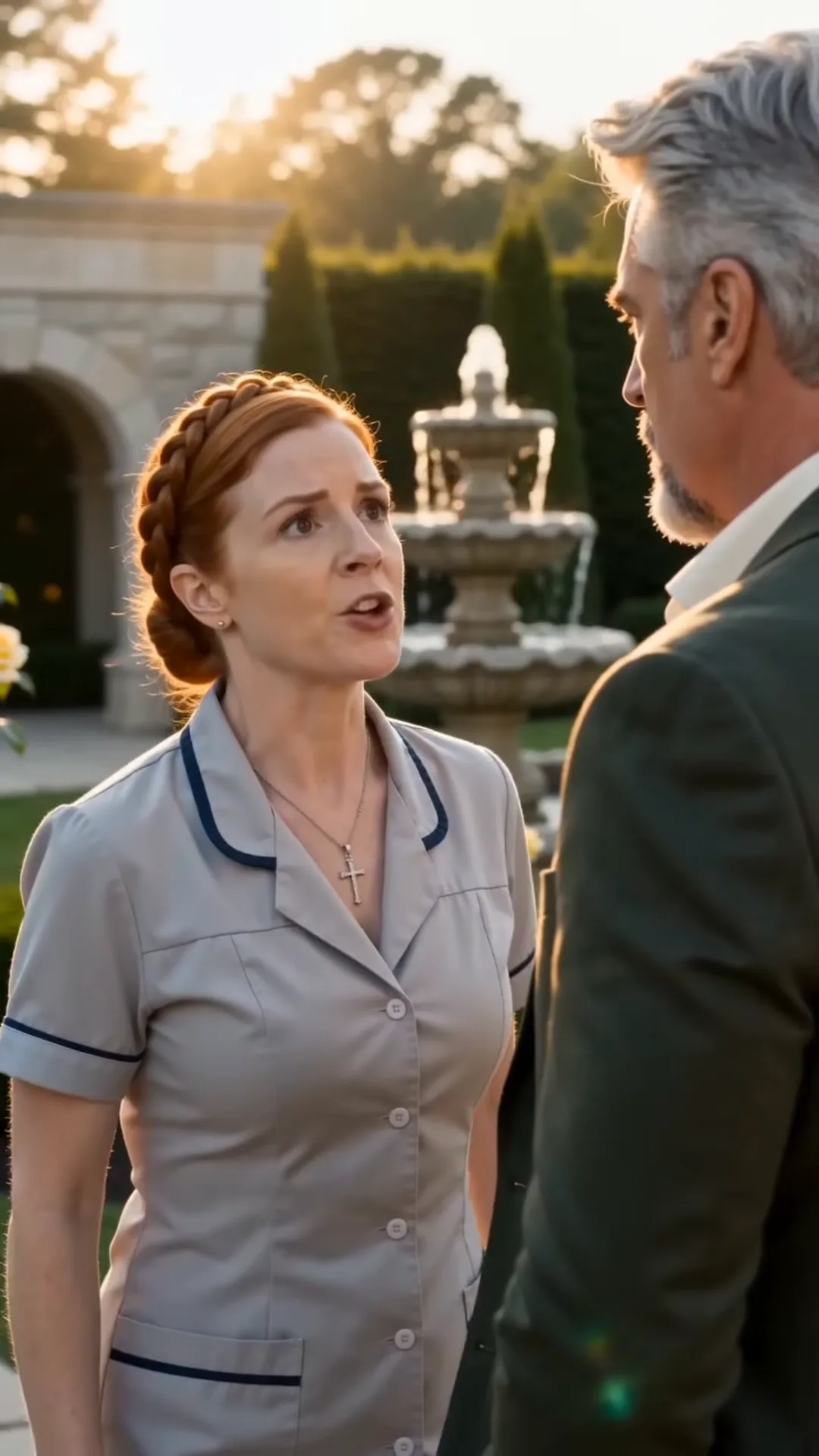
Marisol had worked in the Cross house for six years.
Long enough to know the rhythms of it the way you know the creak of your own knees. Long enough to know which floorboard in the hallway complained under weight, and which cabinet door needed a hip-check to close all the way, and which member of the family smiled with their whole face and which member smiled only with the mouth, leaving the eyes to do something else entirely.
Vivienne Cross smiled only with the mouth.
Marisol had known this since her second week on the job, when she'd broken a wine glass in the kitchen — an accident, a slip, nothing more — and Vivienne had appeared in the doorway with that mouth-smile stretched wide and said, in a voice as smooth as poured honey, We'll take that out of your pay, won't we, dear? Just so you remember to be careful.
It had not, in fact, been taken out of her pay. Richard had seen to that, quietly, the way he saw to a great many things quietly, trying always to smooth the edges his wife left sharp.
But Marisol had learned the lesson underneath the lesson. She had learned what kind of house this was.
*
That morning she came in at seven, as always, through the kitchen door that stuck in humid weather, and she set down her bag on the counter, as always, and she began counting silverware, as always — an old habit from an old job, in an old house, where a fork gone missing could mean a week's wages gone missing too.
Twelve forks.
Twelve knives.
Eleven spoons.
She counted again.
Eleven.
She stood very still in the bright kitchen with the sun coming in gold through the window over the sink, and she thought about the missing spoon, and she thought — the way you think of one thing and are led, helplessly, to another — about the fact that she had not seen Mrs. Eleanor in four days.
Four days ago there had been a spoon at the old woman's placemat every morning, because Mrs. Eleanor liked her oatmeal with cinnamon and could not manage the bowl without a spoon that fit her hand just so, her fingers gone stiff and curled with arthritis.
Four days ago, and then nothing.
She's resting upstairs, Vivienne had said, when Marisol asked. Doctor's orders. No visitors, not even you, dear. We don't want to tire her.
Marisol had nodded and said of course, madam, and gone about her work, because that was the job — to nod, and say of course, and go about her work, and keep the number of forks correct in her head at the end of every day.
But she had also, quietly, gone up to the east wing that same afternoon, on the pretense of changing linens, and found Mrs. Eleanor's bedroom door standing open and the bed made and cold and untouched, the little reading lamp unplugged, the water glass on the nightstand bone dry, holding not water but a fine unbroken skin of dust.
No one rests in an unrested room.
Marisol had said nothing. Not then.
She had gone back downstairs and finished her work and gone home on the six o'clock bus and lain awake that night with her hands folded on her chest like a woman already laid out for a wake, running the numbers, the way she ran the silverware — forks, knives, spoons, days, lies — trying to find the place where they didn't add up.
*
Now, this morning, the eleventh spoon told her everything the missing woman couldn't.
She set down the silverware tray. She went to the pantry, where a narrow door — easy to overlook, tucked behind sacks of flour and a rack of cleaning supplies nobody used but her — led to the service stairs.
The service stairs did not go to the east wing.
They went down.
She had never used them for that. In six years she had never once gone below the kitchen level, because there had never once been a reason to. The wine cellar was the butler's territory, back when there had been a butler; since his retirement two years ago, Richard kept the cellar key himself, on a small brass ring he wore clipped to his belt loop like a man guarding something he was afraid of losing, or afraid of someone finding.
The basement door at the bottom of the service stairs was not locked, not from this side.
It was bolted from this side.
That detail sat wrong in Marisol's stomach the moment she saw it — a bolt on the outside of a door, thick as a thumb, gleaming new against wood gone dark with age, installed, she would guess, sometime in the last two weeks, sometime around the last time she had seen Eleanor Cross carry her own spoon to her own mouth at her own breakfast table.
Marisol stood with her hand on the bolt for a long moment.
She thought of her own mother, three thousand miles south, growing old in a small bright kitchen that smelled of cumin and coffee, a mother who called every Sunday and complained about her knees and her neighbors and the price of tomatoes, a mother who was, God willing, safe, and warm, and free to walk out her own front door whenever the mood took her.
She thought of the eleven spoons.
She slid the bolt.
*
The basement breathed cold air up into her face the moment the door opened, the way a mouth breathes out when it hasn't spoken in a long while.
"Mrs. Eleanor?"
Her own voice came back to her off the stone, small and strange.
There was a shuffling sound in the dark — fabric against stone, the particular rustle of someone trying to make themselves smaller than they already were.
"Who's there?" A voice, but barely. A voice worn down to its last thread.
"It's Marisol, Mrs. Eleanor. It's just me."
The shape in the corner unfolded itself, slowly, painfully, like something coming back from the edge of frozen.
Marisol found the light switch by feel. A single bulb blinked on overhead, throwing everything into a sick yellow glare, and there was Eleanor Cross — eighty-one years old, silver-haired, a woman who had once, Marisol knew from photographs in the front hall, worn pearls to church every Sunday and hosted garden parties with lace tablecloths — curled against the stone wall with a small yellow child's blanket clutched to her chest, a duck embroidered in the corner, thin and worn from years of love.
There was cinnamon-colored bruising along one of her forearms.
There was a plate of untouched food gone hard and grey near the door, pushed just out of reach, as though it had been set down by someone in a hurry to leave, or someone who did not want to get close enough to hand it over properly.
"Oh," Marisol said, and the word broke a little on its way out of her mouth. "Oh, no."
"Don't tell her you found me," Eleanor whispered. Her eyes, pale blue and rheumy, fixed on Marisol's face with sudden, terrible focus. "Please. She'll take it out on the boy."
"What boy?"
"My grandson." Eleanor's hand tightened on the yellow blanket. "He's the one who threw this down to me. Through the vent, if you can believe it. Missed by ten feet and it caught in the roses, and it took him three tries over three nights, but he got it here in the end." A sound came out of her that might, in another life, have been a laugh. "Stubborn boy. Gets it from his grandfather."
Marisol crouched down on the cold stone, heedless of her uniform, and took the old woman's freezing hands in both of her own.
"I'm getting you out of here," she said.
"You can't." Eleanor's grip was surprisingly strong for a woman who had spent four days curled on a floor. "You don't understand what she's capable of. What she'll do to protect this — this arrangement she's made for herself."
"What arrangement?"
Eleanor Cross closed her eyes.
"My husband's money," she said quietly, "doesn't go where everyone thinks it goes. And Vivienne found that out before Richard ever did."
Marisol did not fully understand what that meant. Not yet. But she understood the shape of it — the shape of a lie built on top of another lie, load-bearing, holding up an entire house — and she understood, with the particular clarity of a woman who had spent six years counting silverware and learning to see what wasn't said, that the only way this ended safely was if someone with power in this house learned the truth before Vivienne learned that the truth had gotten out.
"I'm going to tell Mr. Cross," she said.
Eleanor's eyes flew open.
"No—"
"He's her husband. He's your son. He has to be told."
"He won't believe you," Eleanor said, and there was something in her voice now beyond fear — something like old, old grief, the kind that has had years to calcify. "He hasn't believed anything that isn't handed to him by her in fourteen years. Not since the wedding. She built a world for him, Marisol, brick by brick, and he lives in it very happily, and he has never once looked underneath the floor to see what's holding it up."
Marisol thought of the bolt. Thick as a thumb. Gleaming new.
She thought of eleven spoons where there should have been twelve.
"Then I'll make him look," she said.
She did not know, kneeling on that cold stone floor with an old woman's hands wrapped in hers, how wrong that promise would go, or how right it would eventually turn out to be, or how long the road between those two things would run, or how much of it a seven-year-old boy would end up walking alone.
She only knew that she could not un-know what she now knew.
May you like



And in the Cross house, that had never once, in its long and gilded history, ended well for the person who knew too much.
---