Chapter 9 - The Rosebush Knows Everything
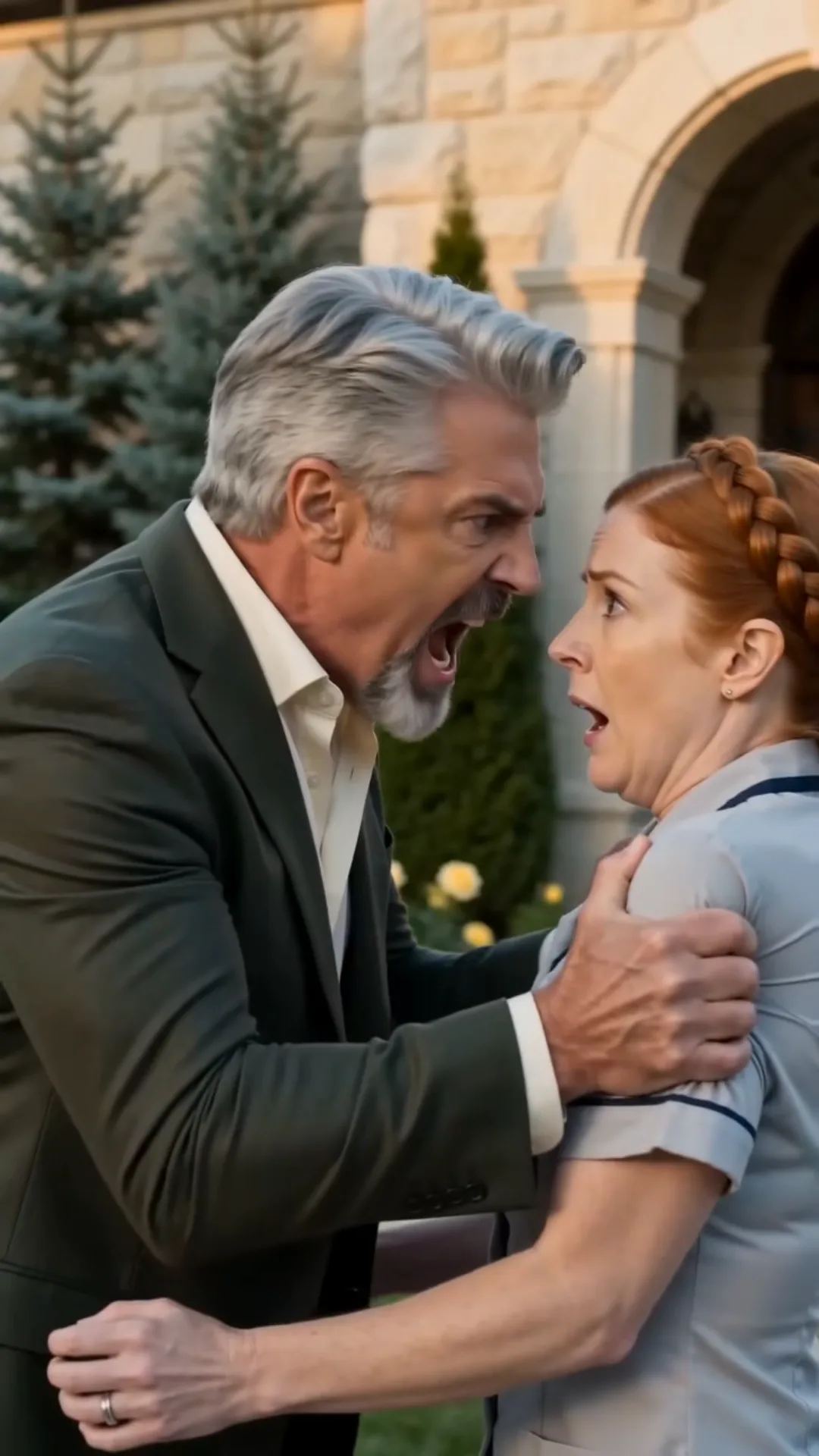
Vivienne knew something was wrong before Richard's car turned into the drive.
She had known, in fact, for three days — ever since he'd stopped answering her calls with anything more than clipped, distant confirmations that he was fine, working late, would explain later. A woman who had spent twenty years reading rooms, reading marks, reading the precise moment a mark's trust began to curdle into suspicion, did not need explicit evidence to feel the temperature of a house shifting around her.
She had begun, quietly, making her own preparations.
A second passport, under a name that predated even Vivian Alcott, kept in a safety deposit box two cities over. A modest sum, moved in careful increments over the preceding week, into an account that existed nowhere in the Cross family's official records. The particular, practiced calm of a woman who had done this kind of arithmetic before, more than once, and who understood that survival, in situations like this one, depended entirely on never being the last to know.
She was in the garden when his car finally came up the drive, on a Thursday evening in late autumn, the roses gone leggy and thin with the season, and she rose from where she'd been kneeling to meet him on the lawn with her mouth already arranging itself into its practiced shape.
The shape did not survive contact with his face.
Richard walked toward her flanked — she registered this with a cold, plummeting lurch — by Dale Osei on one side and, several paces behind, unmistakably, Marisol, and behind Marisol, small and steady and holding his grandmother's hand, Lucas.
"Where is she," Vivienne said, before anyone else could speak, her voice arriving in a register Richard had genuinely never heard from her before, in fourteen years — thin, and fast, and entirely without its usual armor.
"Safe," Richard said. "No thanks to you."
He watched his wife's face in the fading light, watched two decades of careful performance try, visibly, to reassemble itself — the mouth curving, the eyes softening, the whole familiar machinery grinding into motion — and watched it fail, this time, because there was nothing left underneath it for the performance to stand on.
"Richard, darling, whatever they've told you—"
"Vivian Alcott," he said.
The name landed on her like a physical blow. He watched it land — watched, for one unguarded half-second, the composed woman he'd married simply disappear, replaced by someone much older underneath, someone tired, and calculating, and afraid in a way that had nothing performative about it at all.
"Harold Bester," he continued, quietly, each name a stone set down deliberately on a scale. "Walter Grimes. Two dead husbands, twenty years apart, both elderly, both wealthy, both conveniently without children of their own to ask inconvenient questions. And then me. And then my mother, in a basement, because apparently the third time, you finally hit a family with enough people who loved each other to actually notice."
"That's not—" Vivienne started, and stopped, because for the first time in her adult life, she genuinely did not have a next sentence ready. The realization of that — that the well had, at long last, run dry — moved across her face like weather.
"I have everything, Vivienne. Dale has everything. Bank records. The forged facility paperwork. Frank the driver's sworn statement. My mother's testimony. My son's testimony." His voice cracked, finally, on the last word, the only crack in an otherwise devastatingly level accounting. "My son, Vivienne. He rode a city bus alone at seven years old because he trusted a fired housekeeper more than he trusted either of his own parents. Do you understand what you did to him? Do you understand what both of us did to him, because I was too comfortable in the story you built to ever once look underneath it?"
Vivienne's eyes moved past him, to Lucas, standing very still beside his grandmother, watching his mother with an expression that held no anger in it at all — something worse than anger, something flat and finished, the look of a child who has already, quietly, grieved the loss of a version of his mother he'd once believed in, weeks ago, alone, in the dark, long before any of the adults around him caught up.
Something in Vivienne's face genuinely broke, seeing that look.
Not remorse, exactly. Marisol, watching closely, would later say she did not believe Vivienne Cross was capable of remorse in any conventional sense. But something adjacent to it — a recognition, perhaps, of a cost she had not fully priced in, a variable she had failed to account for in twenty years of careful arithmetic: that children watch everything, and forgive very little, and remember absolutely all of it.
"Lucas," Vivienne started, taking a step toward him.
Lucas did not step back. He simply did not move at all, his small hand tightening in his grandmother's, and said, in a voice with none of the tremor it might have carried a month ago:
"Did you really marry two other old men before Dad? And they died?"
The question landed in the garden with the weight of an axe.
Vivienne's mouth opened. Closed.
"You don't have to answer," Richard said quietly, "because it isn't a question for him to hear the answer to. It's a question for the police, who are already on their way, because Dale made that call twenty minutes ago, from the car."
Vivienne's head turned sharply toward him.
"You called them before you even confronted me?"
"I learned that from you, actually," Richard said, and there was something almost like a terrible, exhausted calm in it now, the calm of a man who has finally, fully, stopped negotiating with a story he no longer believed. "Never walk into a room without already knowing exactly how it ends. You taught me that, Vivienne. Fourteen years of watching you do it to everyone around us. I suppose I finally learned the lesson."
*
She ran.
Of course she ran — twenty years of contingency planning did not simply evaporate because one husband, for once, had finally caught up to her — but she did not get far. The second passport, the careful accounts, the practiced calm: none of it accounted for a seven-year-old boy's granola bars, or a fired housekeeper's stubborn loyalty, or a private investigator's eleven days of patient digging, or, in the end, for the simple fact that the police, once alerted, moved considerably faster than a woman on foot, in heels, across a lawn she herself had spent twenty years perfecting for exactly the kind of photographs that would, very shortly, appear in every regional paper within a hundred miles.
Lucas did not watch that part. Marisol made sure of it, turning him gently by the shoulders toward the house, toward his grandmother, away from the flashing lights coming up the long gravel drive.
"Is it over?" he asked her, his voice very small again, seven years old again, all the borrowed bravery of the last two months finally allowed to set down its weight.
Marisol knelt in front of him in the cooling evening air, roses gone brown and papery all around them, the tall white house behind them lit gold in its windows one final time before everything about it would change forever.
"The scary part is over," she said carefully, because she had learned, across this whole long ordeal, never to promise a child more certainty than the world could actually deliver. "The rest — the part where everybody heals, and your dad figures out how to be the kind of father who looks underneath the floor — that part takes longer. But you did the hardest part already, mijo. You told the truth when it would have been so much easier not to. Everything after this is just grown-ups finally catching up to you."
Lucas nodded slowly, and turned to look back at his grandmother, who stood a little apart from them at the edge of the drive, thin and frail and utterly free, watching her son speak to two police officers with an expression that held, for the first time in months, something like peace.
"Grandma," Lucas called.
Eleanor turned.
"Can we trace the river crack on my ceiling tonight? Like we used to?"
May you like



A smile broke across the old woman's face — the first full, unguarded smile Marisol had seen from her since that first freezing morning in the basement — and she crossed the lawn and gathered her grandson into her arms, right there in the fading light, among the browning roses, while behind them a house finally, after twenty long years, began telling the truth about itself.
---







