Chapter 6 - The Woman on the Bus Route
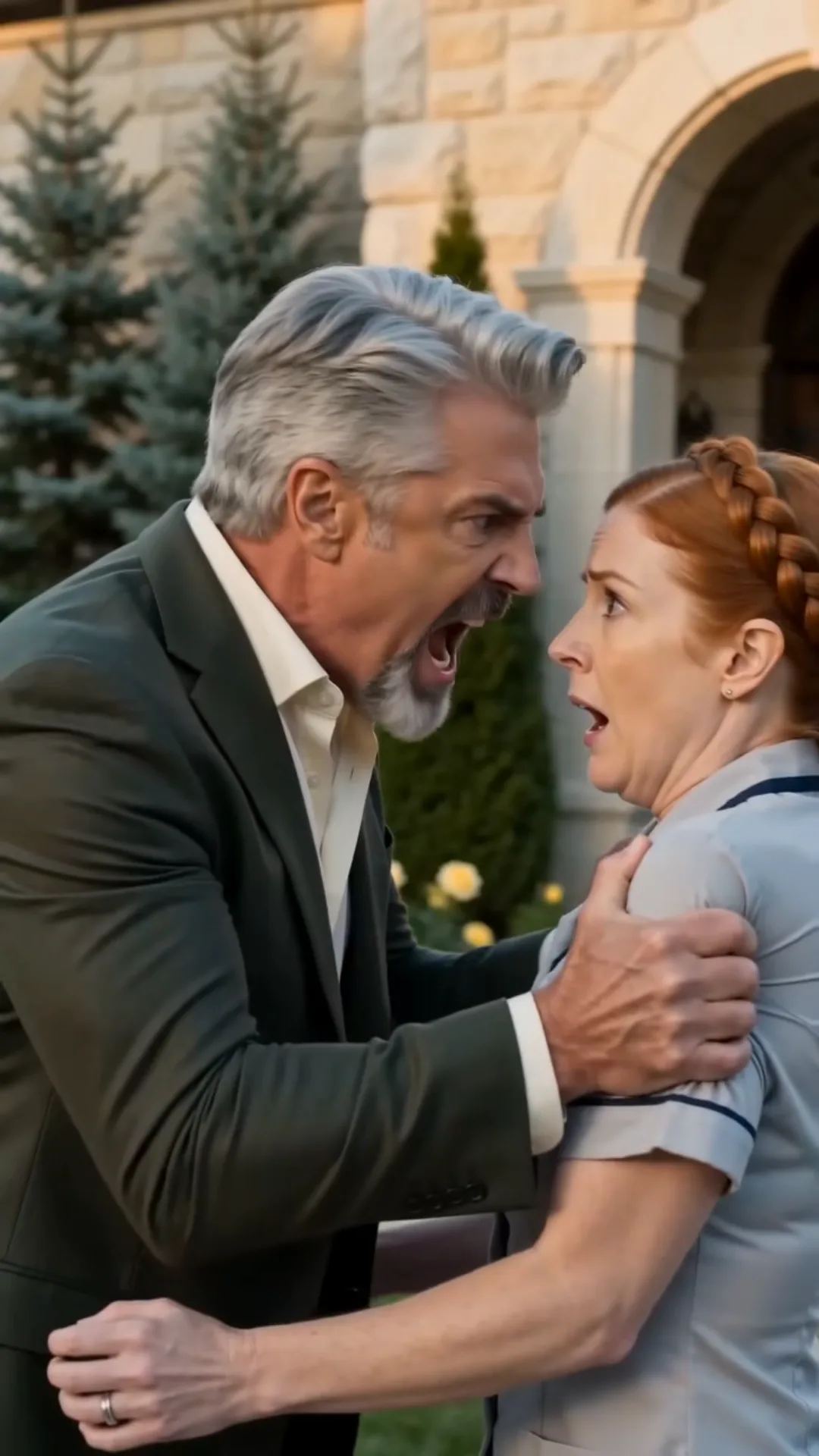
Marisol did not go far.
She could not afford to — not with rent due in eleven days and a reference letter she would never receive from her last employer, and a new job market that, for domestic workers over forty with a six-year gap in resume diversity, was not exactly generous. She took a room with her cousin Ana, two bus transfers from the Cross estate, in a part of the city where the buildings stood close together and the gardens, when there were gardens at all, grew in coffee cans on fire escapes instead of behind wrought-iron gates.
She spent the first week making calls.
A lawyer, first — a legal aid clinic downtown, a tired but kind woman named Priya who listened to the whole story, start to finish, with a patience that made Marisol's throat tighten more than once, and who then explained, gently, exactly how difficult this would be.
"No hospital record. No police report. No independent witness besides you, and you've already been characterized by the family as a disgruntled former employee." Priya tapped her pen against a legal pad, already half-filled with notes. "I'm not saying it's impossible, Marisol. I'm saying it's an uphill fight, and it'll go faster and cleaner if we can get anything corroborating — photos, a second witness, medical documentation if the grandmother ever surfaces at a clinic or hospital. Right now what we have is one very credible account and nothing else."
"I have a photograph," Marisol said. "Of the bolt."
"That's something. It's not much, on its own. A bolt on a basement door isn't a crime."
Marisol thought of the bruises on Eleanor's thin arms, the cinnamon-colored marks she had seen and not photographed, because in the moment all she had wanted was to get the old woman warm, get her fed, get her safe — not to think, with the cold calculation the situation apparently required, about evidence.
She had failed at the one thing that might have mattered most.
"I'll try to call the house," Priya said. "See if I can get a welfare check triggered through the right channels. It won't be fast. These things rarely are, when the family has money and a good lawyer of their own on retainer."
Marisol thanked her and hung up and sat for a long time on the edge of her cousin's pull-out couch, staring at nothing, thinking about eleven spoons, and a yellow blanket, and a small boy standing very still at the edge of a rose hedge.
She thought about him more than she expected to.
*
The welfare check, when it finally came, three slow weeks later, found nothing.
Marisol learned this from Priya over the phone, in a voice carefully stripped of the frustration Marisol could still hear underneath it.
"They let the officer in. Toured the whole house. The basement door was unbolted, unlocked, completely ordinary — just an old wine cellar, dusty, a few crates. No sign of anyone having been kept there. Mrs. Cross — the elder Mrs. Cross — wasn't on the property. Vivienne Cross explained that her mother-in-law has been residing at a private long-term care facility for several weeks now, due to declining health, and produced paperwork to that effect. A facility on the coast, apparently. Very expensive. Very private."
"That's not possible," Marisol said. "I was in that basement three weeks ago. I saw her."
"I believe you," Priya said, and something in her voice made clear she meant it. "But belief doesn't move a case forward on its own. If the grandmother genuinely is at a licensed facility now, being cared for — even if it's a facility she was more or less coerced into, even if the 'admission' happened forty-eight hours after you tried to blow the whistle — from a strictly legal standpoint, that muddies things considerably. It starts to look, on paper, like a family who took an aging relative to a home, not a family who's been holding her prisoner."
"They moved her to hide her," Marisol said. "That's not a coincidence. That's a cover-up."
"I agree with you completely. Proving it is a different question."
Marisol sat with the phone pressed to her ear for a long moment, listening to nothing but the small electronic hush of the line, feeling something in her chest curdle into a helplessness she had not expected — she had thought, when she made her promise on that cold stone floor, that the hardest part would be finding the courage to speak.
She was learning, slowly, that speaking was only the first of many hard parts, and often not the hardest one.
"Is there anything else I can do?" she asked.
"Keep a record," Priya said. "Everything you remember, everything you learn, every date, every detail, write it down while it's still fresh, because memory erodes and paperwork doesn't. And Marisol — if anyone else in that house ever tries to reach you, listen. Sometimes the second witness finds you, rather than the other way around."
Marisol did not think much of that advice in the moment.
She would think of it very differently, six weeks later, on a Tuesday afternoon, when she stepped off the number 14 bus two blocks from her cousin's apartment and found a small boy sitting alone on the bus shelter bench, hands folded very properly in his lap, wearing a backpack far too large for him, looking for all the world like he had been waiting there — patient, still, resolute — for a very long time.
*
"Lucas?"
He looked up. Relief broke across his face so completely, so nakedly, that for a moment Marisol forgot entirely how to be an adult who knew the correct, careful, responsible things to say to a lost seven-year-old, and simply dropped to her knees on the sidewalk and pulled him into her arms.
He was shaking. Not from cold — the afternoon was mild — but from the particular exhaustion of a child who has spent hours being brave entirely alone.
"How did you get here?" she asked, pulling back to look at him, hands on his small shoulders. "Does your mother know where you are? Your father?"
"No." He shook his head hard. "I followed the map on my tablet. I said I was going to Tomás's house after school, and I got off the bus one stop early like the map said, and I walked the rest, and I've been waiting for like an hour because I didn't know which bus you'd be on, I just knew you lived near this stop because I heard Dad on the phone one time telling somebody your new address for your last paycheck—"
He was talking fast now, the words tumbling over each other, weeks of held-back urgency breaking loose all at once.
"They said Grandma's at a fancy clinic now but it's a lie, Marisol, I know it's a lie, because Mom packed her stuff herself in the middle of the night three weeks ago and I heard her on the phone with someone saying it's handled, it's handled, nobody will find her, and I don't know where Grandma actually is, I don't know if she's okay, and nobody will listen to me because I'm just a kid, and you're the only grown-up who ever believed her, and I need you to believe her again, please, please, you have to help me find her—"
"Lucas." Marisol took his face in both her hands, steadying him, the way she imagined, perhaps, a person steadies someone standing at the edge of a very high place. "Breathe, mijo. Breathe. I'm here. I'm listening. I believe you. I have believed you since the day I met you, do you understand? Every word."
He nodded, chest heaving, tears finally breaking loose now that there was someone present to catch them.
"Okay," Marisol said, and her voice, though gentle, had steel running underneath it now — the steel of a woman who had spent six weeks feeling powerless and had just been handed, entirely by accident, on an ordinary Tuesday afternoon, the one thing she had been missing all along.
A second witness.
A living, breathing, specific piece of information no lawyer, no welfare officer, no polished family story could talk its way around: it's handled, nobody will find her.
Words spoken by Vivienne Cross herself, on her own phone, in her own house, overheard by her own son.
"Okay," Marisol said again, softer now, pulling him back into her arms as the afternoon light slanted gold down the ordinary street, so unlike the gold light of that other garden, that other, lying house. "We're going to fix this. You and me. But first, I need you to tell me everything, from the very beginning. Every single thing you remember."
"Everything?"
"Everything, mijo."
Lucas took a long, shaking breath — the breath, Marisol would think much later, of a boy setting down a weight he had been carrying entirely alone for far, far too long.
May you like



"Okay," he said. "It started with the stairs. I always count the stairs."
---







