Chapter 10 - What the Falls Remember
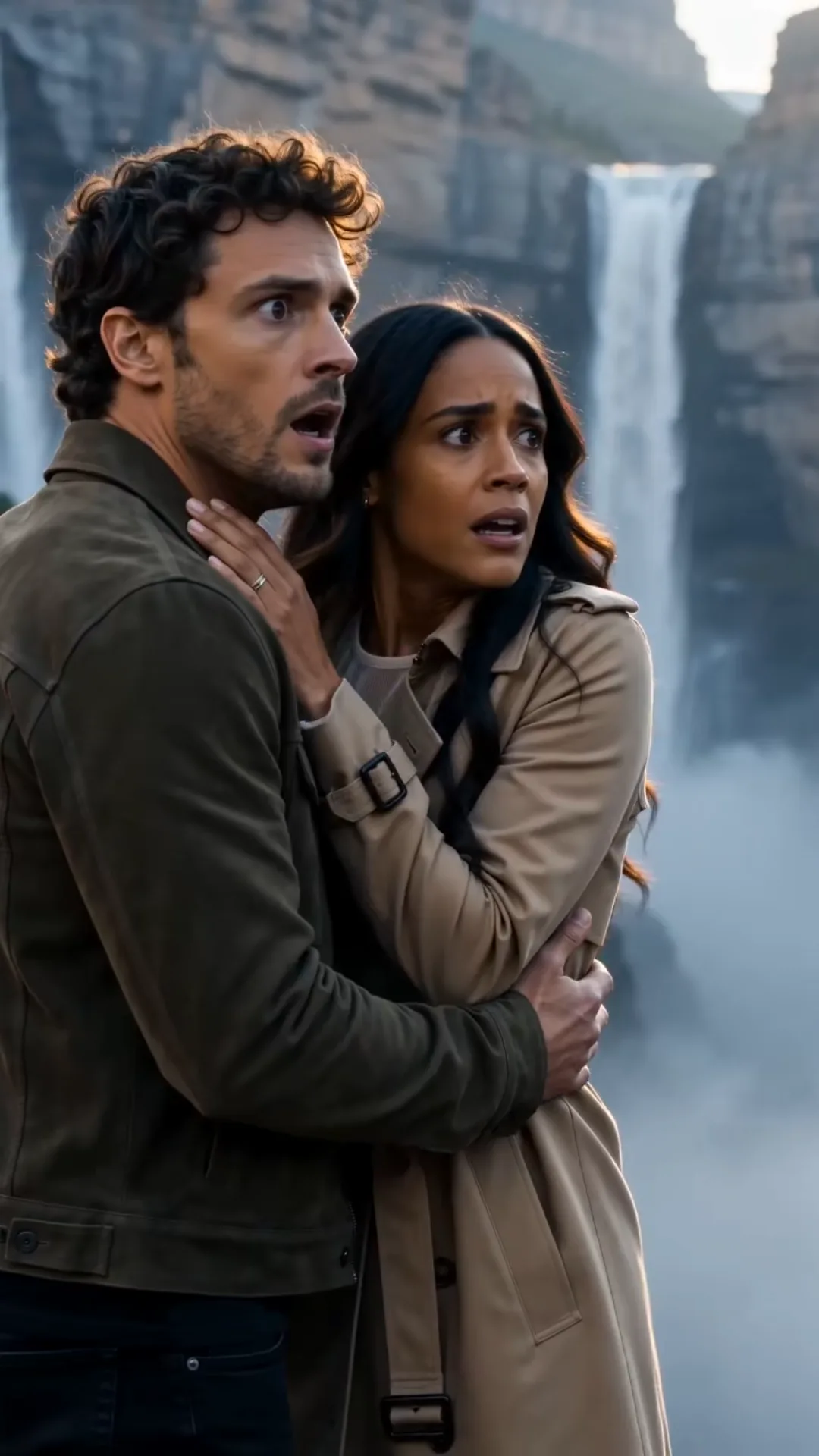
The trial lasted eleven weeks.
Adrian testified against her on the ninth week, in exchange for a sentence that would still, by any reasonable measure, consume the greater part of his remaining adult life — twenty-two years, with the possibility of parole after fourteen, a mercy extended only because he had, in the end, been the one to break first, the one whose trembling hand had finally, in a small interrogation room three months after the arrest, signed a statement admitting everything.
He did not look at Elena while he testified.
He kept his eyes on the prosecutor, on the jury, on a fixed point somewhere above the courtroom's back doors, and described, in flat, careful language, the takeout menu, the fourth-floor conference room, the hiking forum, the two hours of highway with Victor humming tunelessly in the back seat, right up to the moment the wheelchair's front wheels lost contact with the gravel.
He did not mention the mist.
He did not mention the sound, or the voice, or the four impossible seconds during which both of them had stood frozen at the edge of that cliff, staring at something neither of them had ever been able to fully explain to themselves, let alone to a courtroom that dealt only in evidence that could be measured, recorded, and cross-examined.
He told Rourke about it once, privately, in the weeks before the trial began.
"I know how it sounds," he'd said. "I know what it sounds like, coming from a man who's about to go to prison for murder, telling you he heard a ghost. But I heard it, Detective. I've replayed those four seconds more times than I can count, trying to find some other explanation, and there isn't one. He forgave us. In that voice. And I think that's what finally broke Elena more than anything else did. Not the arrest. Not the ring. Him, forgiving us, without a single word about what he had every right to say instead."
Rourke had written this down too, in a private notebook he kept separate from his official case files, the kind of notebook every detective eventually starts keeping if they stay in the job long enough — a record not of evidence, but of the things evidence cannot explain.
He never mentioned it in court.
Some things, he had learned over nineteen years, are not meant for courtrooms.
Elena was sentenced in the spring, on a gray, unremarkable Tuesday not unlike the one on which Victor had died, life without possibility of parole, the maximum the state's laws allowed for a conviction that included, in the judge's own words, a degree of premeditated cruelty toward a vulnerable and trusting victim that this court has rarely encountered in twenty-six years on the bench.
She did not cry during sentencing.
She sat very still, hands folded in her lap in an unconscious echo of the way Victor's hands had once folded in his — an image that struck several observers in the courtroom, though none of them could say afterward exactly why it had unsettled them so deeply — and when the judge finished speaking, she turned, briefly, to look at the small gallery of spectators behind her.
Marta was there, in the third row, sitting very upright, her hands folded tightly in her own lap.
Their eyes met for a moment.
Elena mouthed something — Marta would tell Rourke about it years later, unprompted, during a chance meeting at a grocery store neither of them had expected — two words, silent, meant for no one but herself.
I'm sorry.
Marta never told Rourke whether she believed it.
The wheelchair itself was never recovered. Whatever remained of it lay somewhere in the deep, cold basin beneath the falls, tangled among rocks that had likely not moved in centuries, a small mechanical ghost keeping company with the larger, more terrible ghost the mountain had apparently decided to keep for itself.
The overlook was closed to the public within a month of the trial's conclusion, officially due to the erosion hazard that had, indeed, been documented on hiking forums for years before Victor Hale's death, though several of the maintenance crew assigned to install the new fencing later told slightly different, quieter stories to anyone who asked — about a persistent, unexplained mist that gathered near that particular section of cliff on otherwise clear days, about the way their equipment sometimes recorded strange fragments of sound near the site that none of the audio specialists back at the district office could ever satisfactorily explain.
Most of them, sensibly, kept these stories to themselves.
A mountain does not need to be believed in to keep doing what it does.
Years later, long after the case had faded from local memory, a young couple hiking an adjacent, still-open trail would report to a park ranger that they had heard, faintly, from the direction of the closed northern overlook, what sounded distinctly like two words carried on the wind — it's beautiful — spoken, they both insisted separately in their statements, in a voice that sounded entirely, impossibly human, and entirely, impossibly kind.
The ranger filed the report as he was required to.
He did not investigate further.
Some things, everyone in that small mountain community had long since learned, without ever quite agreeing to say so out loud, were simply part of the landscape now — folded into the falls the way the falls themselves had folded into the mountain millennia before any human being arrived to give the place a name.
The water kept falling, the way it always had.
Indifferent to the small, cruel dramas of the people who occasionally stood at its edge, and yet — if the maintenance crews were to be believed, if the hikers' reports meant anything at all — not quite so indifferent as it appeared.
Somewhere in that endless white roar, in the mist that rose and drifted and occasionally, on certain gray afternoons, seemed to gather itself into shapes that should not have existed, something of Victor Hale remained.
Not vengeful.
Not even angry, as far as anyone could tell.
Just patient, the way water is patient, the way mountains are patient, waiting — the reports suggested, though no one could say for certain what exactly it waited for — for anyone willing to stand close enough to the edge, and listen closely enough to the water, to finally understand what it meant to say those two words and mean them completely, without a single trace of blame.
It's beautiful.
The falls remembered him saying it.
May you like



They would, it seemed, go on remembering for a very long time.
THE END







